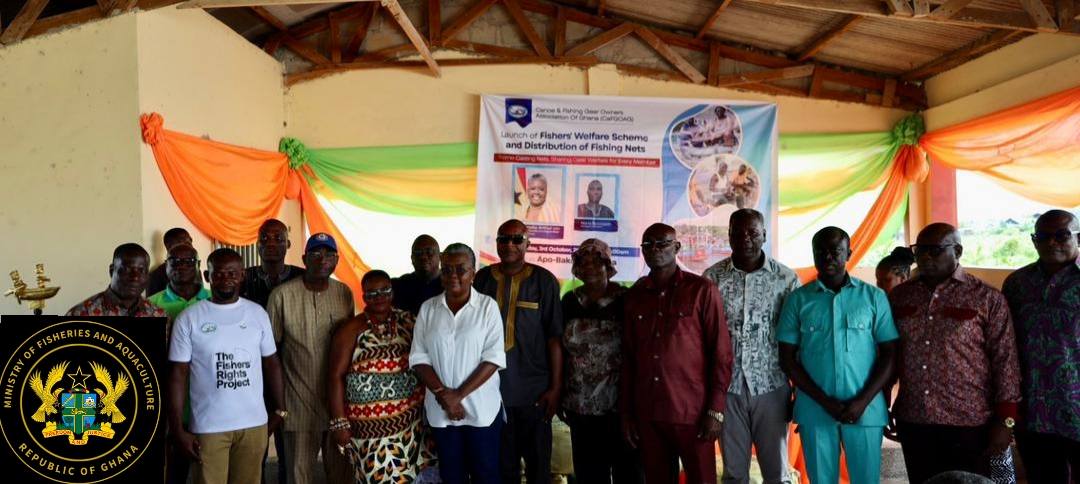
The Minister for Fisheries and Aquaculture, Mrs Emelia Arthur (MP), has officially launched the Canoe and Fishing Gear Owners Association of Ghana (CaFGOAG) Welfare Scheme, a pioneering initiative designed to provide social protection, emergency relief, and livelihood support for fishers and their families.
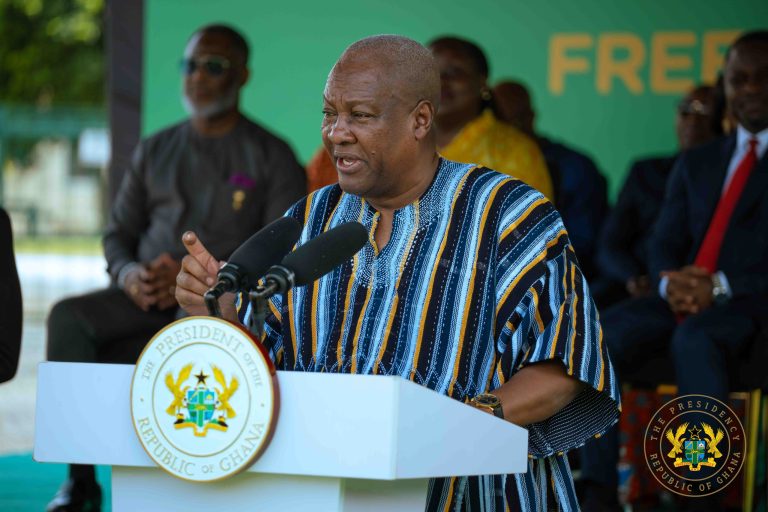
Speaking at the ceremony on Friday in Shama, Western Region, the minister described the scheme as a “groundbreaking initiative dedicated to safeguarding the welfare, dignity, and livelihoods of our hardworking fishers.”
She commended the leadership of CaFGOAG for their vision and commitment to improving the lives of canoe owners, crew members, and fish processors across the country.
“Under the guidelines, every registered member of CaFGOAG is automatically part of the scheme and will contribute a monthly fee of GHS100. These funds will be managed by a Welfare Scheme Management Committee, with annual reports and audits to ensure transparency and accountability”, she noted.
Mrs Arthur urged fishers to participate fully in the scheme, highlighting the importance of collective responsibility.
The Minister further emphasised the government’s commitment to strengthening the fisheries sector, noting the passage of the Fisheries Act, 2024 (Act 1146), ongoing plans to establish Ghana’s first Marine Protected Area at Cape Three Points, and the upcoming National Chief Fishermen and Fishmongers Conference in November 2025.
She called on NGOs, the private sector, and development partners to support the welfare scheme, describing it as a practical tool to advance social equity, food security, and inclusive growth within Ghana’s blue economy.
The Minister added that the Welfare Scheme will provide members with access to medical care, financial support during emergencies, credit for fishing inputs, and a unique savings package. It also aims to extend support for the education of fishers’ children and promote alternative livelihood opportunities in the future.
The launch event brought together canoe owners, fish processors, community leaders, civil society groups, and the media, marking what stakeholders described as a “historic step” in protecting the welfare of Ghana’s fishing communities.
Judith Twumwaa, ISD