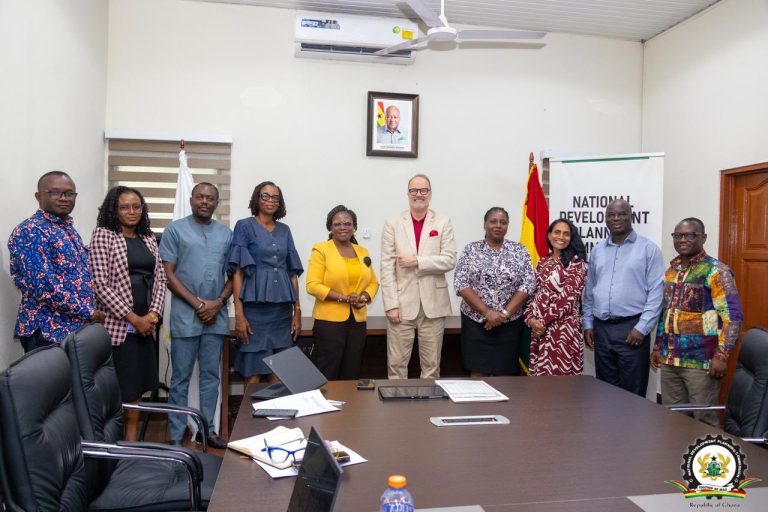
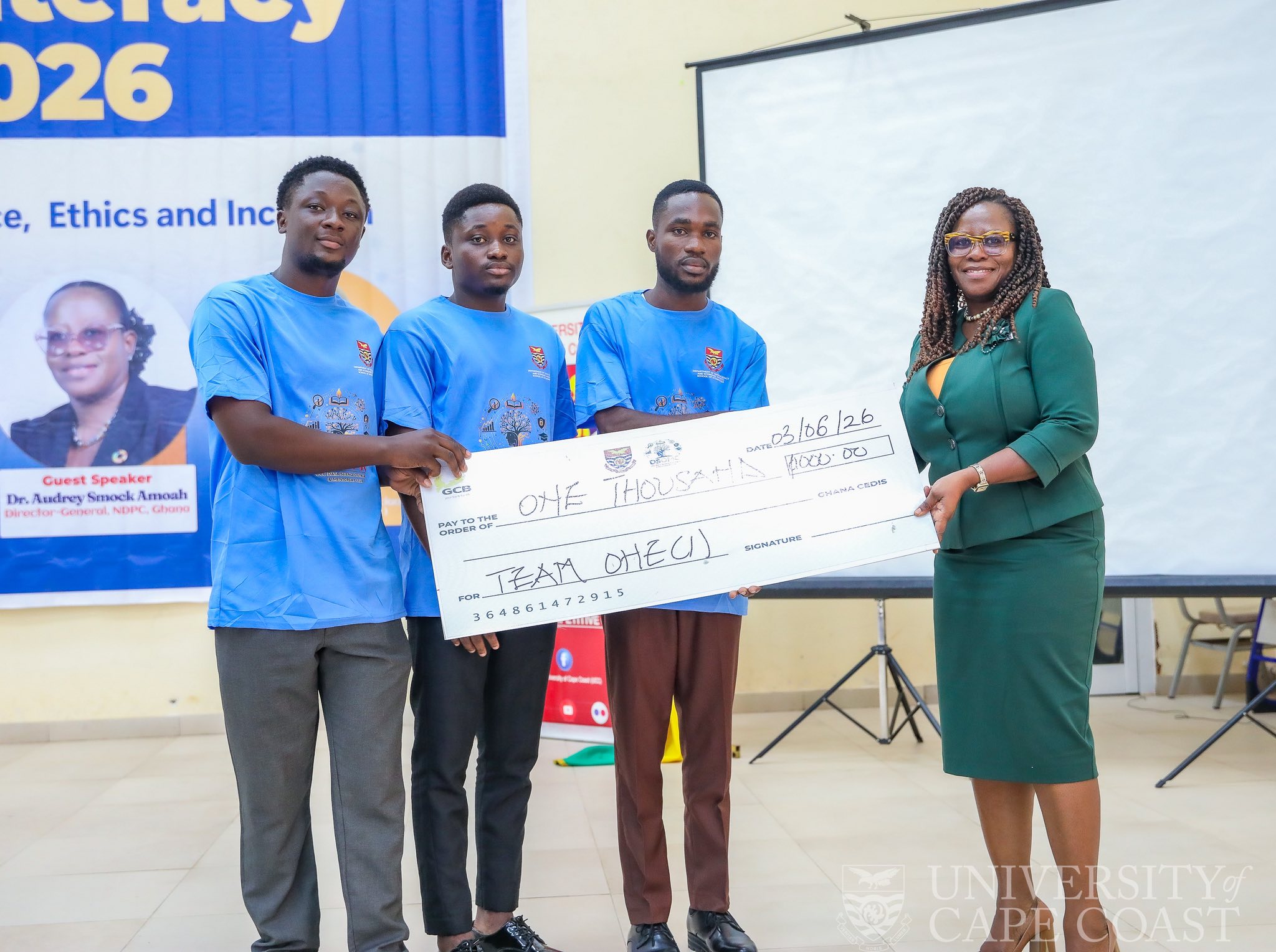
The Director-General of the National Development Planning Commission (NDPC), Dr Audrey Smock Amoah, has urged policymakers, public institutions and development stakeholders to place data and evidence at the centre of decision-making to improve governance, public service delivery and national development outcomes.
Speaking at the launch of the 2026 University of Cape Coast (UCC) Data Literacy, Dr Amoah said Ghana must embrace a culture that values, protects and effectively uses data as a strategic national resource.
“Ghana is sitting on a new kind of national resource. This resource is data. Used wisely, it can make every cedi work harder, every policy fairer and every public service more efficient,” she stated.
Dr Amoah described evidence as the foundation of effective governance, noting that decisions based on reliable data were more likely to achieve meaningful impact than those driven by assumptions.
She said several initiatives aimed at strengthening data-driven governance, including data-sharing agreements between the Ghana Statistical Service and 25 Ministries, Departments and Agencies (MDAs).
On the issue of ethics, Dr Amoah cautioned that the growing use of data and digital technologies must be accompanied by safeguards that protect privacy, build public trust and prevent the exclusion of vulnerable groups.
“Without trust, citizens will not share accurate information. Institutions will hoard data. Innovations will face suspicion. And the state will lose legitimacy,” she warned.
She called on all stakeholders to work collectively towards building a data-smart nation where evidence informs decisions, ethics safeguards innovation and inclusion guarantees that development benefits every citizen.
“Let us build a Ghana where evidence defeats guesswork, where ethics protects innovation from becoming exploitation, and where inclusion ensures that progress reaches the last mile, not only the first users,” she said.
Deborah Narkie Nartey, ISD