Ghana has intensified efforts to attract long-term investment into its rice sector as part of a broader strategy to boost food security, drive industrialisation, and reduce the country’s dependence on rice imports.
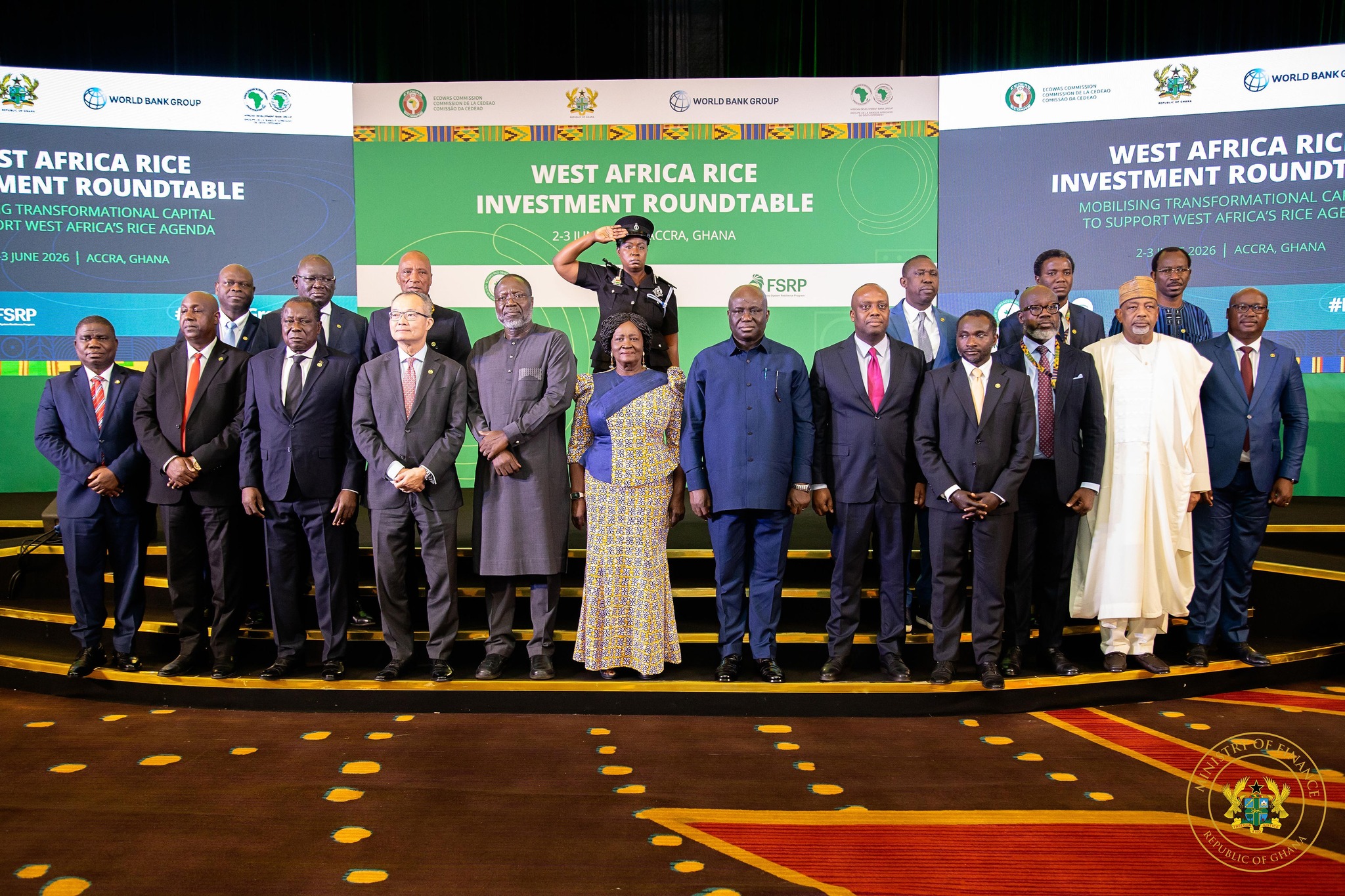
Speaking at the 2026 West Africa Rice Investment Roundtable in Accra, Deputy Minister for Finance, Mr Thomas Nyarko Ampem, called on investors and development partners to commit transformational capital to unlock the full potential of Ghana’s rice value chain.
He said Ghana is repositioning agriculture, particularly strategic value chains such as rice, as a central pillar of economic transformation.
He stressed that the government was creating the necessary policy and macroeconomic conditions to attract investment into the rice sector and support sustainable growth.
“Ghana’s message to investors is straightforward: we are doing the policy work, we are strengthening the enabling environment, and we are creating the conditions for long-term capital to thrive,” he stated.
According to the Deputy Minister, the government is focused on reducing import dependence while expanding domestic rice production, agro-processing and value addition across the sector.
“West Africa continues to spend about US$3-4 billion annually importing rice. That is billions in foreign exchange leaving our economies each year to finance demand that we should increasingly be meeting ourselves,” he said.
He explained that the region requires transformational capital, which is a long-term financing that extends beyond seasonal farming support to include investments in irrigation infrastructure, storage facilities, logistics systems, milling operations and agro-processing.
The Deputy Minister said Ghana’s economic reset agenda under President John Dramani Mahama and Vice President Prof. Naana Jane Opoku-Agyemang places significant emphasis on productive transformation, food security and private sector-led growth.
He indicated that ongoing government interventions are focused on strengthening agricultural value chains, improving market coordination, supporting price stability mechanisms and creating a predictable investment environment for businesses.
Mr Nyarko Ampem added that improving macroeconomic stability and renewed investor confidence were enhancing Ghana’s ability to attract long-term investment into critical sectors of the economy.
He urged stakeholders across the sub-region to move beyond policy discussions and begin mobilising practical financing arrangements capable of supporting large-scale rice production.
“West Africa does not need more declarations. We need to create pipelines of bankable projects capable of crowding in long-term capital at scale,” he stated.
The high-level forum brought together representatives from governments across West Africa, the private sector, development finance institutions, investors and regional organisations, including ECOWAS.
Deborah Narkie Nartey, ISD