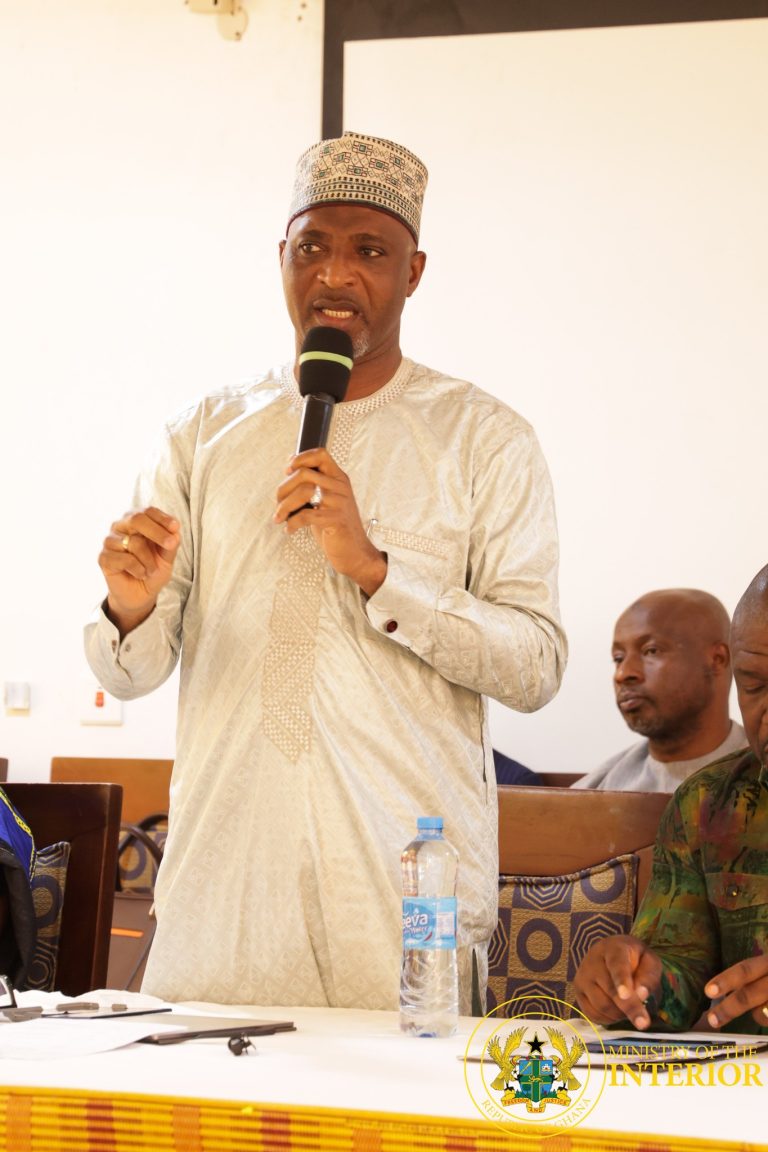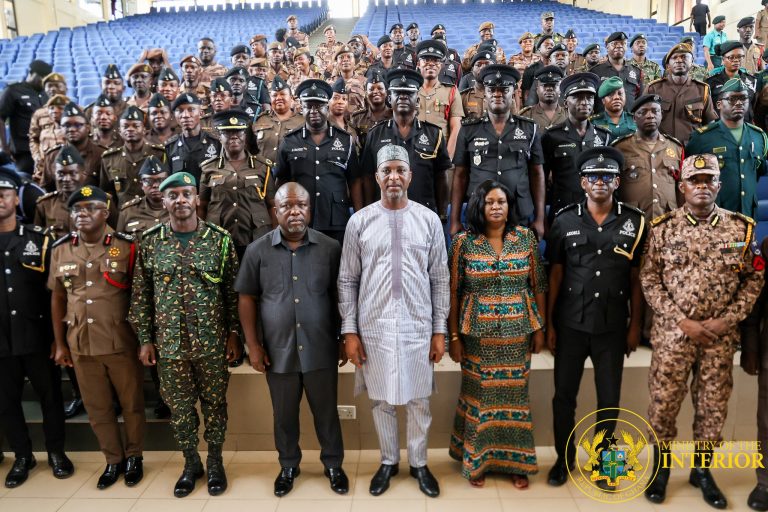
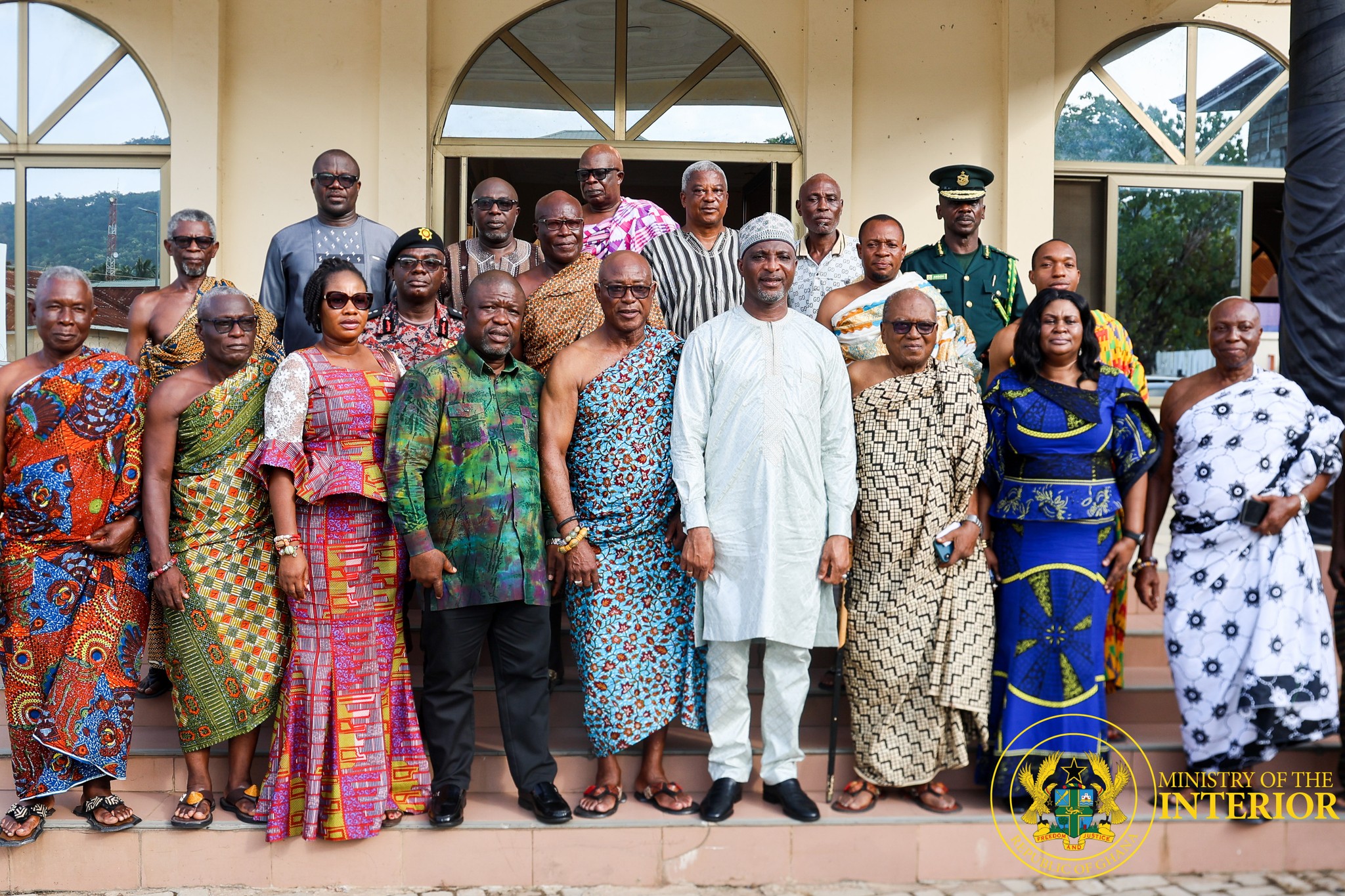
The Minister for the Interior, Mr Muntaka Mohammed-Mubarak, has appealed to chiefs, religious leaders and community stakeholders in the Volta Region to play a more active role in safeguarding national security by helping to curb irregular migration, human trafficking and other emerging security threats.
Addressing traditional and religious leaders during a meeting in the Volta Region, the Minister emphasised that maintaining national security required the collective efforts of government institutions and local communities.
He expressed concern over the increasing use of unapproved border routes by undocumented migrants and the involvement of some individuals in facilitating the illegal entry of foreigners into the country.
While reaffirming Ghana’s commitment to regional integration and hospitality, Mr Mohammed-Mubarak urged citizens to remain vigilant and desist from aiding undocumented migrants to bypass the country’s immigration and identification systems.
He called on traditional authorities, religious leaders and community members to support security agencies by reporting suspicious activities and assisting efforts to protect the country’s borders and national security interests.
“Our national identification system, health insurance scheme and passport regime are intended to serve citizens and lawful residents. We must not allow these systems to be undermined through fraudulent practices,” he stated.
The Minister revealed that security agencies had identified 102 unapproved inland crossing points in the Volta Region that were being used by undocumented migrants to enter the country.
He further disclosed that investigations into recent human trafficking and smuggling cases indicated that all 740 victims rescued in 2025 entered Ghana through the Aflao and Akanu corridors.
“All of them entered undocumented and outside our official systems. This is a major security concern that requires the support of communities, chiefs and religious leaders,” he stressed.
According to the Minister, the Ghana Immigration Service rescued 714 victims of human smuggling in 2025 and arrested 103 suspected perpetrators, 99 of whom were Nigerians.
Mr Mohammed-Mubarak also revealed that more than 1,200 foreign beggars had been repatriated from the streets of Accra and Kumasi this year, while over 1,600 foreign nationals engaged in street begging were returned to their home countries in 2025.
He noted that Ghana’s prisons currently housed about 14,000 inmates, including approximately 1,100 foreign nationals from various countries within the West African sub-region.
Mr Mohammed-Mubarak acknowledged public concerns regarding the conduct of some security personnel at checkpoints and assured stakeholders that the government was exploring technological solutions and improved customer service measures to enhance efficiency and professionalism.
The Minister also announced reforms to Ghana’s citizenship acquisition process, explaining that fees had been revised upward to preserve the integrity of the country’s nationality regime.
Under the new fee structure, applicants from West African countries will pay GH¢15,000, applicants from other African countries will pay GH¢25,000, while non-African applicants will pay US$25,000 and be required to demonstrate an investment commitment of at least US$250,000 in Ghana.
Mr Mohammed-Mubarak further disclosed that the Ministry of the Interior was accelerating the digitisation of its services, including criminal background checks, firearm registration and other public services, to improve accessibility, transparency and efficiency.
Judith Twumwaa, ISD