Ghana will introduce a motion in the United Nations General Assembly to declare the transatlantic slave trade as the greatest crime against humanity, demanding reparations for slavery and colonial resource theft.
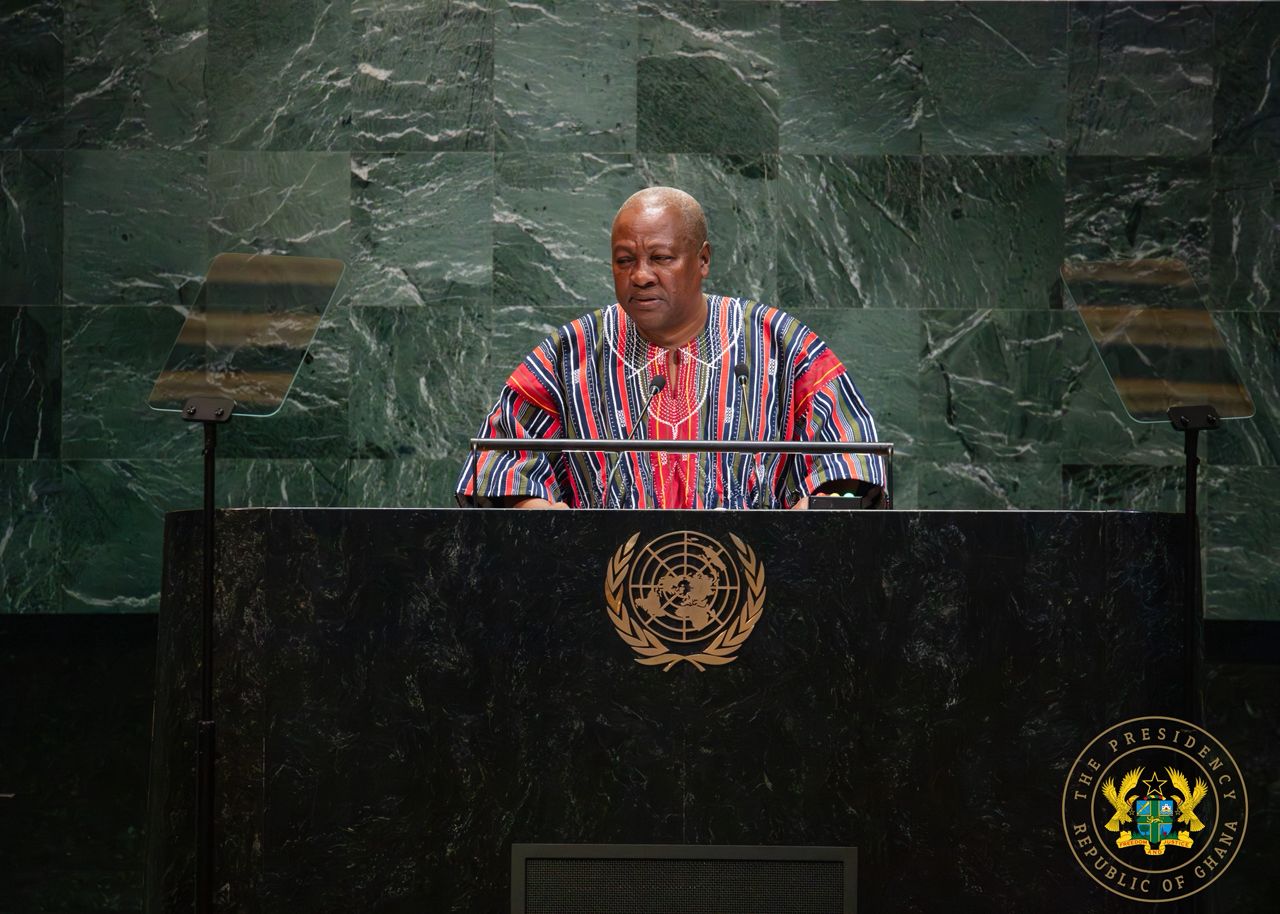
President John Dramani Mahama announced this in his address at the 80th UN General Assembly on Thursday.
He said Ghana, serving as African Champion on reparations, will formally present the motion to the international body.
The President argued that more than twelve and a half million Africans were forcibly taken against their will and transported to create wealth for powerful Western nations.
“We must demand reparations for the enslavement of our people and the colonization of our land that resulted in the theft of natural resources, as well as the looting of artifacts and other items of cultural heritage that have yet to be returned in total,” President Mahama told the assembly.
The President noted that governments had previously paid reparations to former slave owners as compensation for the loss of their “property” when enslaved people were freed, drawing a parallel to justify reparations for the descendants of those enslaved.
He emphasized that Africa recognizes “the value of our land and the value of our lives” just as colonizers did.
President Mahama called for the complete return of looted African artifacts and cultural heritage items that remain in Western museums and private collections.
The demand encompasses both monetary reparations and the repatriation of cultural objects taken during the colonial period.
Speaking as African Champion on reparations, the President argued that the wealth generated from forced African labor and resource extraction built the foundation for Western economic development while leaving African societies impoverished and fragmented.
He emphasized that African nations continue to suffer from the long-term consequences of slavery and colonialism, including underdevelopment, social disruption, and cultural loss.
Richard Aniagyei, ISD