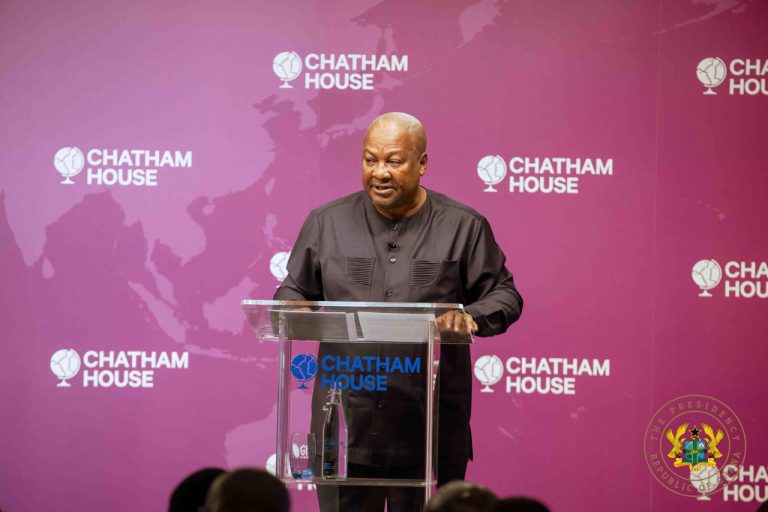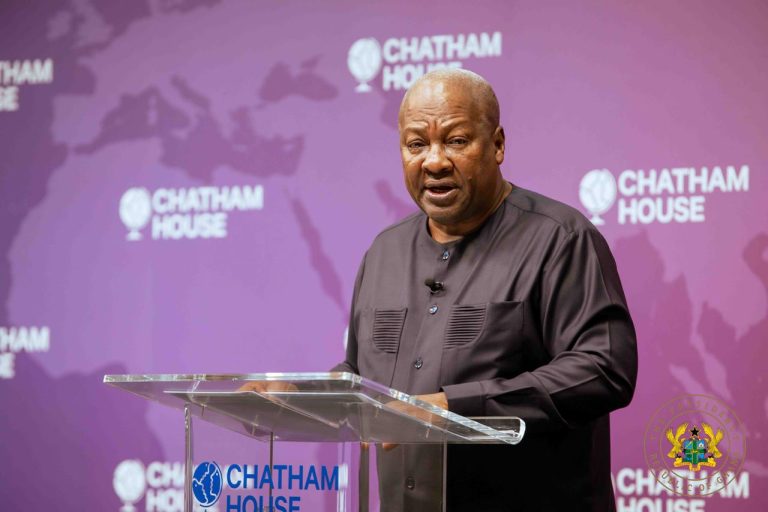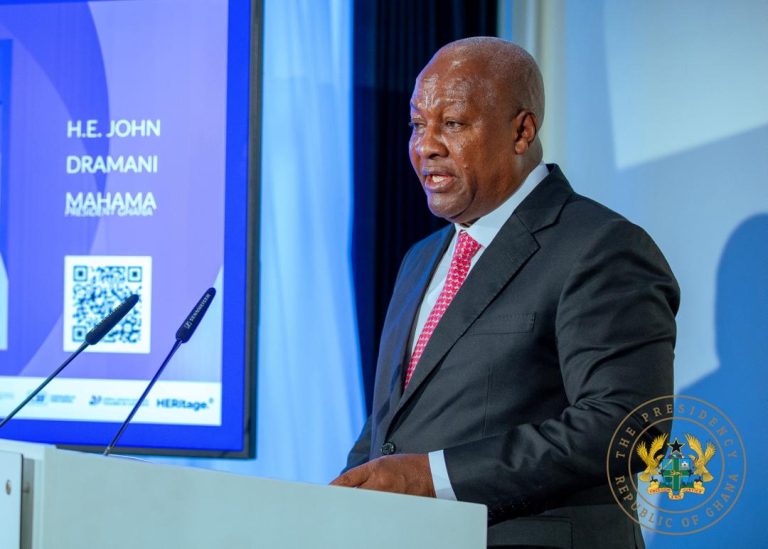
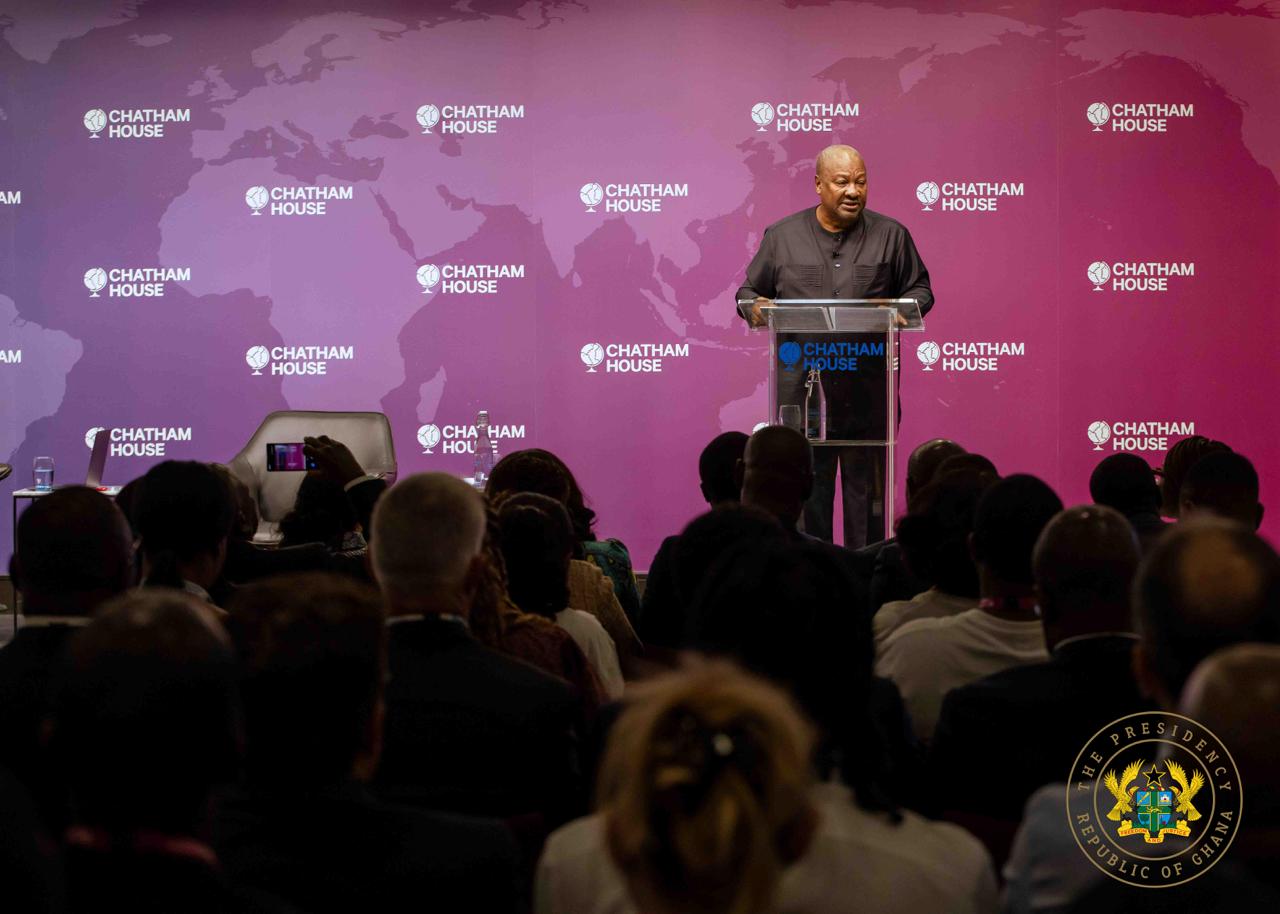
Africa’s continued exclusion from permanent representation on the United Nations Security Council is a historical injustice and a structural imbalance that eats away at the credibility of the multilateral system, President John Dramani Mahama has said.
Speaking at Chatham House in London on Monday, President Mahama said the situation was particularly indefensible given that Africa accounts for 54 of the United Nations’ member states and is projected to make up nearly a quarter of humanity by 2050.
“This is not nearly a procedural anomaly,
“It is a historical injustice and a structural imbalance that undermines the credibility of the multilateral system itself,” he said.
Ghana, he said, would continue to support comprehensive reform of the United Nations, including equitable representation for Africa on the Security Council.
The President’s critique of the international system went beyond representation.
He said the international financial architecture needed to become more responsive to the realities facing developing countries, arguing that the debt vulnerabilities facing much of the Global South were not merely fiscal challenges but development constraints that limited investments in health, education, infrastructure, climate adaptation, and industrial transformation.
“The international debt system must therefore become fairer, more flexible and more development-focused,” he added.
He also called for reforms to global taxation frameworks to ensure that developing economies derived equitable value from economic activity generated within their jurisdictions, warning that a stable international order could not be sustained while prosperity remained structurally unequal.
The COVID-19 pandemic, he said, had laid bare the cost of that inequality. African countries found that access to vaccines and essential medical supplies depended not on the urgency of need but on their position within the global supply hierarchy.
That experience, he said, was what prompted Ghana to launch the Accra Reset Initiative, a strategic framework aimed at moving Africa and the Global South from dependency towards resilience and from passive participation towards active agenda-setting in global governance.
President Mahama told the Chatham House gathering that Ghana did not see itself as a passive observer of the changes reshaping the international order.
“We see ourselves as active participants in shaping a more balanced, equitable, and cooperative international system,” he said.
Richard Aniagyei, ISD