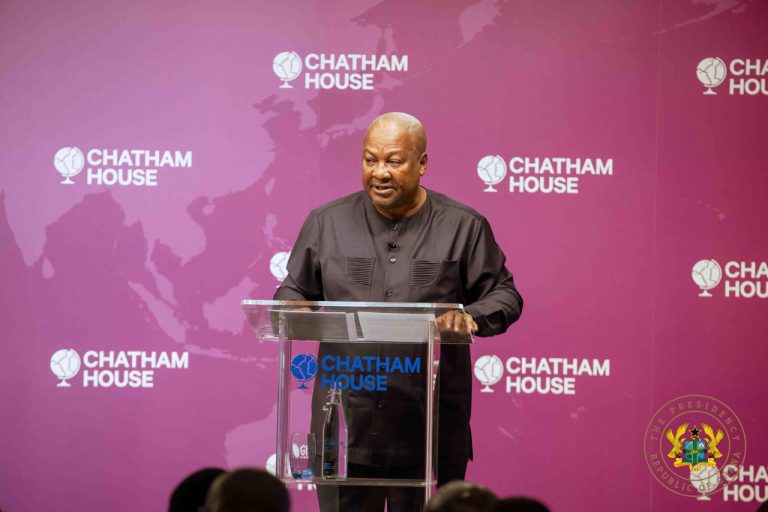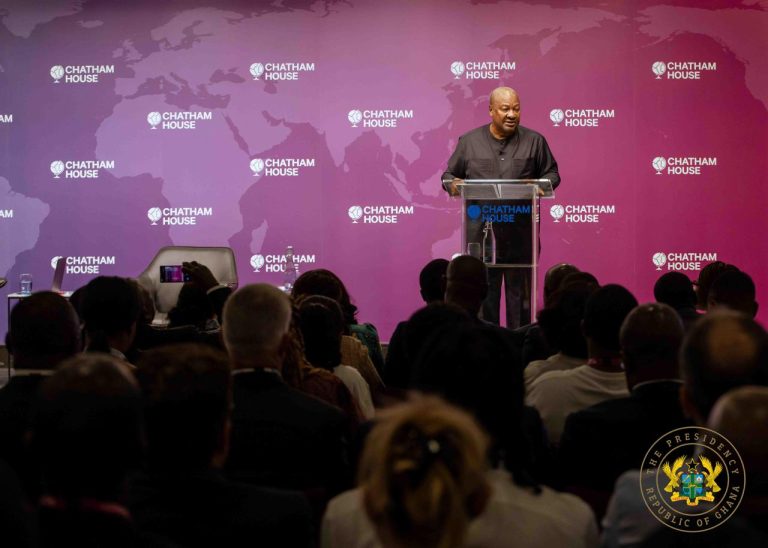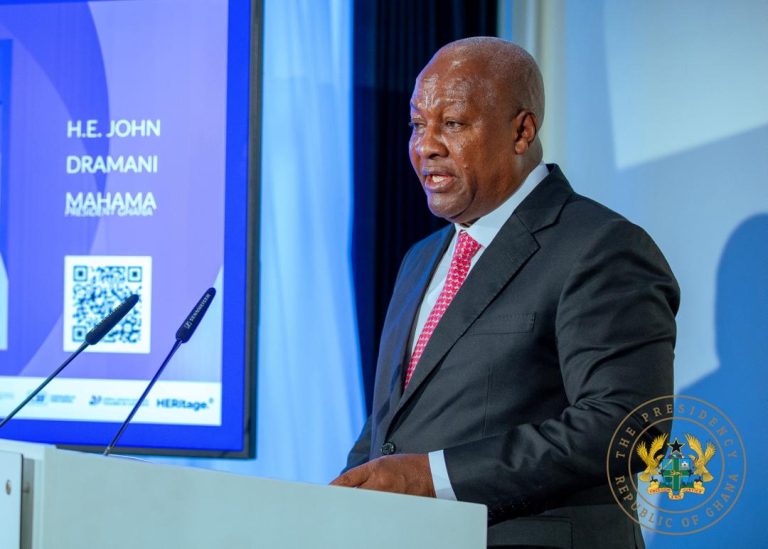
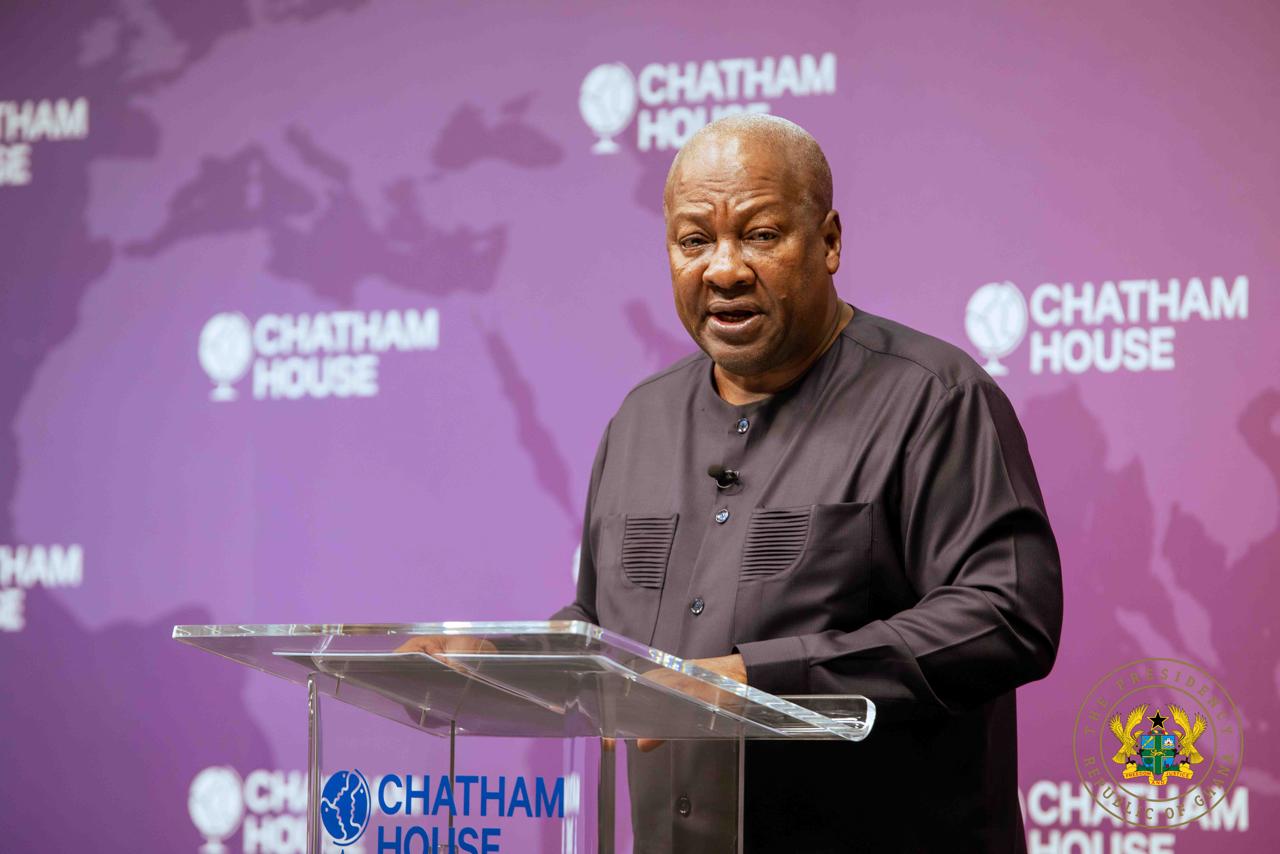
Democracy is not merely a political ideal. It is an economic asset, and Ghana stands as evidence of that, President John Dramani Mahama told an audience at Chatham House in London on Monday.
Addressing one of the world’s most prominent foreign policy institutions, President Mahama said Ghana’s record of constitutional governance, political pluralism, the rule of law, and peaceful transfers of power had given it something many countries struggled to offer investors: predictability.
“Democracy strengthens investor confidence, has its institutional credibility, supports social cohesion, and creates the predictability necessary for long-term investment and development,” he said.
The argument carried particular weight given its setting.
The President made the case at a moment when democratic systems are facing pressure across multiple regions, and as Ghana positioned itself before British investors at a UK investment summit also taking place in London this week.
He said his government was pursuing reforms to restore macroeconomic stability, strengthen domestic resource mobilisation, improve public financial management, and rebuild investor confidence, with its 24-hour economy initiative and Accelerated Export Development Programme forming the centrepiece of a strategy to reposition Ghana as a productive, industrial, and export-oriented economy.
“In an increasingly competitive world, nations that produce, innovate, industrialise, and export will have greater strategic relevance,” he said. “And Ghana intends to be amongst them.”
President Mahama said the creation of the Ghana GoldBod reflected a broader commitment to ensuring that Ghana’s natural wealth translated into long-term national value rather than perpetual extraction without transformation, as global demand for critical minerals and strategic commodities continued to rise.
At the heart of the government’s agenda, he said, was investment in young people. Africa had the youngest population in the world, and that demographic reality could be either a historic advantage or a profound vulnerability depending on the choices made today.
His government was prioritising education, digital transformation, skills development, and innovation ecosystems to prepare Ghanaian youth not merely to participate in the global economy of the future but to help shape it.
The President also used the platform to call for a reformed international order, arguing that Africa’s continued exclusion from permanent representation on the United Nations Security Council was a historical injustice and that the international debt system needed to become fairer and more development-focused.
He told the gathering that Ghana had launched the Accra Reset Initiative, a strategic framework aimed at building African resilience across public health, pharmaceutical manufacturing, digital infrastructure, food security, and industrialisation.
“The future of the multilateral system cannot be built on dependency,” he said. “It must be built on dignity.”
Richard Aniagyei, ISD