Equipment for 24-Hour Economy Factories to Enter Duty and Tax-Free
The government will allow factories registered under the 24-hour economy initiative to bring equipment for expansion or retooling into the country duty and tax-free.
The measure aims to incentivize manufacturers to increase production capacity and operate multiple shifts to maximize productivity and create more jobs.
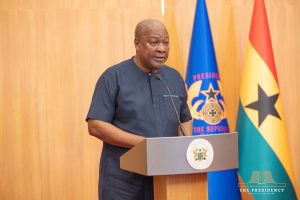
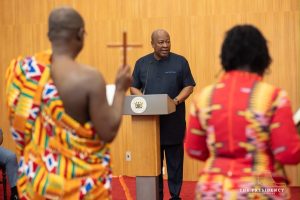
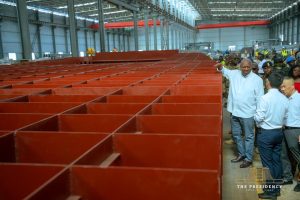
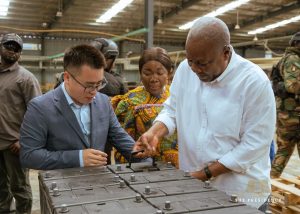
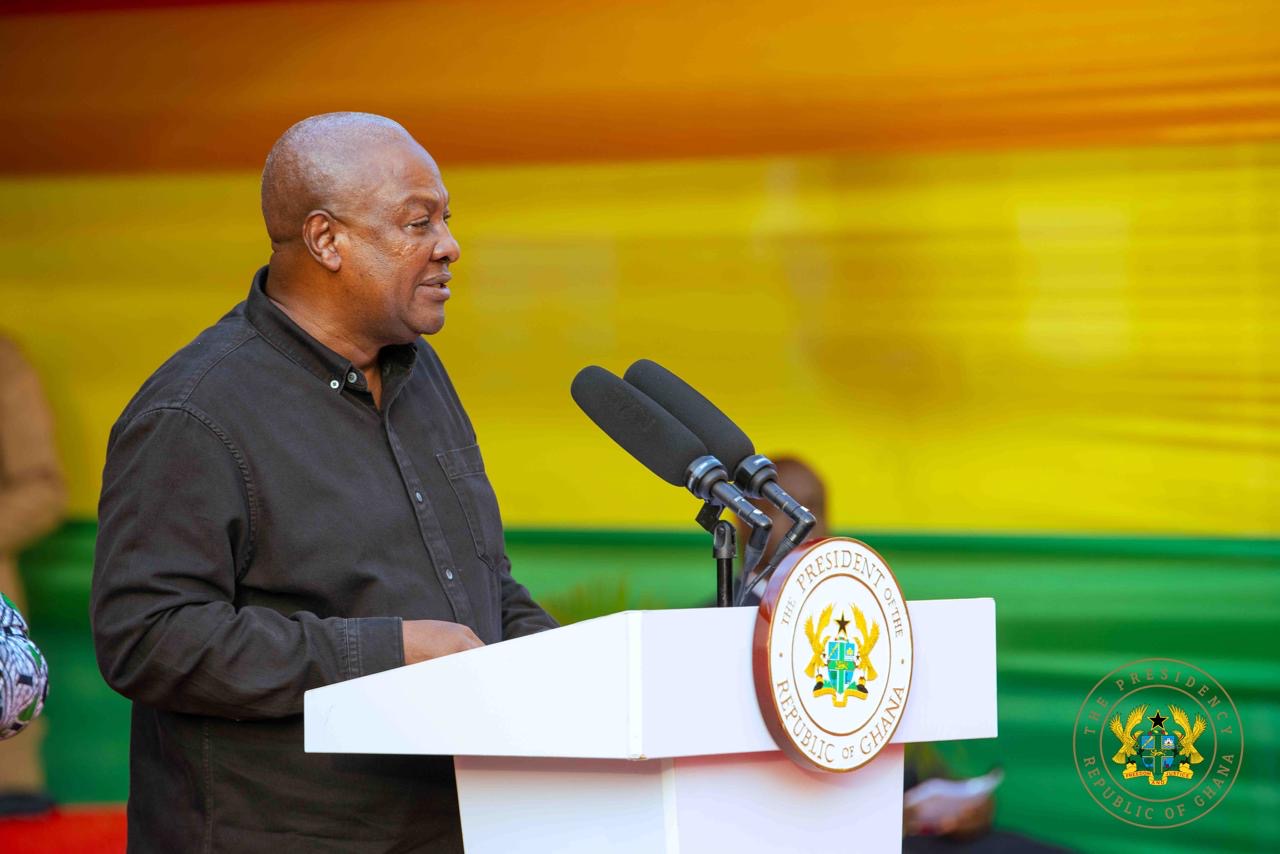
President John Dramani Mahama announced this on Tuesday at KEDA Ghana Ceramics Company Limited in Shama, Western Region, during the sod-cutting for a $250 million float glass manufacturing facility.
“For factories that are established and register under the 24-hour economy initiative, I have proposed that if they want to expand or they want to bring new equipment to retool their factory, they should be able to bring that equipment into the country duty and tax-free,” President Mahama stated.
The President disclosed that he had recently signed the 24-Hour Economy Authority Bill into law, making the authority active and operational.
He explained that the duty and tax exemptions on capital equipment emerged from a Presidential Dialogue with the Private Sector held on Monday, where captains of industry raised concerns about duties and taxes on capital equipment.
“One of the issues they raised was the duties and taxes on capital equipment. I went with all my ministers and regulatory agencies. And the Minister for Trade, Industry and Agribusiness was the host minister. And so we had a very fruitful discussion,” President Mahama said.
He assured investors, particularly Chairman Shen of KEDA, that the incentives are coming and will open the way for companies to invest even more in Ghana.
The President explained that the 24-hour economy program is particularly relevant to energy-intensive industries such as manufacturing, where continuous operation reduces energy wastage, improves efficiency, lowers unit production costs, and maximizes asset utilization.
He noted that factories operating three shifts instead of one maximize capital, infrastructure, and labor productivity, generating more employment and expanding exports.
President Mahama stated that for manufacturers, the 24-hour economy includes shift-based incentives, off-peak electricity tariffs, enhanced night-time security, structured labor dialogue, and tax exemptions on equipment for factory expansion.
He described the initiative not as mere reform but as a productivity revolution that will transform Ghana’s manufacturing sector.
The President disclosed that the government has allocated GH¢110 million in the 2026 budget to operationalize the 24-hour economy programme, reflecting the administration’s seriousness about the policy.
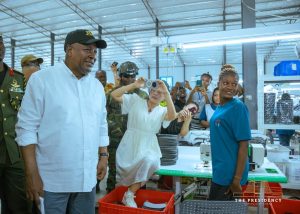
He announced that KEDA will be among the first companies to register under the 24-hour economy initiative, following the company’s expansion projects including the float glass factory, fifth phase of tile production, and sanitary ware factory.
President Mahama noted that the project aligns fully with the national industrial strategy and the objectives of the 24-hour economic program, the accelerated export development program, and the African Continental Free Trade Area regional integration agreements.
He emphasized that industrial growth must drive exports and that under AfCFTA, Ghana is uniquely positioned as host of the secretariat and must translate that advantage into manufacturing strength.
The President stated that trade agreements alone do not create prosperity but production, value addition, and competitive exports do.
He called on manufacturers to take advantage of the incentives to expand operations, create jobs, and contribute to Ghana’s industrial transformation agenda.
Richard Aniagyei, ISD