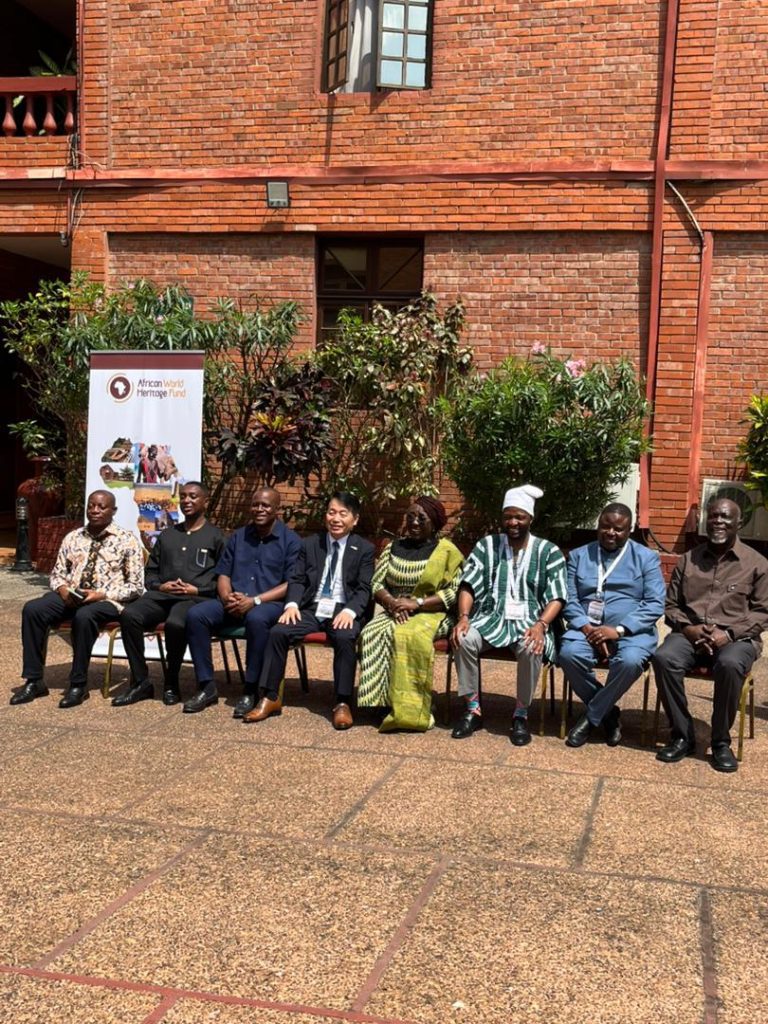
The Ministry of Tourism, Culture and Creative Arts, in partnership with the Ghana Commission for UNESCO and UNESCO Accra, has officially commenced the in-person workshop on the Interpretation and Presentation of World Heritage in Africa.
This is an initiative aimed at enhancing how Africa’s cultural and heritage sites are interpreted and presented.
The week-long programme, running from 17–21 November, is jointly organized by the Ministry, the Ghana Museums and Monuments Board, the African World Heritage Fund (AWHF), the International Center for the Interpretation and Presentation of World Heritage Sites (WHIPIC), and supported by UNESCO and the Korea Heritage Service of the Republic of Korea.
The programme which brought together participants from various African countries seeks to build local capacity and promote community-centered approaches to heritage conservation.
Speaking at the opening ceremony on Monday in Accra, the Minister for Tourism, Culture and Creative Arts, Madam Abla Gomashie, expressed Ghana’s pride in hosting the workshop, describing it as a “significant step in our collective journey to strengthen the protection, management, and communication of Africa’s rich culture and heritage.”
She emphasized that Africa’s diverse cultural expressions, from folklore and music to traditional arts, carry deep lessons about identity, resilience, and creativity.
According to the Minister, shaping global perceptions of Africa requires strategic storytelling rooted in authenticity and community voices and surged participants to adopt approaches that place local communities at the center of heritage work.
“Too often, the conversation is in the capital cities among intellectuals, but the owners of these narratives are the people in the local communities,” she said.
She encouraged experts to share practical experiences and explore innovative interpretation strategies that reflect Africa’s shared aspirations and expressed confidence that the workshop’s outcomes would positively influence heritage policies across the continent.
She also praised the African World Heritage Fund and WHIPIC for their ongoing collaboration with African universities to build capacity in heritage management.
The UNESCO Representative to Ghana, Mr. Edmond Moukala, in his address, stressed the urgency of improving Africa’s representation on the World Heritage list noting that although the continent is rich in heritage, it remains under-represented and faces mounting pressures such as climate change impacts, rapid urban development, and resource constraints.
“These challenges demand collaborative, collective responsibility to safeguard, interpret, and present Africa’s heritage in meaningful, inclusive, and sustainable ways.” he said.
He emphasized that the workshop aligns directly with UNESCO’s key regional frameworks, the Strategy for World Heritage in Africa (2022–2029) and the Africa Action Plan (2021–2027), which call for stronger technical capacity and inclusive storytelling across the sector.
He noted that the workshop will equip participants with analytical and practical skills to develop community-centered interpretation strategies. Sessions will include lectures, group work, field exercises, and site visits to Ghana’s iconic forts and castles, World Heritage properties of exceptional historical significance.
He added that UNESCO remains committed to supporting strong and resilient heritage management systems across Africa, noting that the networks built during this programme will influence policy, conservation practices, and future interpretation work throughout the continent.
The Deputy Director General of WHIPIC, Mr. Heung Nyeon Kim, resounded the significance of inclusive interpretation, saying the workshop comes at a time when deeper public understanding of World Heritage has never been more important.
Judith Twumwaa, ISD