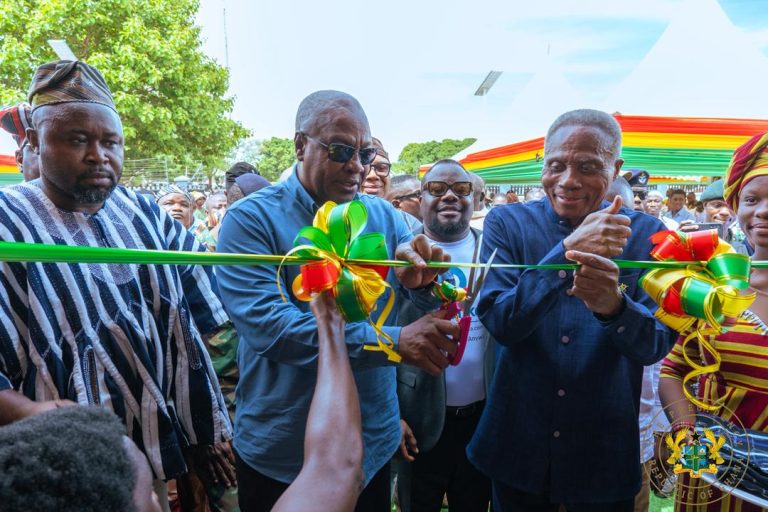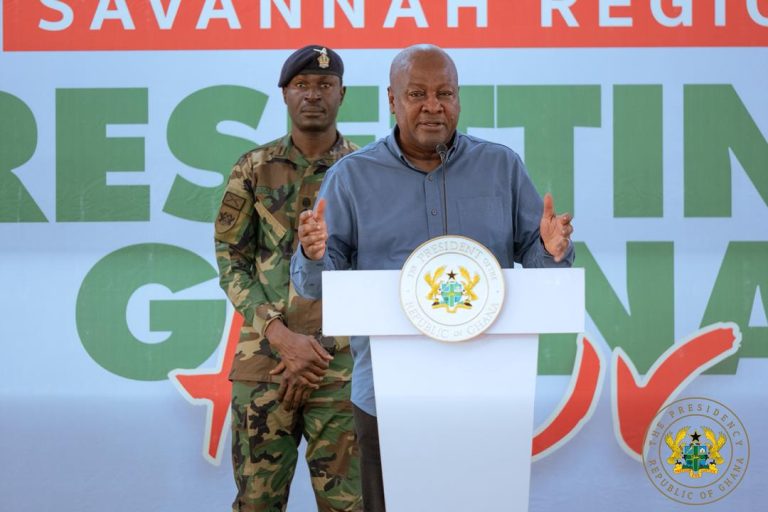

One hundred and seventy-two communities in the Savannah region that have never had access to electricity are set to be connected to the grid, with contracts signed and contractors already mobilising to begin work on the ground.
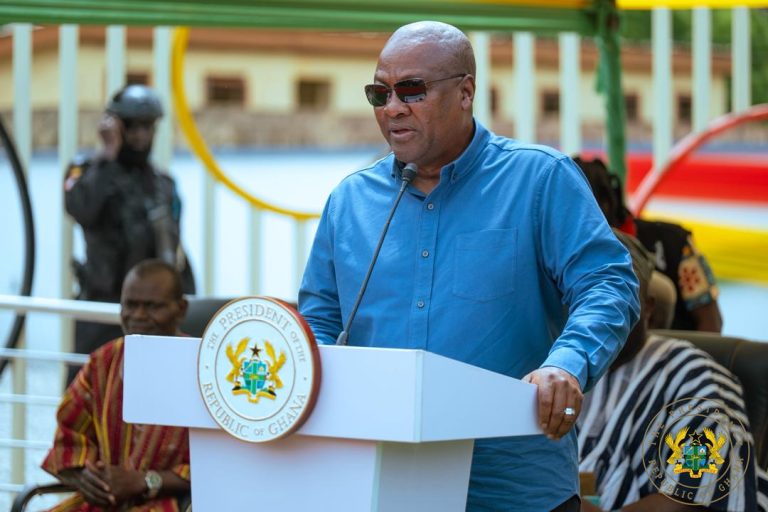
President John Dramani Mahama made the announcement on Saturday during a community engagement in Damango, the Savannah regional capital, on the second day of his Resetting Ghana working tour of the region.
He said the 172 communities form the first phase of a broader electrification push targeting the region.
The President noted that the Savannah region currently has an electricity coverage rate of 68 percent, well below the national average of close to 90 percent, making it one of the least served regions in the country.
He said his administration’s intention is to close that gap as much as possible.
For communities located too far from the national grid to benefit from a direct connection, President Mahama said the government is looking at solar energy solutions as an alternative, ensuring that even the most remote settlements are not left behind.
The electricity announcement was one of several development commitments the President laid out for the region during the engagement.
He said a 300-bed regional hospital with CT scan, MRI and full modern facilities is being built for the Savannah region to serve as a referral centre for all district hospitals. A water project drawing from Yapei is also moving through procurement and a sod-cutting is imminent, with the pipeline set to supply Damango, Busunu, Larabanga and the Mole Game Reserve.
On education, the President confirmed that a new university of science and technology is coming to the region, with a $30 million grant from the Chinese government already secured and a further $100 million being sought from BADEA, the Arab nations development bank.
Infrastructure in all secondary schools across the region is also being expanded, and a new college of education in Bole, with a capacity for 1,500 students, had its sod cut earlier in the tour.
President Mahama said the concentration of investment in the Savannah region reflects a deliberate policy of targeting the country’s poorer regions for special attention, noting that national poverty surveys consistently place the five northern regions at the bottom.
“If we have a situation where a certain part of the country is richer and has more opportunities, what happens is you have migration from the poorer parts of the country to the other parts where there are opportunities,” he said, adding that balanced development was the only sustainable answer.
He also told the gathering that Ghana’s economy has grown from $80 billion to $114 billion within just over a year, moving the country from the 11th to the 8th largest economy in Africa, and that this expansion is what makes the level of investment now going into the region possible.
Richard Aniagyei, ISD