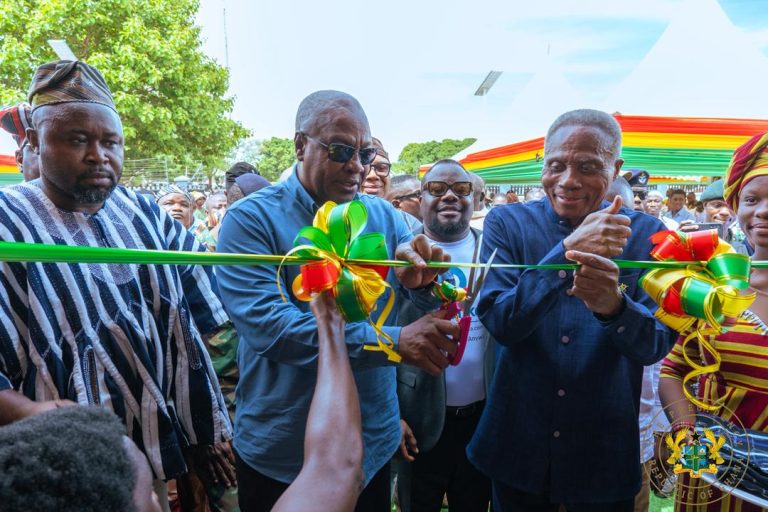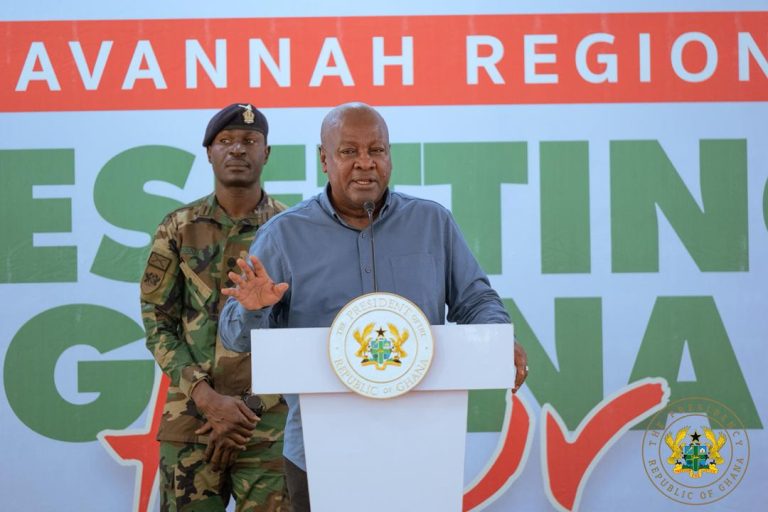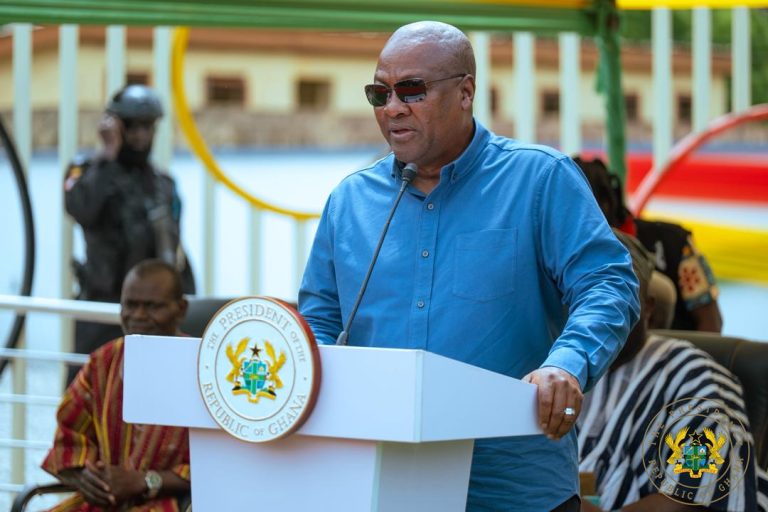
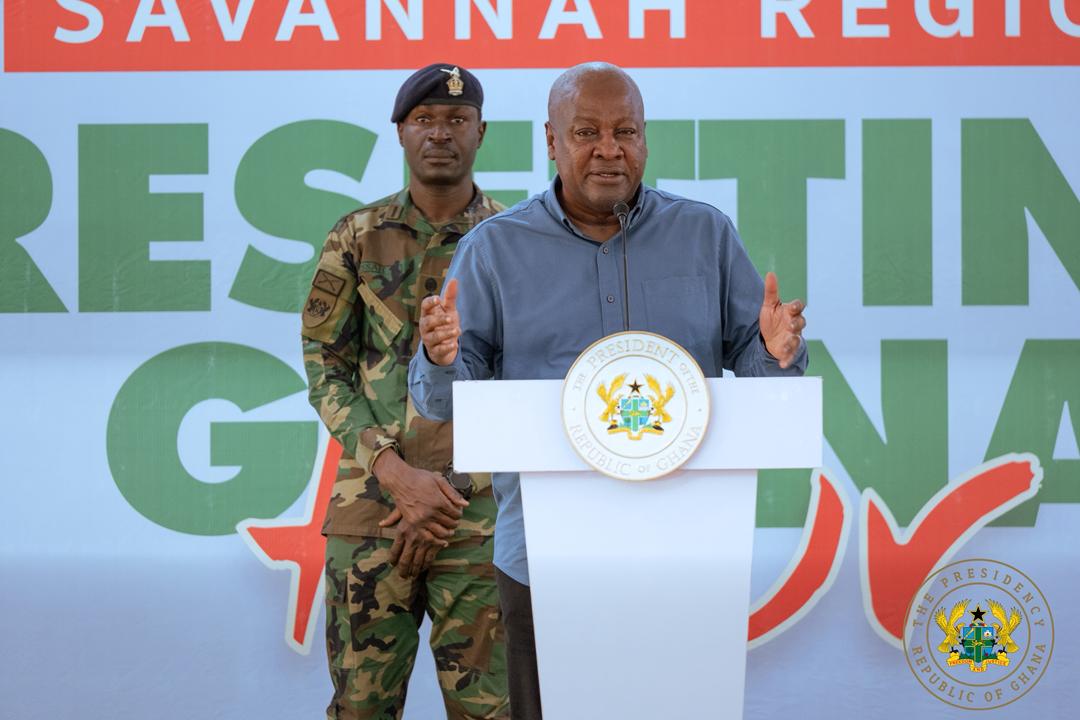
The Savannah region is in line to receive a sports stadium as part of a national programme targeting Ghana’s six newest regions, though the facility will not break ground until next year, with the new regional hospital taking priority in the current budget cycle.
President John Dramani Mahama disclosed the plan on Saturday during a community engagement in Damango, as part of his two-day Resetting Ghana working tour of the Savannah region.
He said the government is building three stadiums this year for three of the six new regions, while the other three receive regional hospitals.
The arrangement will be reversed next year, with the remaining regions getting their hospitals and the others receiving their stadiums.
Because the Savannah region is among those getting a regional hospital this year, its stadium is expected to break ground in the next cycle.
“Once our hospitals are progressing, we will also get the sports stadia to start,” President Mahama said.
The regional hospital itself is a 300-bed facility with modern equipment including X-ray, CT scan and MRI machines.
It will serve as a referral centre for all district hospitals across the Savannah region, handling cases that go beyond the capacity of district-level facilities. Mahama said he was driving to the Swalipi site after the engagement to inspect the proposed location for the hospital.
Beyond health infrastructure, the President outlined a broad package of investments for the region.
A water project drawing from Yapei is moving through procurement and heading toward a sod-cutting, with the pipeline set to supply Damango, Busunu, Larabanga and the Mole Game Reserve with clean water.
On electricity, contracts have been signed and contractors are mobilising to connect 172 communities that currently have no access to power.
The region’s electricity coverage stands at 68 percent against a national average of close to 90 percent, and Mahama said the goal is to close that gap.
A new university of science and technology is also coming to the region, with $30 million already secured as a grant from the Chinese government and a further $100 million being sought from BADEA.
Road projects, a new college of education in Bole and a series of market and agricultural facilities round out the investment package the President laid out during his two-day visit.
The President framed all the investments within the context of a strengthening economy, telling the gathering that Ghana’s gross domestic product has grown from $80 billion to $114 billion in just over a year, lifting the country from 11th to 8th place among Africa’s largest economies.
He also announced that Ghana has reached the end of its IMF bailout programme, with a final tranche of $380 million expected after board approval, and expressed hope that the country would never again need to seek an IMF bailout.
“We must be able to manage our affairs in such a way that we don’t go begging anybody to come and bail us out,” he noted.
Richard Aniagyei, ISD