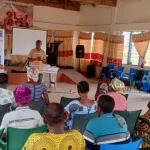
The Upper East Regional Peace Council has trained residents of Kadema in the Upper East Region to strengthen their capacity to prevent conflicts, promote peaceful coexistence, and respond to threats of violent extremism.
The two-day training forms part of the Preventing and Responding to Violent Extremism in the Atlantic Corridor Project, being implemented with support from the United Nations Development Programme (UNDP) and funding from the Embassies of Denmark and Norway.
During the training, the Upper East Regional Executive Secretary of the Peace Council, Mr Damien Asobayire, said the intervention was necessitated by the identification of Kadema as a potential conflict flashpoint due to underlying vulnerabilities within the area.
He explained that the training was aimed at equipping participants with practical skills to identify early warning signs of conflict and violent extremism, and to take appropriate action to prevent escalation.
“As part of this intervention, we are strengthening community-level structures to ensure timely detection, reporting, and response to threats. The goal is to empower the people themselves to take ownership of peacebuilding efforts,” he said.
Mr Asobayire noted that the training would culminate in the formation of a nine-member Local Peace Committee (LPC) to serve as a community-based platform for dialogue, mediation, and coordination of peace activities.
He said the committee would comprise representatives from key stakeholder groups, including the traditional leadership, youth, women, minority groups, persons with disabilities, and actors within the local mining sector.
According to him, the LPC would operate for a four-year term and develop action plans tailored to address specific conflict risks identified within the community.
Judith Twumwaa, ISD