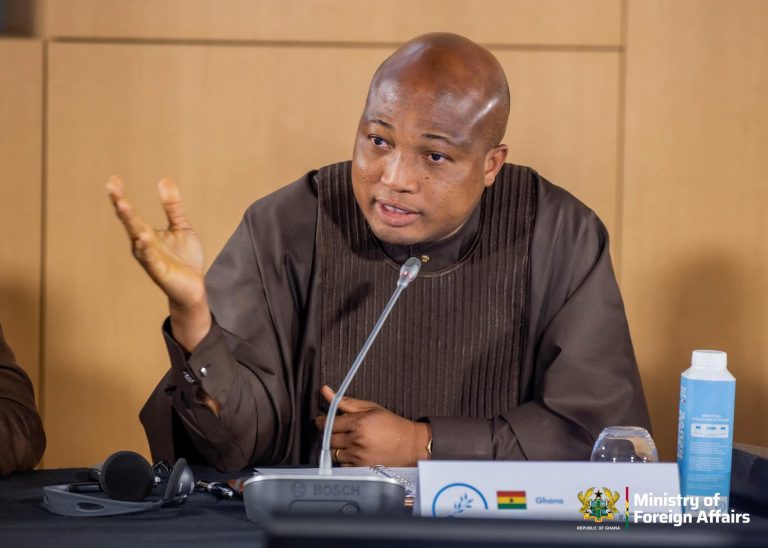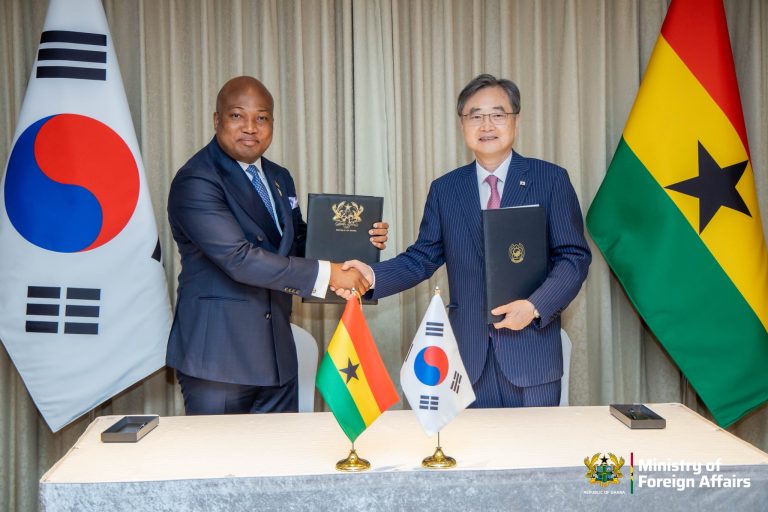
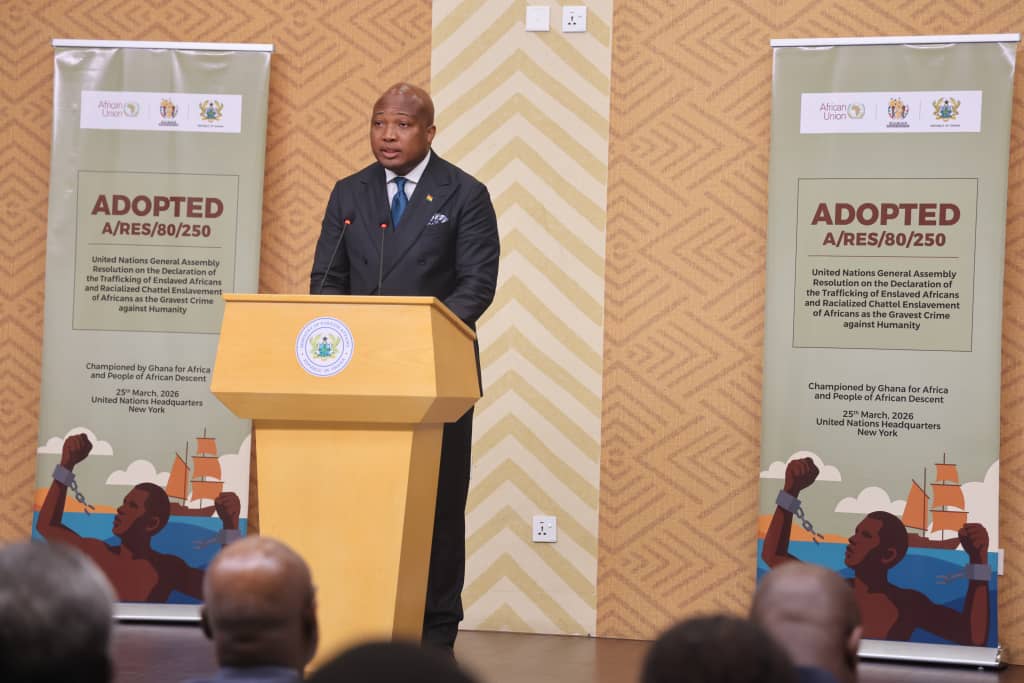
The Minister for Foreign Affairs, Mr Samuel Okudzeto Ablakwa, has described the adoption of the United Nations General Assembly Resolution as a step that opens a new phase in the global push for reparatory justice.
Addressing the media on Tuesday in Accra, the Minister said the resolution, which declares the trafficking of enslaved Africans and racialised chattel enslavement as the gravest crime against humanity, reflects years of advocacy by African states and their partners.
He noted that expectations around reparations go beyond direct financial payments.
“The recovery of stolen artefacts, which have great cultural and spiritual significance for our people, is one of the many reparatory justice initiatives we are pursuing,” he stated.
He added that the process must also confront present-day inequalities linked to slavery, noting that “the vestiges of slavery continue to this day, and structural inequalities still affect people of African descent in areas such as employment and education, and we expect this process to lead to the dismantling of those structures.”
On compensation, Mr Ablakwa clarified that African leaders are not pursuing personal gain.
He said they were not interested in direct payments and that the effort was not a profit-making venture, but there was a need for financial support for programmes such as skills training, public health and psychosocial care.
Responding to concerns that major economies such as the United Kingdom and the United States are not endorsing reparations, he said, the process would require sustained engagement.
“We know this will not be easy, but this outcome should give us hope that when we stay united, progress is possible,” he stated.
He said Ghana would continue to work with partners, including Caribbean states, to build consensus.
“We are maintaining the coalition we have built, and even those who abstained have another opportunity to join us,” he said.
According to the minister, Ghana would maintain diplomatic relations with countries that opposed or abstained from the resolution and continue to engage all partners.
“We are not declaring hostility, but there are principles we will not compromise on,” he said.
Joyce Adwoa Animia Ocran, ISD