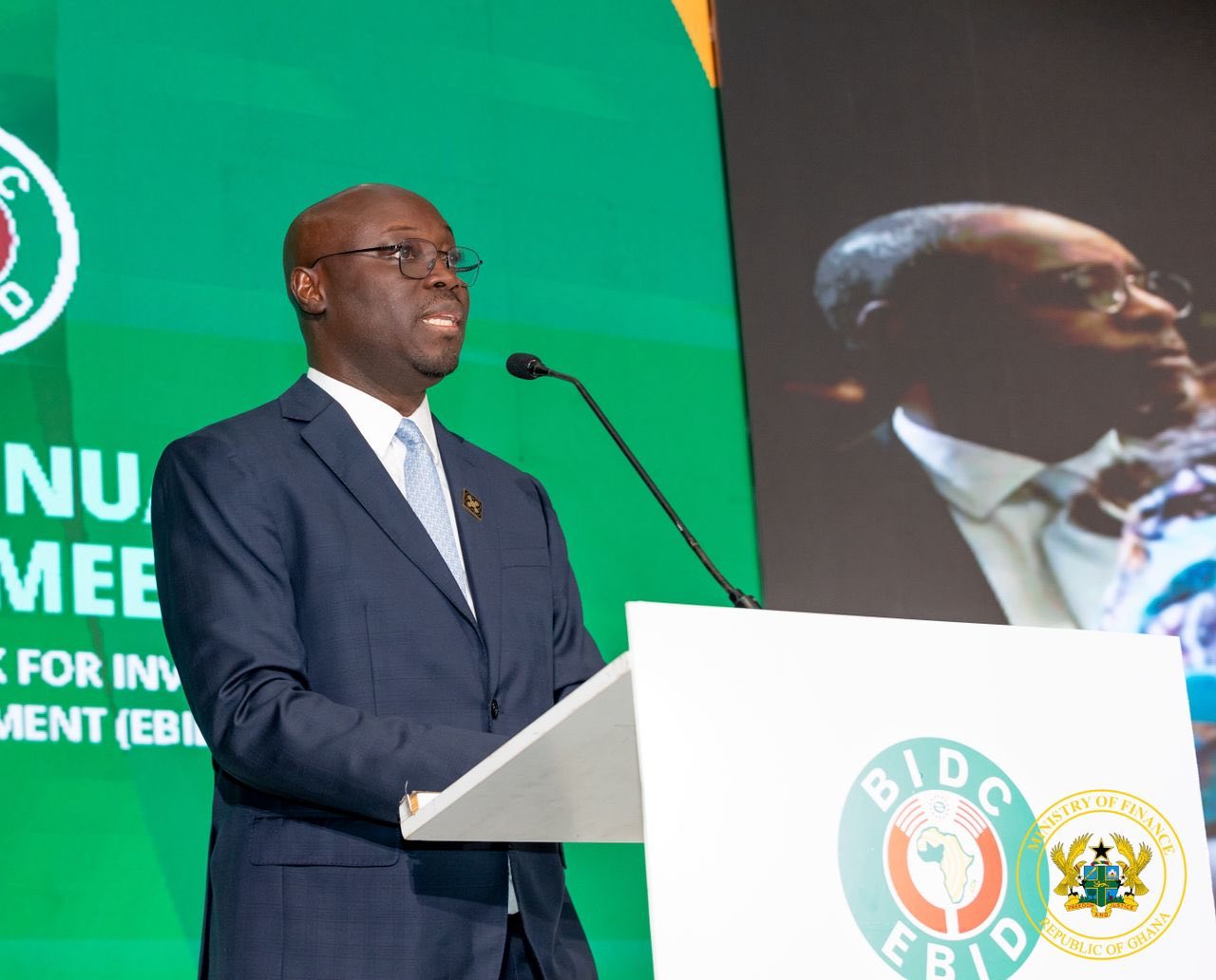
Ghana’s Finance Minister and Chairman of the Board of Governors of the ECOWAS Bank for Investment and Development (EBID), Cassiel Ato Forson, has called on member states to urgently meet their capital commitments to the regional bank, warning that delays could undermine its ability to finance critical development projects across West Africa.
He said this on Monday at the opening of the 24th Ordinary Session of the Board of Governors of the ECOWAS Bank for Investment and Development in Accra.
Dr Forson welcomed delegates on behalf of President John Dramani Mahama and highlighted both the achievements and challenges facing the institution.
The Minister noted that the Bank operated in a difficult global environment in 2025, marked by uneven growth patterns, geopolitical tensions, and trade uncertainties; however, EBID demonstrated resilience and strengthened its role as a driver of regional development.
According to him, the Bank recorded strong financial growth, with its balance sheet expanding from $1.97 billion in 2024 to $2.39 billion in 2025, while profits rose by 13.3 per cent to $9.75 million.
He added that operational performance also improved significantly, with project approvals increasing by 50 per cent and commitments rising by over 83 per cent to $813.77 million, particularly in energy and transport infrastructure.
The Minister also mentioned that EBID mobilised substantial resources, including over $510 million and €310 million, which were fully deployed into priority projects, alongside an additional $100 million in capital mobilisation.
He further highlighted key institutional milestones, including reaffirmed credit ratings by Moody’s and Fitch, accreditation with the Green Climate Fund, and the opening of a regional office in Abidjan to enhance project delivery and regional engagement.
Nonetheless, Dr Forson raised concerns over delays in capital contributions by member states. He recalled a 2022 Board decision to increase EBID’s authorised capital to $3.4 billion and noted that, although a third tranche of $411.4 million was due by December 2025, only four countries, Ghana, Côte d’Ivoire, Guinea, and Togo, have fully met their obligations.
He urged member states to act with renewed commitment with outstanding arrears estimated at $256 million, stressing that timely payments are critical to strengthening the Bank’s financial capacity and sustaining its development impact.
“Our discussions here in Accra must be rigorous because the decisions we take will shape the economic future of our Bank and the West African region,” he said, calling for bold, decisive, and united action.
He expressed gratitude for the confidence placed in Ghana to chair the Board over the past year and commended the leadership of EBID President George Agyekum Donkor and his team for their commitment and professionalism.
He concluded by encouraging delegates to experience Ghana’s culture and hospitality, expressing hope that their stay would be both productive and memorable.
Deborah Narkie Nartey, ISD