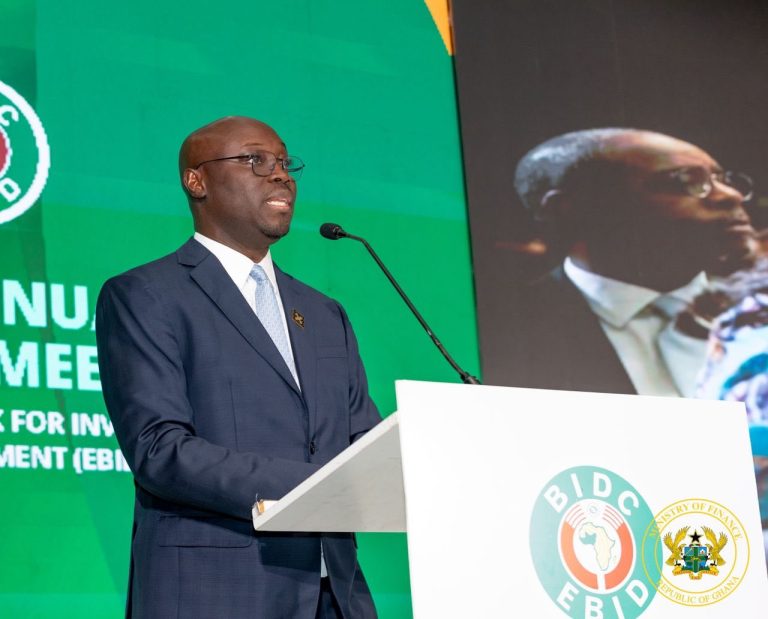

Deputy Minister for Finance, Thomas Nyarko Ampem, has called on all stakeholders to rally behind the newly launched Ghana Infrastructure Plan (GIP), describing it as a defining step toward building a modern, connected, and resilient nation.
Speaking at the launch of the infrastructure plan, Mr Nyarko Ampem reaffirmed the government’s commitment to ensuring that the GIP becomes the cornerstone of Ghana’s infrastructure transformation agenda.
“This launch is a milestone that marks a decisive step toward transforming our nation’s infrastructure landscape and accelerating Ghana’s journey toward sustainable and inclusive growth,” he said.
He noted that the Ghana Infrastructure Plan is a practical expression of President Mahama’s vision for continuity and long-term national development that transcends political cycles.
He added that the Plan not only sets a clear roadmap for infrastructure investment but also strengthens coordination and accountability across government and private sector actors.
He clarified that the Ministry of Finance is particularly focused on three imperative essentials for success, which are collaborative financing, effective coordination, and strategic communication.
According to him, these pillars will ensure that the Plan does not merely remain a policy document but becomes a living framework that drives real transformation.
“We at the Ministry of Finance stand ready to co-lead on all fronts. Infrastructure financing is a foremost priority of President Mahama’s government. Through the Big Push Initiative, we have allocated GH¢13.9 billion, which is part of a US$10 billion medium-term programmed financing to accelerate infrastructure expansion,” he declared.
He revealed that the government is strengthening the Ghana Infrastructure Investment Fund (GIIF) to serve as a key vehicle for blended financing, while reforming the Public-Private Partnership (PPP) framework to attract more private capital into major infrastructure projects.
Mr Ampem emphasised that, beyond technical soundness, the success of the Ghana Infrastructure Plan would depend heavily on strategic communication and public engagement.
“This Plan represents a grand national vision; we must communicate it effectively to inspire collective ownership and attract private sector partnerships for its implementation,” he said.
He reaffirmed the Finance Ministry’s readiness to partner with the NDPC, Parliament, and the private sector to effectively execute the Plan, stressing that its full implementation would mark a turning point in Ghana’s economic renewal.
Deborah Narkie Nartey, ISD