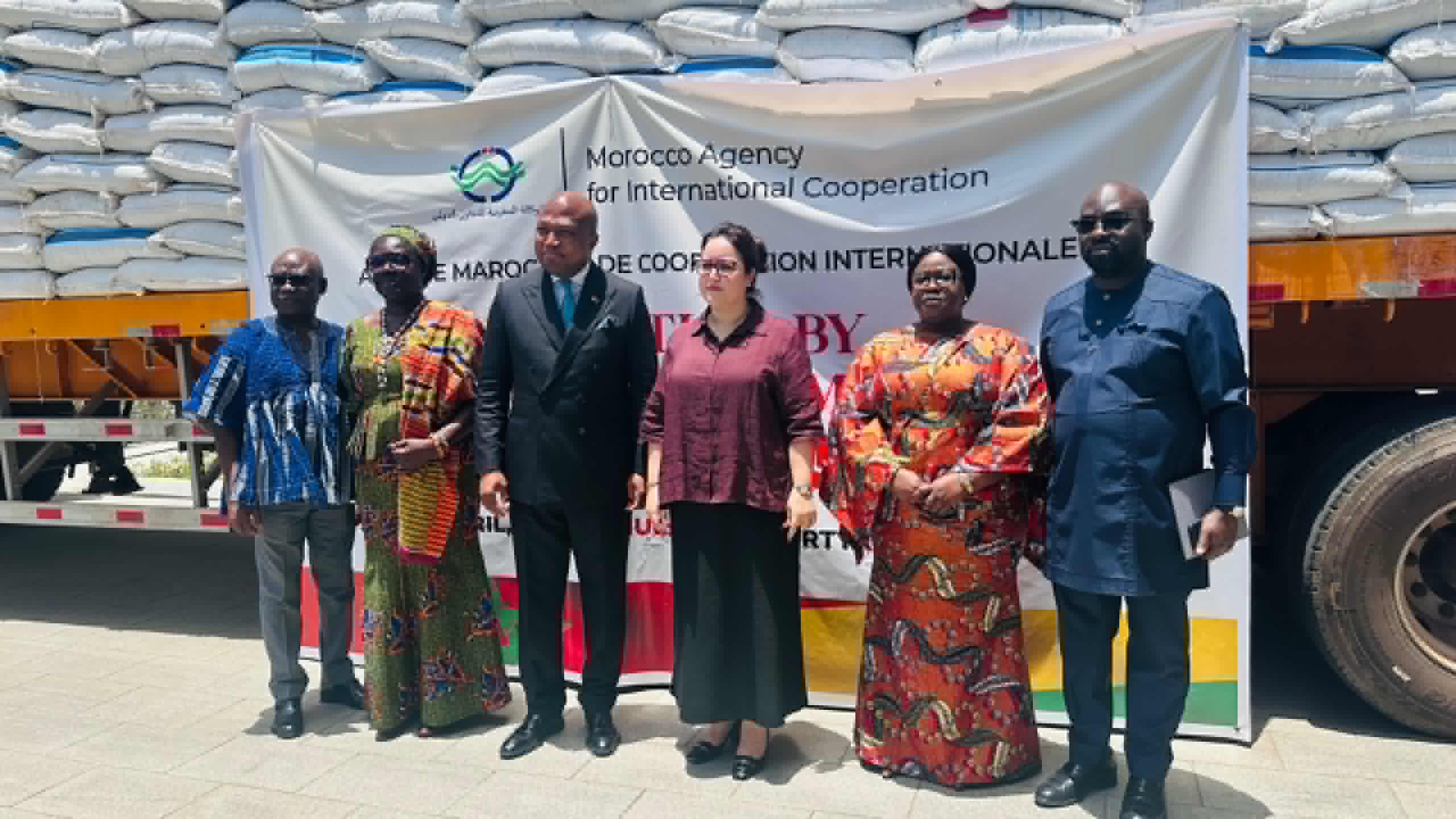
Ghana has received a second consignment of 2,000 metric tons of fertiliser from the Kingdom of Morocco, as cooperation between the two countries continues to expand across agriculture and other sectors.
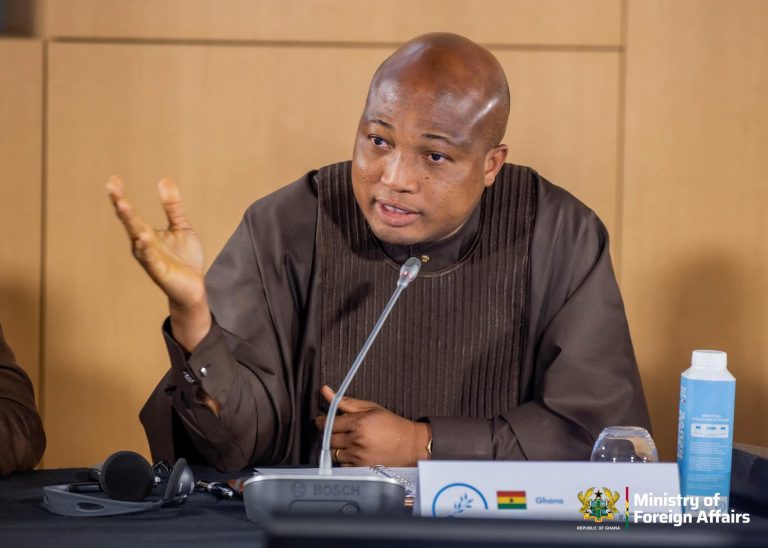
Speaking at the handover ceremony on Wednesday in Accra, the Minister for Foreign Affairs, Mr Samuel Okudzeto Ablakwa, expressed appreciation to Morocco on behalf of the government and people of Ghana.
He described the donation as a reflection of the growing relations between the two countries and recalled his engagements with Morocco’s Foreign Minister, Nasser Bourita, during a recent visit.
“I expressed our desire to deepen our cooperation in agriculture because I noted that the Kingdom of Morocco has a comparative advantage when it comes to fertiliser production. They have the capacity, the plans, the know-how, and they are very advanced in scientific research into seed production,” he said.
Mr Ablakwa said Morocco responded by sending technical experts to Ghana, leading to closer collaboration with institutions such as the Council for Scientific and Industrial Research.
He added that, beyond donations, Ghana would be working with Morocco to build its own fertiliser production capacity.
“We are in the process of establishing our own fertiliser manufacturing plant where we can also produce because of the strong technical collaboration that is going on,” he said.
The Minister noted that cooperation between the two countries has expanded into travel, tourism, business and sports, noting that both countries have eased visa requirements, leading to increased movement of people.
“We have agreed with Morocco that there is a need to ease visa restrictions, since then, travel, particularly for tourism and business, has doubled as compared to the pre-visa waiver regime,” he added.
He said the fertiliser would support government programmes aimed at boosting food production and reducing imports.
He added that the consignment would support the Feed Ghana initiative, which focuses on irrigation, improved seedlings and livestock production.
“This is coming at a very opportune time where we seek to boost agriculture production and improve our capacity for food security,” he said.
Mr Ablakwa also pointed to global supply challenges linked to tensions in the Middle East, which have affected fertiliser availability and prices.
“Fertiliser is not easy to come by these days, and it is not cheap. At this time of global difficulty, our good friends, the Kingdom of Morocco, have made them available to Ghana so that we do not face the difficulties that other countries are facing,” he noted.
He assured that the fertiliser would be distributed directly to farmers, as was done with the previous consignment.
On her part, Morocco’s Ambassador to Ghana, Imane Ouaadil, described the donation as a reflection of the strong relationship between both nations and a shared commitment to improving agricultural outcomes across the continent.
She explained that the support aims to help Ghana boost agricultural productivity and respond to challenges such as climate change and market instability.
“Through this second donation, Morocco reaffirms its firm resolve to support the efforts of the Republic of Ghana in enhancing agricultural productivity and strengthening the resilience of its farming sector,” she added.
Joyce Adwoa Animia Ocran, ISD