President John Dramani Mahama has announced plans to bring private sector operators into the metering and billing operations of the Electricity Company of Ghana, after revealing that commercial and technical losses in the country’s power distribution system stood at 42 percent before the current government took office.
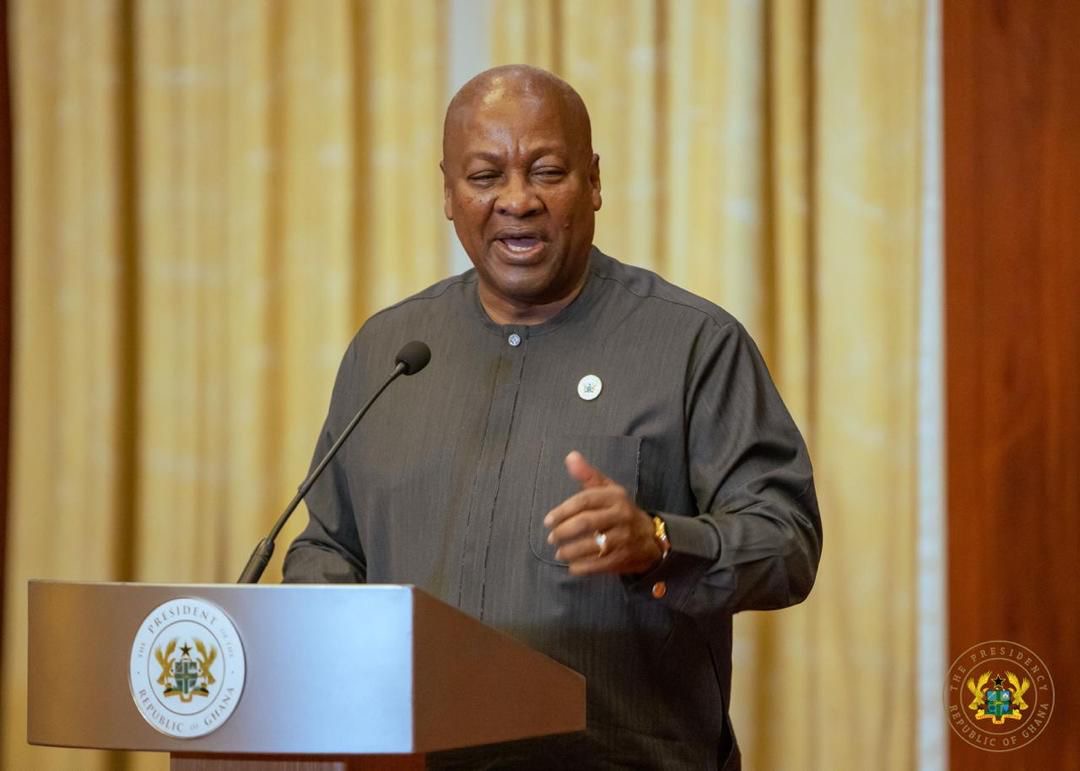
Speaking during a question and answer session at a dialogue with the Ghanaian community in Philadelphia on Thursday, President Mahama said ECG would remain state-owned and no workers would lose their jobs, but that private concessionaires would be brought in to handle metering and billing across defined geographic zones in a model he described as bulk metering.
Under the arrangement, a private company awarded a concession for a particular area would be responsible for ensuring every property in that zone had a functioning meter, that every meter was read and that bills were paid.
President Mahama used East Legon as an example of how such a concession could work in practice.
He said the 42 percent loss rate, a combination of electricity that was stolen, meters that were not read and bills that were not collected, was a figure that would have driven any private enterprise into bankruptcy.
The only reason ECG had survived, he said, was precisely because it was state-owned.
“Any private enterprise that loses 42 percent of your product, there is no way. You go bankrupt,” President Mahama told the gathering.
He said bringing private sector discipline to metering and billing would, over time, reduce losses and bring down electricity tariffs for all consumers.
He acknowledged that the reform had already met resistance but said the government would continue engaging stakeholders to build the case for change.
President Mahama also touched on renewable energy, saying Ghana was far short of its target of generating 10 percent of its energy mix from solar. With available power capacity at roughly 4,300 megawatts, the 10 percent target translated to more than 400 megawatts of solar, yet current solar generation stood below 100 megawatts.
The ministry, he said, was already inviting tenders from companies willing to close that gap.
Richard Aniagyei, ISD