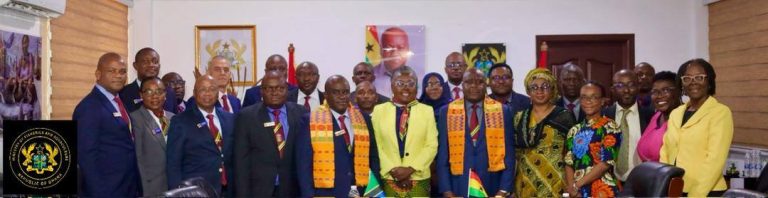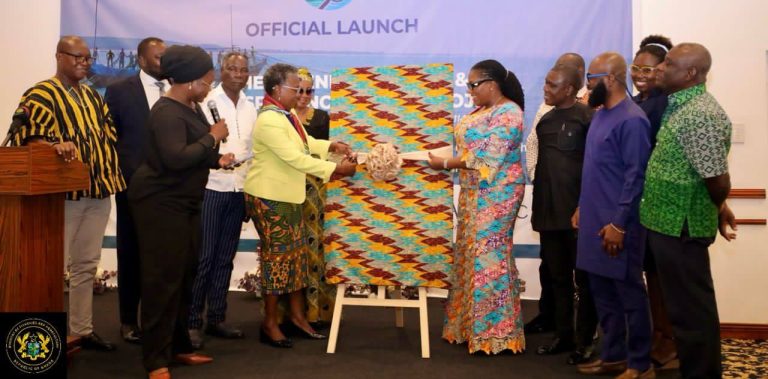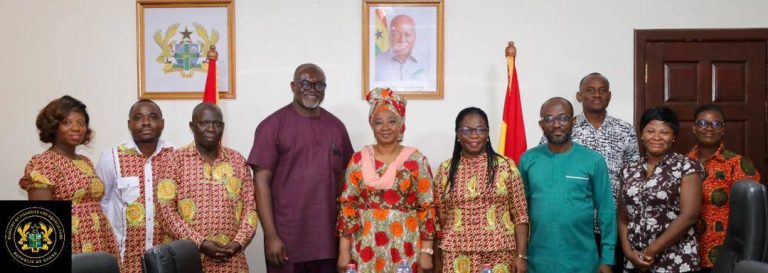

The Minister for Fisheries and Aquaculture, Mrs Emelia Arthur, has stated the government’s commitment to pursuing research-led partnerships that will strengthen Ghana’s capacity in aquaculture expansion, fisheries resource management, disease control, value addition and human capital development.
She said this on Monday at a high-level meeting with the Chinese Academy of Fishery Sciences (CAFS) in Beijing.
She noted that the engagement forms part of Ghana’s 24 Hour Economy and Accelerated Export Development Programme, which focuses on food security, job creation, export growth and industrial competitiveness through international partnerships.
The Minister stated that fisheries and aquaculture remain central to Ghana’s development agenda because of their role in food and nutrition supply, employment and export earnings.
Both sides discussed cooperation in aquaculture and mariculture, including marine fish farming, species diversification beyond tilapia, inland and coastal cage systems and large-scale production for domestic and export markets. Talks also covered capture fisheries, with attention given to joint fish stock assessments, marine surveys, improved fisheries data, action against illegal fishing and responses to climate change impacts on marine ecosystems.
Ghana highlighted gaps in fish disease surveillance and biosecurity, and the Chinese Academy expressed readiness to support the development of national biosecurity frameworks, laboratory systems and training for fisheries officers and researchers. Human capital development featured strongly, with discussions on scholarships, postgraduate training, technical exchanges, expert deployments and collaboration with Ghanaian universities and research institutions.
The two sides explored cooperation in fisheries infrastructure and value chain development, including fish processing facilities, cold chain systems, feed production, aquaculture demonstration parks and support for the second phase of development of the Fisheries College.
The Ministry of Fisheries and Aquaculture will now lead follow-up actions, including drafting a framework memorandum of understanding, identifying joint research programmes, planning technical missions to Ghana, establishing training and scholarship arrangements and exploring infrastructure investment models. A joint working group involving the Ministry, the Chinese Academy and the 24-Hour Economy Secretariat is expected to be set up by February 2026, with pilot projects planned for mid-2026.
The meeting also built on the 66-year partnership between Ghana and China, with fisheries and aquaculture identified as an area for sustained cooperation. The Chinese Academy of Fishery Sciences, which operates under China’s Ministry of Agriculture and Rural Affairs, presented its research capacity, including its network of specialised institutes, scientists, research vessels and ongoing projects across Africa and other regions.
The Ministry stated that the partnership is expected to support national food security, export growth under the African Continental Free Trade Area, research-informed policy and the sustainable development of the blue economy.
It reaffirmed its commitment to ensuring that such cooperation delivers practical benefits for fishers, fish farmers, processors and coastal communities across Ghana.
Irene Wirekoaa Osei, ISD