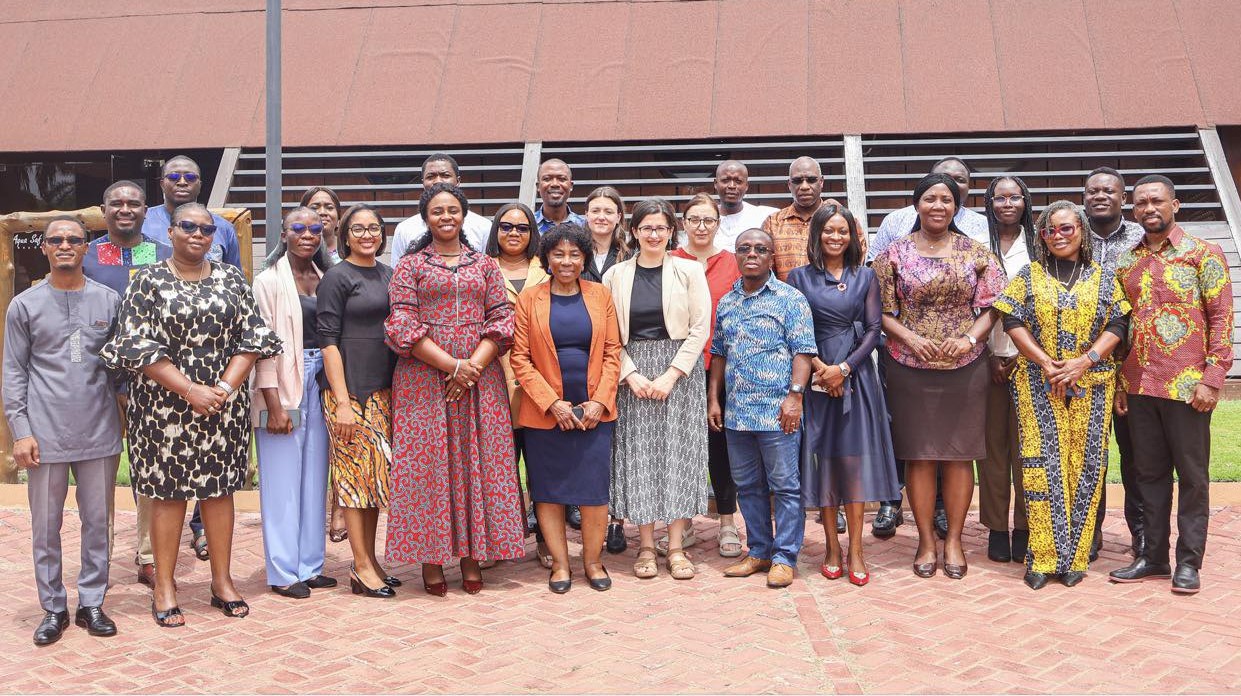
The National Development Planning Commission (NDPC), in collaboration with Results for Development (R4D), the World Bank and UNICEF Ghana, has convened a two-day pilot workshop aimed at strengthening district-level capacity for food systems and nutrition programming.
The workshop held at Aqua Safari Hotel brought together district officials from Ada East, Ningo-Prampram, and South Tongu.
Delivering remarks on behalf of the NDPC Director-General, Mrs Alice Amekudzi stressed the critical importance of food systems and nutrition in Ghana’s development agenda.
She noted that despite progress in policy, the country continues to face a “triple burden” of malnutrition, undernutrition, overnutrition and micronutrient deficiencies largely due to food systems that remain insufficiently resilient, inclusive, and nutrition responsive.
She called for stronger coordination, data-driven decision-making and multi-sectoral collaboration at the district level, where development plans are implemented, and outcomes realised.
According to her, the workshop was designed as a practical exercise to equip district officials with tools to develop evidence-based, costed and actionable programmes aligned with Ghana’s Medium-Term Development Plans.
Technical sessions facilitated by NDPC officials, including Mr Nii-Odoi Odotei and Mr Daniel Amofa, focused on the food systems and nutrition priorities under Ghana’s 2026–2029 Medium Term National Development Policy Framework.
In a statement delivered on behalf of the District Chief Executive, Ada East District Coordinating Director, Madam Jean Ameley Tagoe, she described the initiative as timely and strategic.
She noted that despite the availability of food resources, poor nutrition outcomes persist in many communities, particularly among children and women of reproductive age.
Madam Tagoe further highlighted that many interventions are often implemented in isolation, limiting their impact and welcomed the integrated approach promoted through the workshop, stressing that district-level planning remains the most effective entry point for addressing food systems and nutrition challenges.
She urged participants to take ownership of the process and ensure that outcomes from the workshop are incorporated into district development priorities and programmes.
Deborah Narkie Nartey, ISD