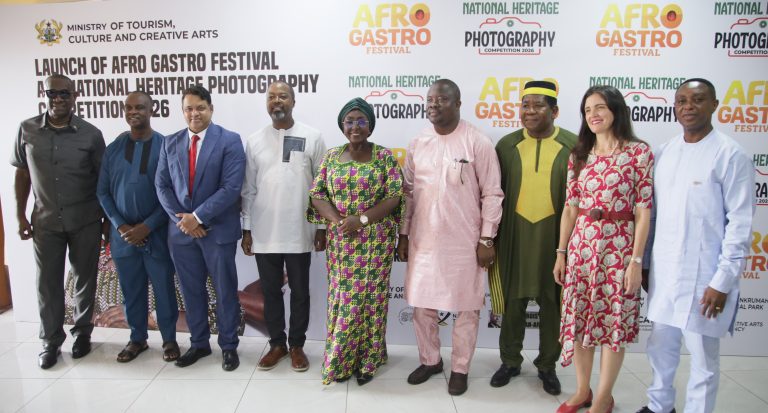

The Government of Ghana, through the Ministry of Tourism, Culture, and Creative Arts, has appointed renowned cultural advocate and entrepreneur, Ms Hamamat Montia, as Cultural Ambassador for Ghana’s Shea Butter, reaffirming its commitment to positioning culture as a central driver of national development.
Speaking at a special recognition ceremony on Tuesday in Accra, the Minister, Madam Abla Dzifa Gomashie, described the appointment as both symbolic and strategic, noting that culture was not peripheral but foundational to Ghana’s identity, economy, and global relevance.
According to the Minister, Shea Butter represents more than a cosmetic product; it’s a living expression of indigenous knowledge, women’s enterprise, sustainability, and African ingenuity.
She stressed that by elevating Shea Butter, Ghana would be elevating rural communities, particularly women whose livelihoods depend on the value chain.
Madam Gomashie further called for deliberate investment in culture as a national strategy, citing Ghanaian textiles such as fugu and kente as examples of how culture sustains livelihoods across agriculture, fashion, tourism, and trade.
She reaffirmed the government’s resolve to reposition culture as a source of dignity, jobs, and global visibility, working in partnership with creatives, traditional authorities, influencers, and cultural ambassadors.
The Minister called for a renewed call for sustained investment in culture and announced plans for further cultural engagements, including a Shea Butter culinary and cultural showcase scheduled for March 14, Ghana Culture Day.
Ms Hamamat Montia traced her inspiration to her grandmother, an indigenous herbalist whose deep knowledge of plant medicine earned recognition both locally and internationally. She used the story to underscore the importance of valuing ancestral knowledge beyond formal documentation, describing culture as wealth passed from generation to generation.
Ms Montia highlighted the economic potential of the Shea Butter industry, noting that the global market’s value was over US$2.6 billion, yet Africa captures only a fraction of that value.
She called for a shift from exporting raw materials to producing premium, ethical and competitive African products, positioning Ghana as a global hub for natural skincare.
She also appealed for partnerships and investment to scale production, citing growing international demand and renewed global attention on Ghanaian heritage following recent high-profile cultural engagements.
Judith Twumwaa, ISD