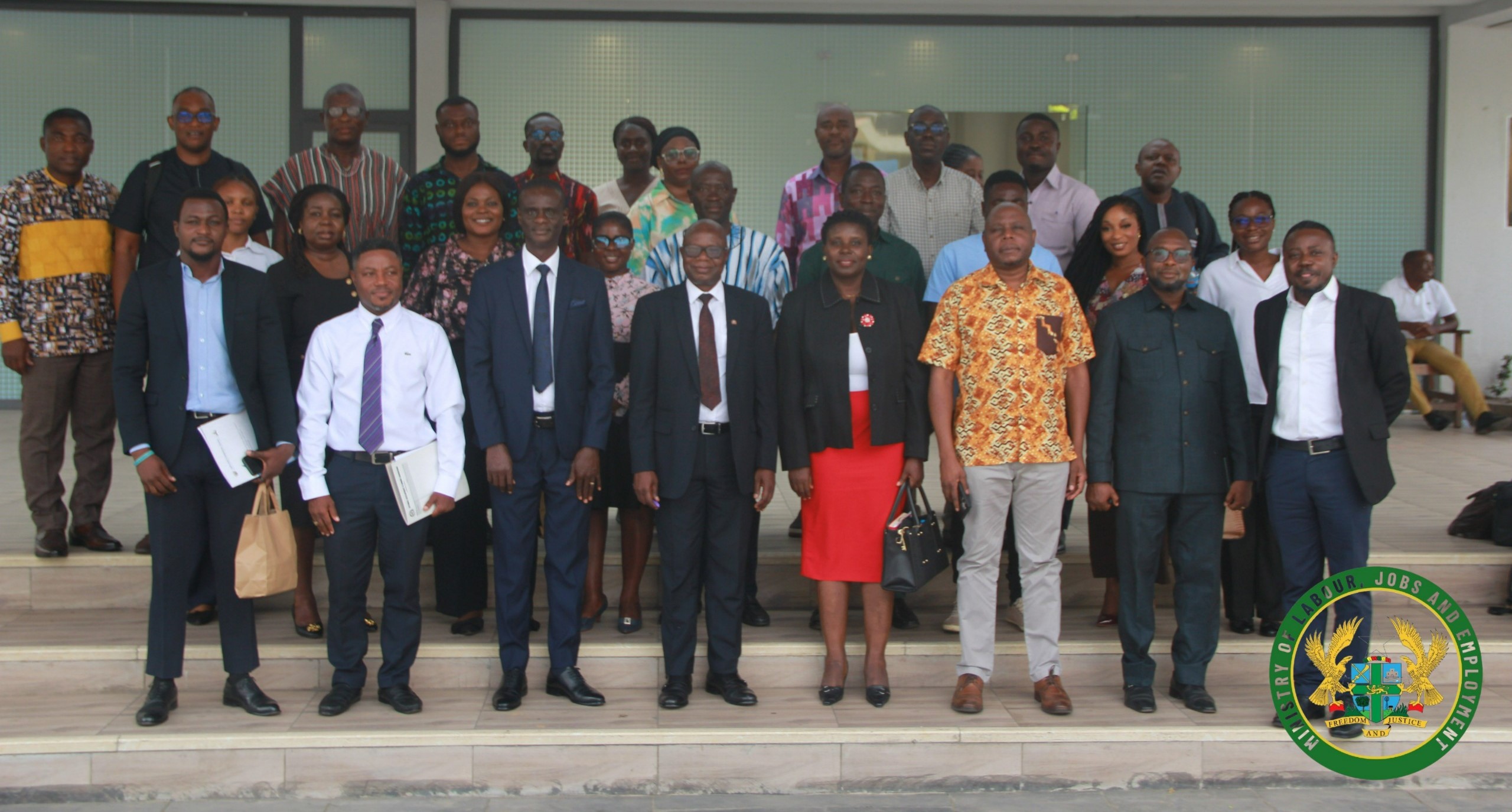
The Chief Director of the Ministry of Labour, Jobs and Employment, Mr Hamidu Adakurugu, has reaffirmed the government’s commitment to aligning environmental sustainability with decent work.
He said this on Monday during a workshop in Accra to review the draft Ghana Green Jobs Inventory Report.
He stated that the inventory provides an assessment of the supply side of Ghana’s green labour market, which maps existing skills, occupations, and human capital across the country. He noted that the report aims to clarify current and emerging green employment opportunities in key sectors.
“It also identifies skills gaps and training needs, analyses relevant labour market dynamics, and outlines strategies for a fair transition for all workers,” he added.
Mr Adakurugu said the evidence from the report will guide policy, inform the review of the National Green Jobs Strategy, and shape skills development reforms.
He said the report was intended to support small businesses and strengthen collaboration between government and private partners. He emphasised that the workshop was an opportunity for participants to refine the report’s data and analysis.
He urged open dialogue and constructive recommendations to ensure the findings reflect national priorities.
The Chief Director stated that the workshop outcomes will help Ghana prepare for green growth opportunities while ensuring decent work and social protection.
On his part, Mr Lloyd Ngo, of the International Labour Organisation (ILO), noted that the exercise highlighted several critical issues, particularly the need for stronger policy coherence among institutions involved in green jobs development.
He stated that stakeholder coordination on the platform has been limited over the past two years and urged renewed collaboration.
“This inventory gives us a strong national baseline to work with. With this, we can track our progress annually in green jobs creation and measure how well the country is building its green economy,” he said.
Mr Ngo reaffirmed the ILO’s commitment to supporting the Ministry of Labour, Jobs and Employment and other partner institutions to effectively monitor green job development across the country, adding that what cannot be measured cannot be properly tracked.
The outcomes of the validation process are expected to strengthen Ghana’s preparedness to create sustainable green jobs while promoting social protection and decent working conditions nationwide.
Priscilla Osei-Wusu Nimako, ISD