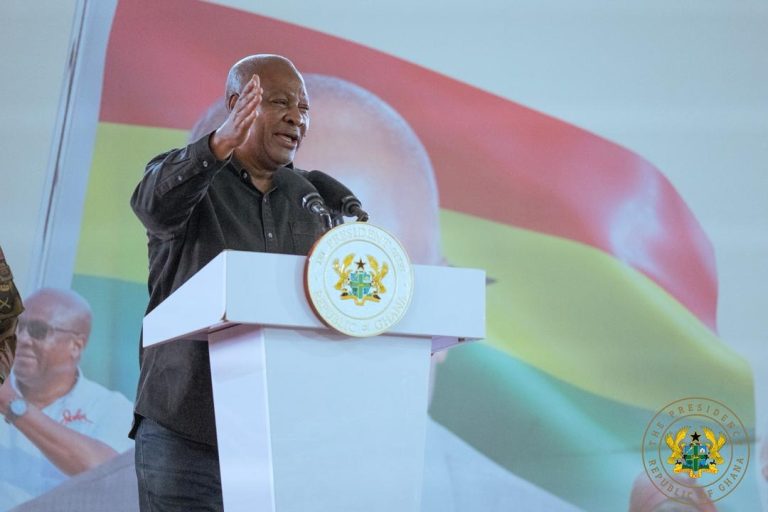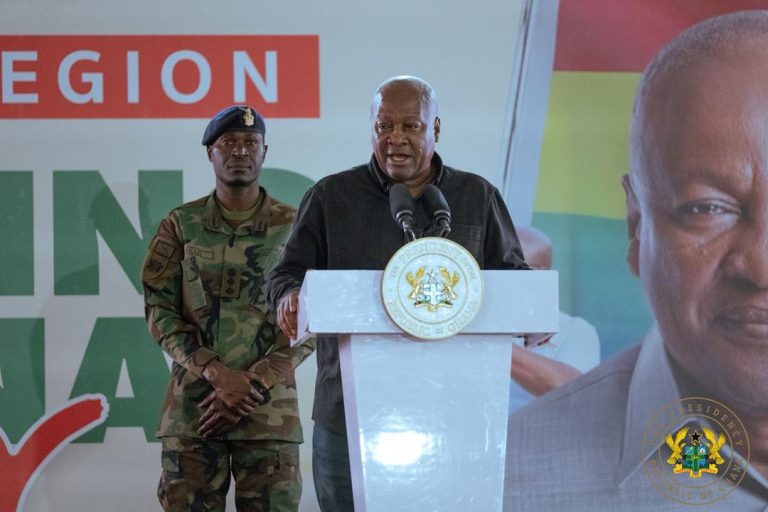
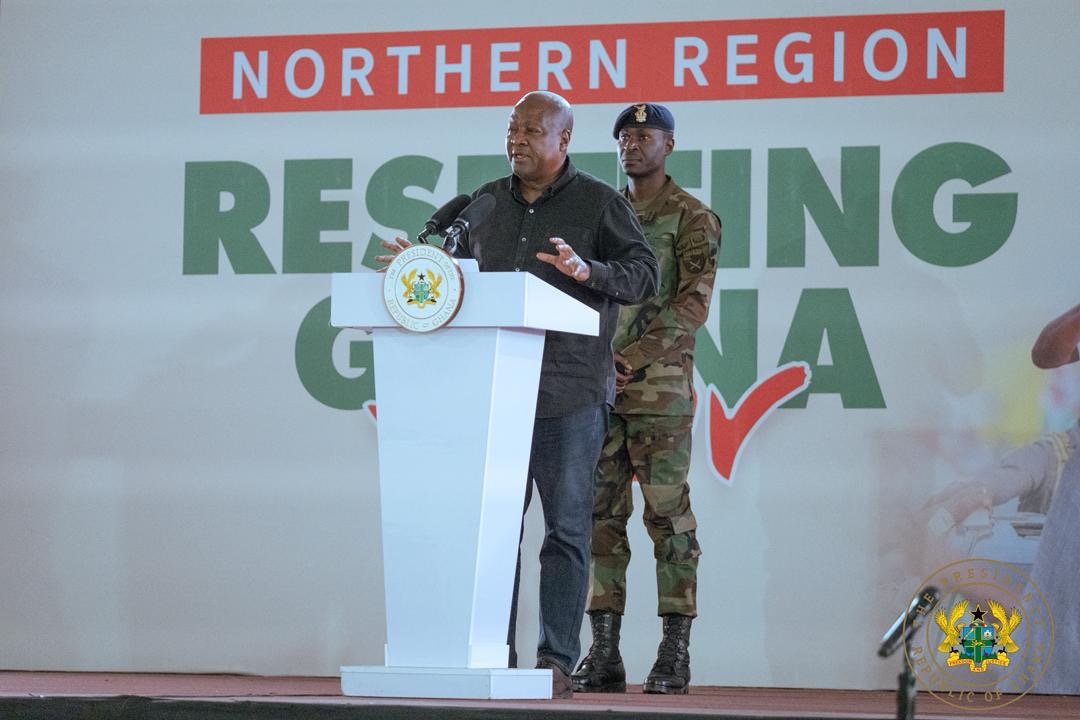
President John Dramani Mahama has assured Ghanaians that the country’s economy remains sound and resilient in the face of global pressures, pointing to a sharp drop in inflation, a stable currency and carefully managed fuel prices as evidence that the administration has the situation firmly in hand.
The President gave the assurance on Sunday during the ResettingGhana citizens engagement at the University for Development Studies in Tamale, where he addressed concerns about the impact of the ongoing US-Israel-Iran conflict on Ghana’s economy.
Drawing a direct comparison with the United States, Mahama noted the scale of the fuel price shock being felt in more exposed economies.
He added that Ghana’s economic management had shielded citizens from a similar fate.
The President said inflation, which stood above 24 percent when his administration took office, had been brought down to under four percent and the government intended to keep it there through continued fiscal discipline.
He acknowledged that Ghana’s debt default had shut the country out of the international capital market, making it impossible to access external loans, but argued that the constraint had in some ways been a blessing, forcing the government to fund its programmes from its own resources.
“Until this administration, I didn’t believe that we could do some of the things we are doing using our own money,” he stated.
He also pointed to a build-up in foreign reserves, saying the country’s reserves had grown from 8.3 billion dollars when his administration came to office to 13.9 billion dollars, a buffer he said had helped insulate the economy from external shocks.
On fuel, the President said the government had absorbed part of the cost at the pump to prevent prices from rising further, keeping diesel at 16.10 cedis per litre when it should otherwise have reached 19 cedis.
He also expressed hope that ongoing peace talks in Pakistan between the parties to the conflict would lead to a resolution that would ease global oil market pressures.
President Mahama said the IMF programme under which Ghana had been operating was due to end in May but stressed that fiscal discipline would be maintained regardless.
“It is not because of the IMF. We must be able to maintain fiscal discipline so that we are able to save resources to invest in the things that are important to our people,” he said.
Richard Aniagyei, ISD