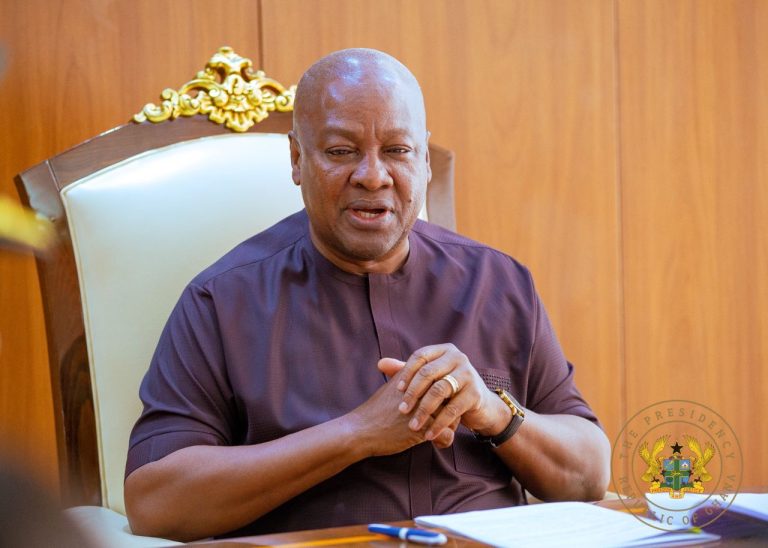
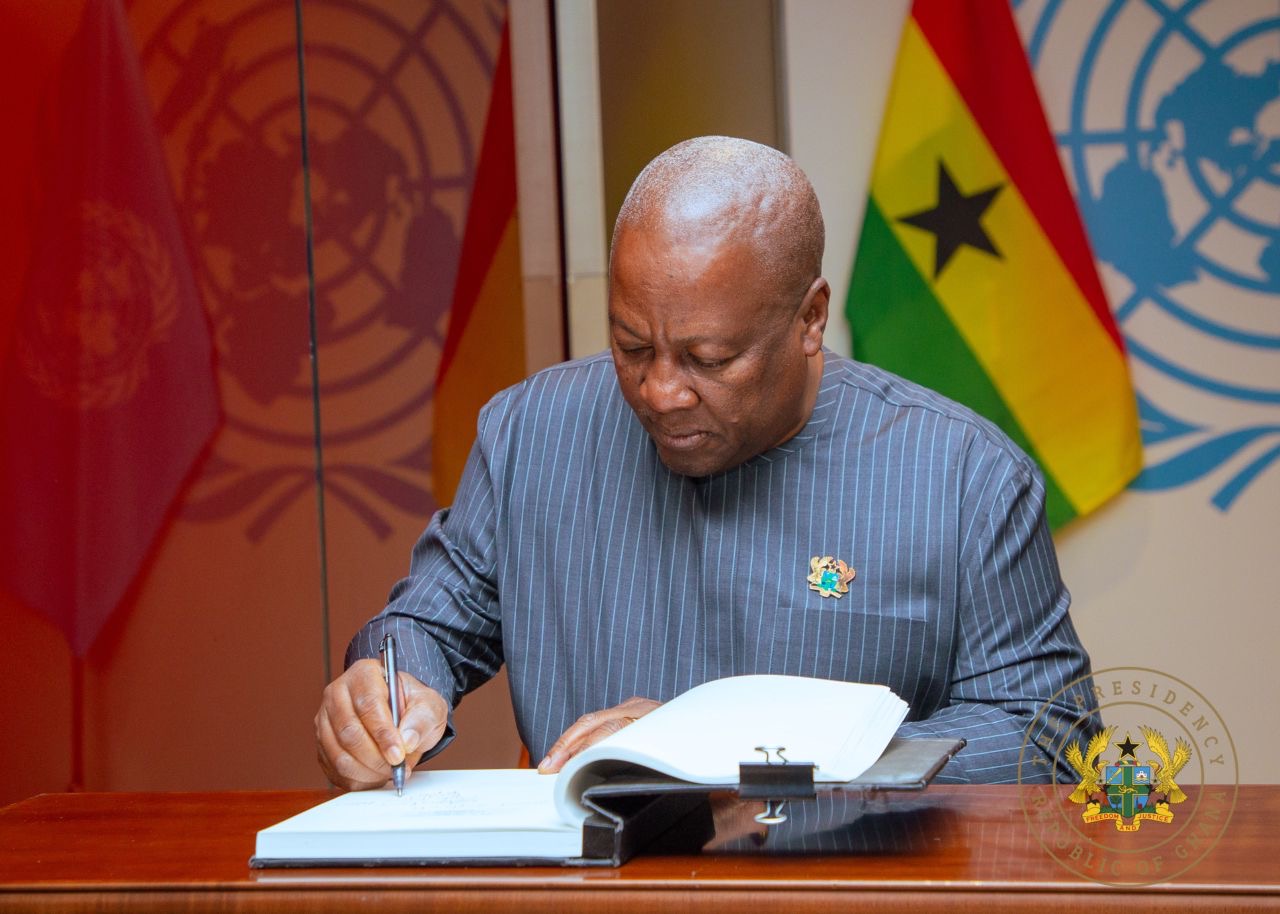
President John Dramani Mahama has called on the United Nations General Assembly to adopt a resolution declaring the transatlantic slave trade the gravest crime against humanity, urging member states to back what he described as a step toward justice and healing for millions of victims.
Speaking at the plenary of the UN General Assembly to mark the International Day of Remembrance of the Victims of Slavery and the Transatlantic Slave Trade on Wednesday, President Mahama said the draft resolution, tabled on behalf of the African Group, followed months of consultations among African countries, scholars and legal experts.
“This draft resolution is the result of months of consultation and consensus-building… with the sole aim of achieving a united front and grounding the final outcome in truth, compassion, and moral conscience,” he said.
He reminded the Assembly that Ghana had, during the 80th session of the UN General Assembly last year, pledged to move the motion seeking formal recognition of the transatlantic slave trade as the gravest crime against humanity.
According to him, the move is not only about remembrance but also about ensuring that the global community does not lose sight of one of history’s darkest chapters, in which an estimated 13 million Africans were forcibly taken from the continent over several centuries.
“Today, we come together in solemn solidarity to affirm truth and pursue a route to healing and reparative justice,” he said, adding that adoption of the resolution would serve as a safeguard against forgetting.
The International Day of Remembrance, observed every March 25, was established by the UN in 2007 following an earlier decision in 2006.
President Mahama noted that the observance itself represents progress made by the international community in acknowledging the horrors of slavery and keeping its memory alive.
He pointed to ongoing efforts to preserve that memory through education, storytelling, and monuments such as the Ark of Return at the UN Headquarters in New York.
Quoting former U.S. President Theodore Roosevelt, the President said neutrality in the face of moral questions amounts to siding with wrongdoing. He also cited civil rights leader Martin Luther King Jr., noting that justice, though slow, remains inevitable.
He urged member states to support the resolution, framing the decision as a defining moment for the international community.
“On this beautiful day in March, we are called to stand on the right side of history,” Mahama said. “Let our vote on this resolution restore their dignity and humanity.”
The proposed resolution is expected to come before the General Assembly as part of ongoing efforts by African states to seek recognition, accountability and pathways toward reparative justice for the enduring legacy of the transatlantic slave trade.
Richard Aniagyei, ISD