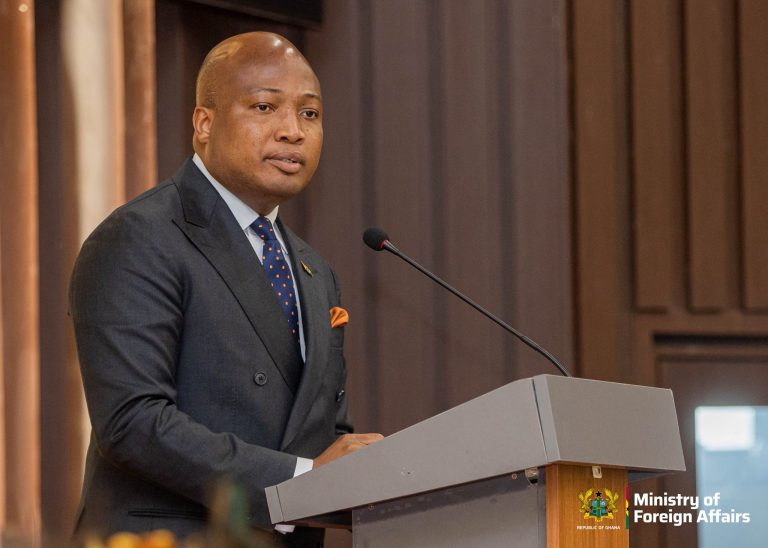
The Chief Director of the Ministry of Foreign Affairs, Ambassador Khadija Iddrisu, has called for urgent action to strengthen multilateral approaches to global security.
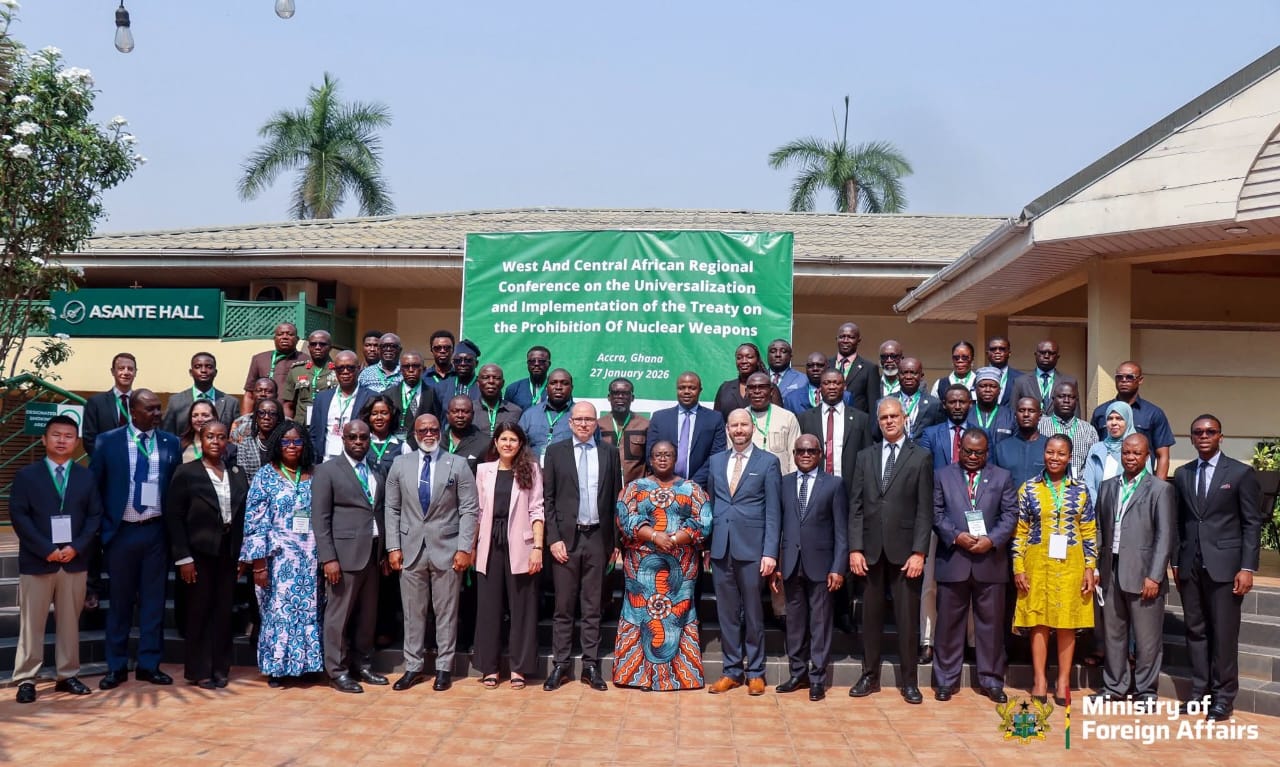
She stated this on Tuesday at the 2026 West and Central African Regional Conference on the Universalisation and Implementation of the Treaty on the Prohibition of Nuclear Weapons (TPNW) in Accra.
The Chief Director emphasised the importance of cooperation and respect for human life as fundamental elements of sustainable security in view of the growing geopolitical tensions around the world.
“We cannot build a secure future on the foundation of weapons of mass destruction”, she added, highlighting Ghana’s long-standing commitment to nuclear disarmament.
She recalled Ghana’s historic role under its first President, Osagyefo Dr Kwame Nkrumah, who cautioned that the possession of nuclear weapons represented “the greatest threat to the survival of mankind,” and emphasised the nation’s longstanding commitment to nuclear disarmament.
Ambassador Iddrisu noted that Ghana’s unanimous parliamentary ratification of the TPNW in June 2025 reaffirmed its moral leadership at a time of heightened global insecurity.
“The prohibition of nuclear weapons is not only a legal obligation, but a moral imperative owed to future generations,” she said, reaffirming remarks by the Minister for Foreign Affairs when he was depositing Ghana’s instrument of ratification at the United Nations.
On her part, the Deputy Head of Mission of the Austrian Embassy in Ghana, Sandra Gintsberger, delivering remarks on behalf of partner states, described the Treaty as offering a paradigm shift by empowering those most affected by nuclear risks.
She affirmed Africa’s collective rejection of nuclear weapons, noting that while the continent has made significant progress, further ratification was essential to strengthen the Treaty’s impact.
She, therefore, urged African States to continue advancing universal adherence to the TPNW, stressing that nuclear weapons do not provide sustainable security but instead represent an existential risk to humanity.
The conference had four (4) thematic sessions examining Africa’s security concerns in the current global context, the humanitarian consequences of nuclear weapons, the provisions and obligations of the TPNW, and pathways toward universalisation and implementation of the Treaty ahead of its First Review Conference in 2026 under South Africa’s presidency.
Speakers at the conference included senior officials from the United Nations Office for Disarmament Affairs (UNODA), the Economic Community of West African States (ECOWAS), the African Union (AU), national security institutions, academia, and civil society.
Joyce Adwoa Animia Ocran, ISD