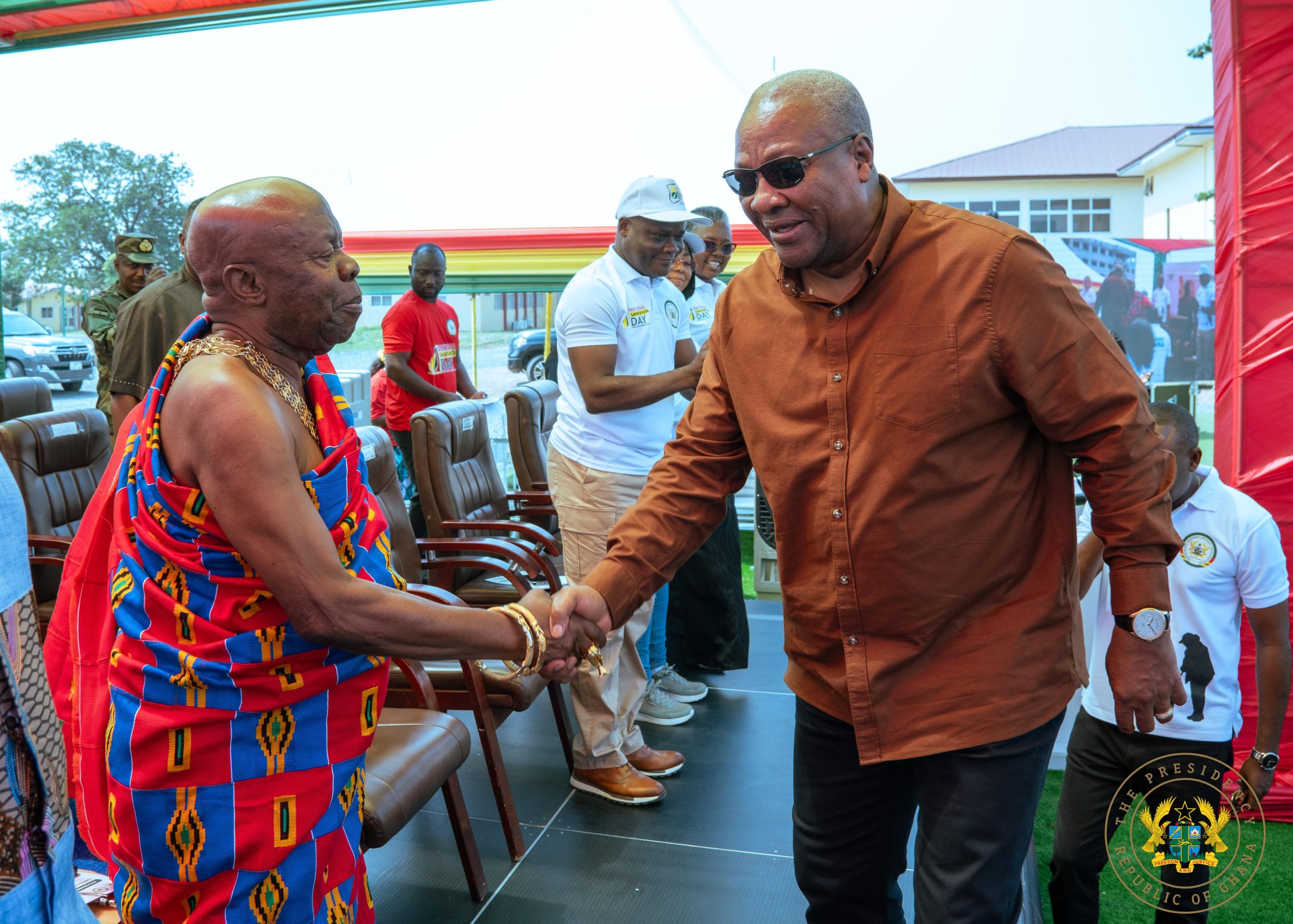
Chiefs will play a central role in Government’s approach to national cleanliness.
In that regard, Government plans to amend Ghana’s 1992 Constitution to restore traditional authorities’ powers over environmental and sanitation matters.
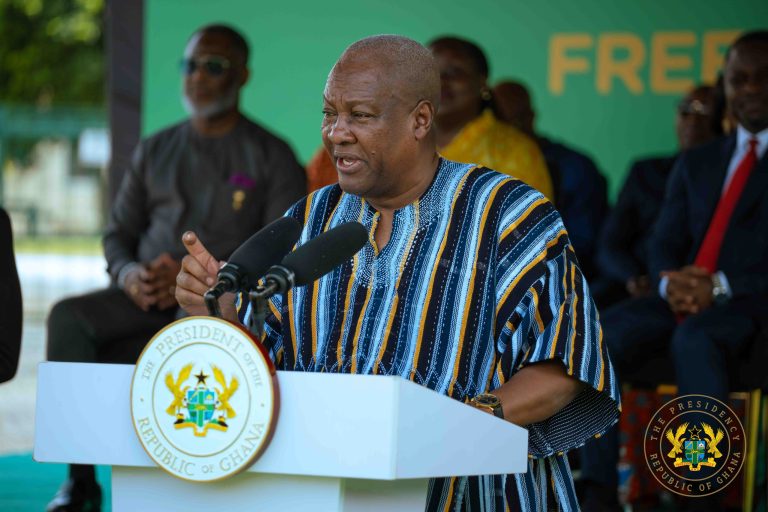
President John Dramani Mahama disclosed this in his address at the relaunch of National Sanitation Day in Accra on Saturday,
“Government will review Chapter 22 of the Constitution, which deals with chieftaincy issues, to reinstate some of the powers that chiefs have lost since independence. I am in favor of restoring some of the authority back to chiefs, especially in respect of our environment and sanitation,
“We have a national constitutional review process ongoing. And in that process, some amendments will be done to the constitution,”the President told the gathering.
He proposed establishing sanitation courts in chiefs’ palaces across the country, working alongside district assemblies to prosecute persistent polluters.
“I believe that in every community there is a chief. And so if in every community there is a chief, we can put a sanitation court in the palace of the chief.
“People who are persistent polluters will be brought to those sanitation courts and they’ll be given the sanctions that they deserve so that we can have cleaner communities, cleaner cities, and cleaner towns,” he explained
As part of his 24-hour economy policy, President Mahama announced new regulations requiring garbage collection and sanitation services to operate primarily during nighttime hours to reduce daytime traffic congestion and public nuisance.
“We want to bring regulation so that a lot of the sanitation work and the garbage collection takes place at night.
“It doesn’t make sense when in the morning, we have gotten up to go to work and we are in the rush hour traffic. And that’s when a garbage truck too has gone to collect garbage and is competing with cars on the road,”the President explained.
The new regulations will particularly affect cesspit emptying services, which he described as creating public health hazards during daytime operations.
“When they come and empty your cesspit, day to daytime, you are carrying this thing around and some of them are not very well maintained so you can see the flies and you can smell the poo-poo following them,” he said. “We must do regulation to ensure that they do that at night so that they are not a public nuisance.”
Drawing from his recent visits to Japan and Singapore, the President argued that modernization should not come at the expense of traditional values around cleanliness.
“Modernization does not mean that we should abandon our value systems. “You go to Japan and Singapore, you won’t see one single piece of paper or plastic anywhere on the ground,” he said.
The President recalled traditional cleaning practices from his childhood, when families would wake at 5 a.m. to sweep compounds and surrounding areas, describing this as “part of African traditional practice” that has since broken down.
He announced plans to work with the Ministry of Education to reintroduce civic education in schools, focusing on courtesy and responsible citizenship from basic through secondary school levels.
Richard Aniagyei, ISD