The government has reaffirmed its commitment to strengthening protection and support systems for survivors of domestic violence and care for victims of abuse across the country.
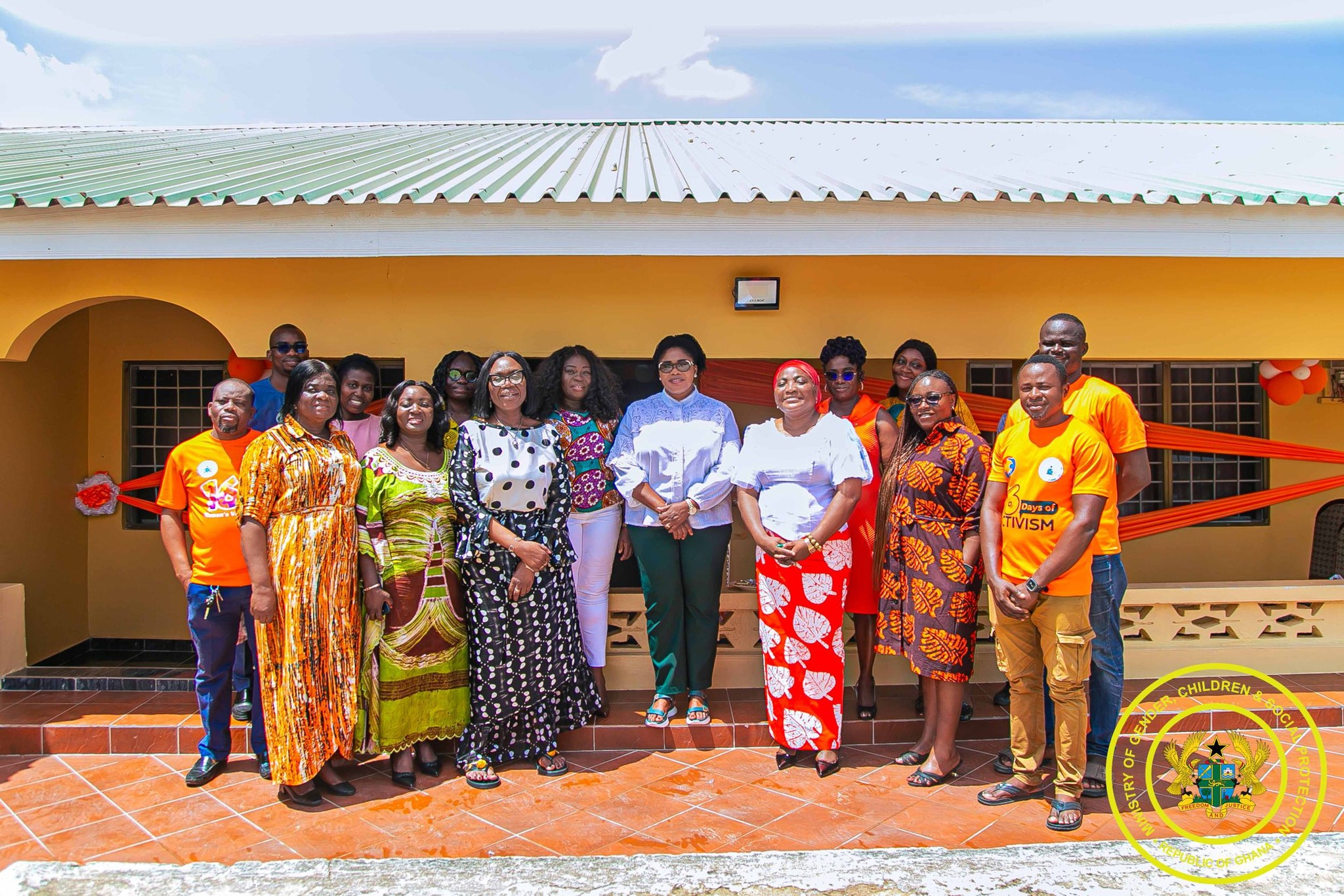
The Minister for Gender, Children and Social Protection, Dr Agnes Naa Momo Lartey, said this at the commissioning of a new shelter for survivors of domestic violence and described it as a place of safety, dignity, hope, and restoration for survivors seeking protection from violence and abuse.
Speaking at the event, Dr Agnes Naa Momo Lartey said domestic violence and gender-based violence continue to affect women, children and other vulnerable groups across the country.
She noted that many survivors are left with physical injuries, emotional trauma, and long-term psychosocial challenges.
According to the Minister, the government has implemented several measures to combat domestic violence, including the enactment of the Domestic Violence Act, the establishment of the Domestic Violence Secretariat, and the creation of the Domestic Violence and Victim Support Unit (DOVVSU).
Despite these efforts, she acknowledged that access to safe shelters for survivors remains limited, making it difficult for many victims to obtain the protection and support they need.
Dr Agnes Lartey explained that the newly commissioned shelter forms part of a broader government agenda under the administration of President John Dramani Mahama to expand shelter and protection services nationwide.
She said the initiative aims to ensure that survivors receive the care, protection, and psychosocial support necessary to recover from abuse and rebuild their lives. She added that shelters play an important role by providing temporary accommodation, counselling, legal assistance, medical care, and rehabilitation services for survivors.
She reaffirmed the government’s determination to prevent domestic violence, protect victims and strengthen rehabilitation and reintegration programmes nationwide.
The Chairperson of the Domestic Violence Management Board, Dr Miriam Iddrisu, together with a representative from UNICEF, commended the Ministry for establishing the facility and called for stronger prevention efforts, increased public education, and effective operational systems to guarantee the shelter’s long-term sustainability.
They called for sustained public education, stronger prevention measures, and improved operational systems to ensure the long-term sustainability and effectiveness of the shelter.
The facility, developed as part of ongoing interventions, is intended to provide safe refuge and essential services for survivors, including counselling, medical care, legal aid, and psychosocial support.
Priscilla Osei-Wusu Nimako, ISD