The National Identification Authority (NIA) has marked 20 years of operation with a renewed call to strengthen Ghana’s National Identity system and expand access to services through the Ghana Card.
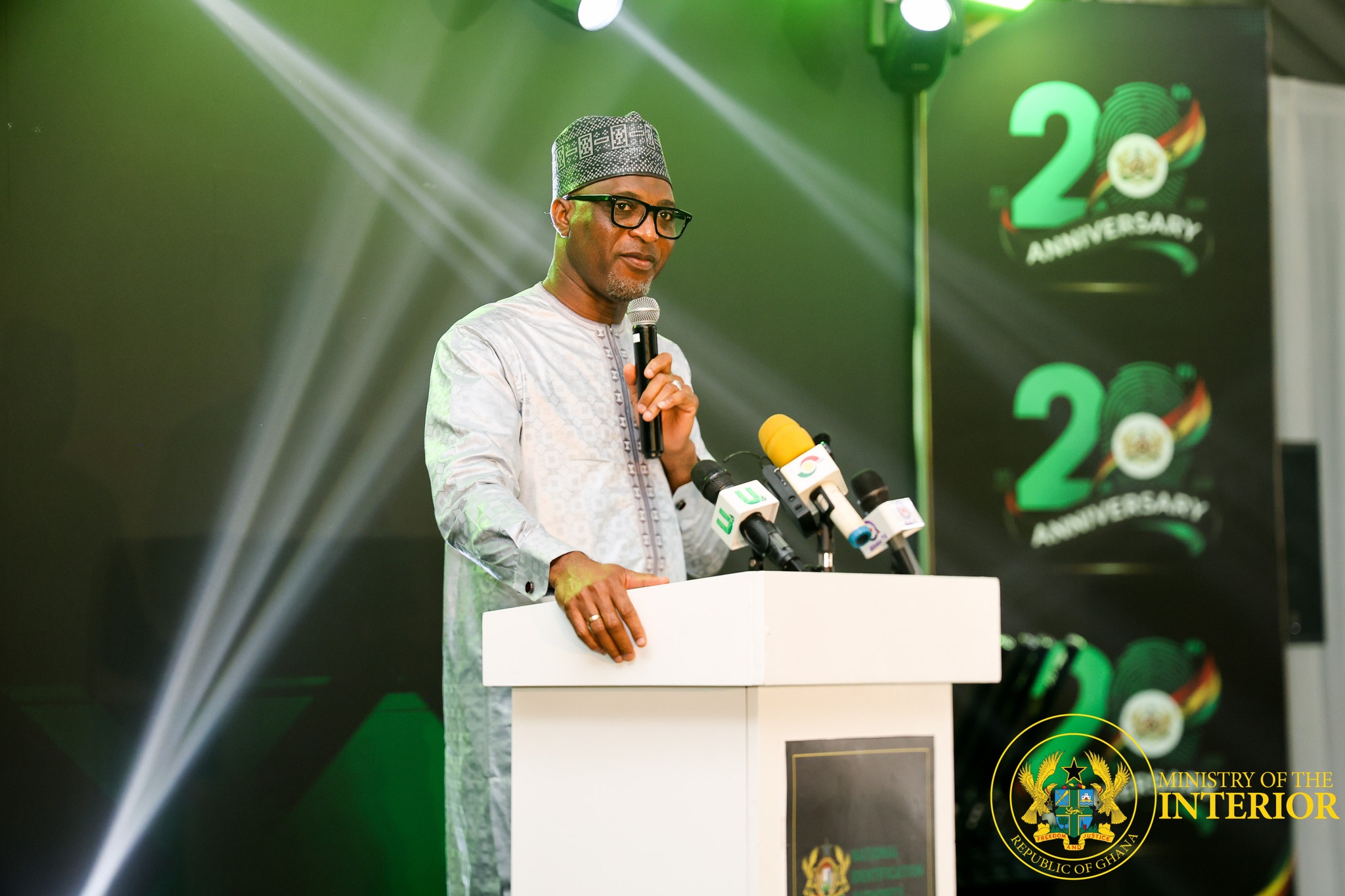
At the launch of the 20th-anniversary celebrations in Accra, the Minister for the Interior, Muntaka Mohammed-Mubarak, described the Ghana Card as more than a national identification document, saying it had become a gateway to financial services, healthcare, telecommunications, and public services.
Speaking on the theme, “Reflecting on the Past, Securing the Future,” the Minister said the NIA had evolved from a conceptual initiative in 2006 into a “resilient and sophisticated biometric identity ecosystem” supporting national security and economic participation.
“When we began this journey, the road was fraught with uncertainty, resources were limited, and expectations were high. Yet through determination and foresight, a solid foundation was laid. Today, the Ghana Card transcends its role as a mere identification document,” he stated.
According to the Minister, the Ghana Card now plays a central role across both public and private institutions, with the biometric identification system gaining widespread acceptance nationwide.
He outlined three major priorities for the Authority going forward: achieving universal registration coverage to ensure no Ghanaian is excluded; protecting the integrity and security of citizens’ data; and driving innovation to make identity services more seamless and accessible.
The Interior Minister assured the Authority of the government’s continued support and encouraged staff and stakeholders to maintain the momentum by pursuing excellence and exploring new opportunities in identity management across the sub-region.
“Building a national identity system is an ongoing journey, one that must evolve alongside our people, our economy, and our national aspirations,” he added.
The Executive Secretary of the NIA, Wisdom Kwaku Deku, also reflected on the Authority’s journey from its formative years to its current role as a central pillar in Ghana’s governance and economic systems.
He highlighted the role of technology in driving operational improvements and upgrades within the Authority, stressing that the Ghana Card is intended to serve as a practical identity tool for accessing services across the country.
Mr Deku thanked Ghanaians for the confidence reposed in the NIA and called for renewed commitment from staff and stakeholders to continue working with vigour, integrity, and purpose.
Judith Twumwaa, ISD