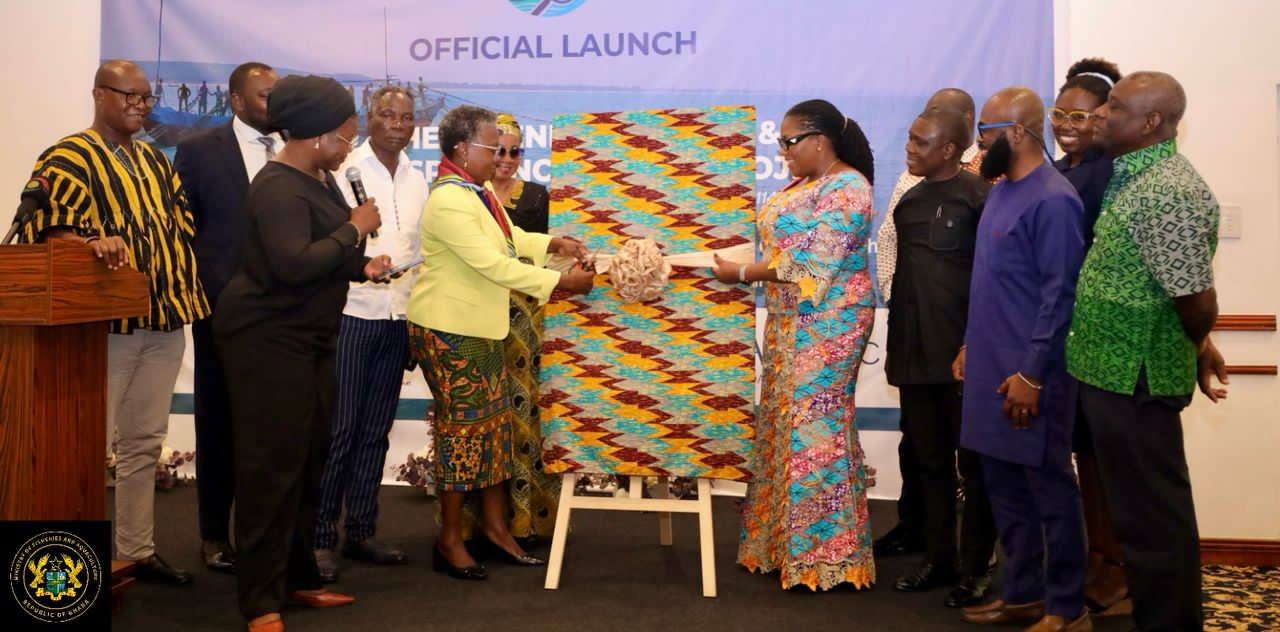
The Minister for Fisheries and Aquaculture, Mrs. Emelia Arthur, has officially launched the Inshore Exclusion Zone Enforcement and Transparency Policies Implementation (IEZET) Project, a three-year initiative aimed at strengthening fisheries governance, improving regulatory enforcement and advancing Ghana’s blue economy agenda.
This was at a stakeholder engagement held on Thursday in Accra, with a key focus on the operationalisation of the Fisheries and Aquaculture Act, 2025 (Act 1146).
The IEZET Project is designed to promote sustainable and resilient fisheries through stronger enforcement of regulations, enhanced transparency across the value chain, inclusive governance systems, and spatial protection measures.
The Project is in collaboration with the Ministry of Fisheries and Aquaculture and the Fisheries Commission, with funding support from the Oak Foundation and Oceans 5.
Madam Arthur described the initiative as both timely and strategic, noting its strong alignment with Ghana’s reform agenda under the new fisheries legislation, emphasising that the real challenge lay in effective implementation.
She called on all stakeholders to sustain their collaboration to ensure the project delivered tangible results, particularly in rebuilding fish stocks and protecting the country’s marine resources.
She further expressed optimism about ongoing efforts to develop supporting regulations under the new law, describing the pace of progress as encouraging and affirmed the government’s commitment to the long-term sustainability of the sector.
The Country Director of the Global Fisheries and Resilience Alliance (GFRA), Mr. Socrates Segbor, outlined the scope of the project, noting its alignment with national development priorities and its consortium-based implementation model.
He acknowledged the critical role of implementing partners and funding organisations in driving the initiative forward.
The initiative is expected to contribute to improved food security and support Ghana’s broader blue economy transformation. It will also lay the groundwork for a National Marine Protected Areas policy, with specific interventions planned for the Volta Estuary.
Adwoa Koramah Anokye-Gyimah, ISD