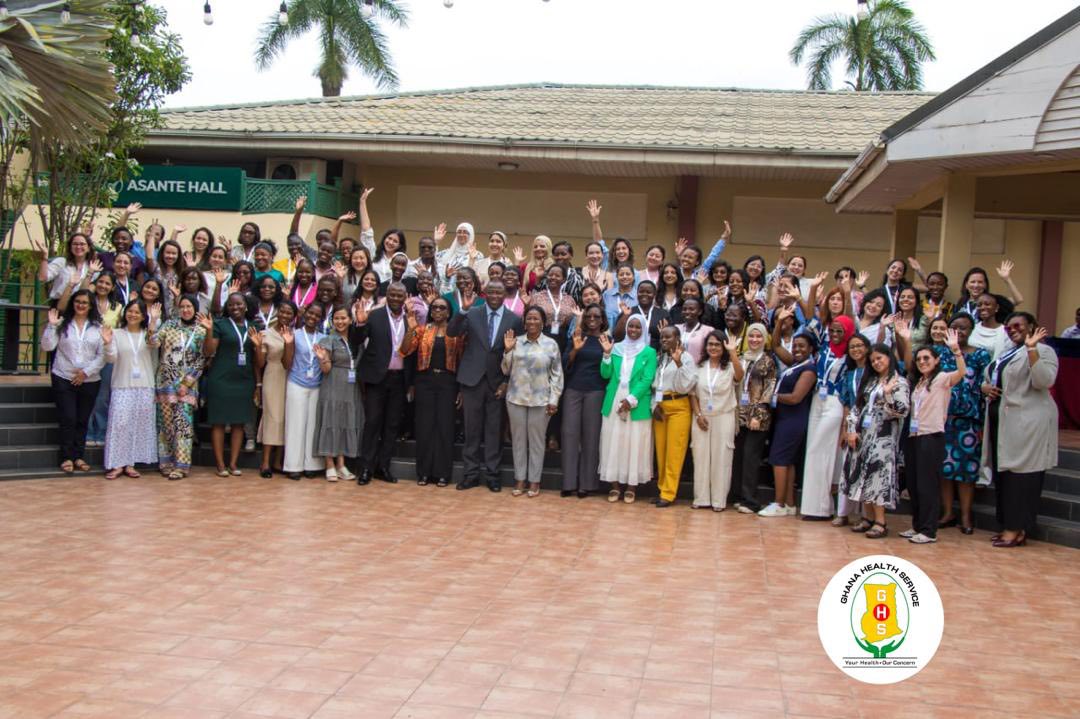
The Ghana Health Service (GHS) has organised a three-day event – All Cohort Meeting 2026 and Human-Centred Design Bootcamp, currently underway in Accra, which brings together fellows, health professionals, and international partners to focus on developing leadership skills, encouraging innovation, and emphasising human-centred healthcare.
The purpose of the event is to strengthen healthcare systems and promote women’s leadership in medicine at the Women in Medicine (WIM) Global Leadership Fellowship.
Speaking at the event, the Deputy Minister for Health, Prof. Dr Grace Ayensu-Danquah, underscored the importance of ensuring equitable access to training opportunities, particularly within specialised and surgical disciplines.
Adding the need to create an enabling environment that supports women to take up leadership roles across health institutions, academia, and policy-making spaces.
She praised “Operation Smile” for its ongoing contributions to transforming lives through surgical care and professional empowerment, describing the partnership as a model of effective collaboration in healthcare.
Dr Caroline Reindorf Amissah, Deputy Director-General of the GHS, emphasised the proactive efforts to address Ghana’s changing health challenges, including infectious diseases, non-communicable diseases, and mental health issues.
She reaffirmed the GHS’s commitment to providing high-quality, compassionate, and patient-centred healthcare services. She pointed out the essential role women play in healthcare delivery. While recognising that women constitute a significant portion of the workforce, she stressed that more should be done to increase their representation in leadership roles.
She added that the GHS continues to support initiatives such as mentorship, training, and professional development to empower women in the sector.
Speaking on behalf of the Minister for Gender, Children, and Social Protection, Dr Naa Lartey, Madam Sabia Kpekata outlined Ghana’s progress in promoting gender equality.
She revealed that the legislative instrument for the relevant gender equality Act has been submitted to Parliament, with expectations of its passage soon.
She said the launch of the National Gender Policy (2025–2034) was designed to integrate gender equality into national development plans. Noting that the policy addresses key areas such as women’s health, education access, workforce participation, digital inclusion, cyber governance, gender-responsive budgeting, and women’s economic empowerment.
Grace Acheampong, ISD