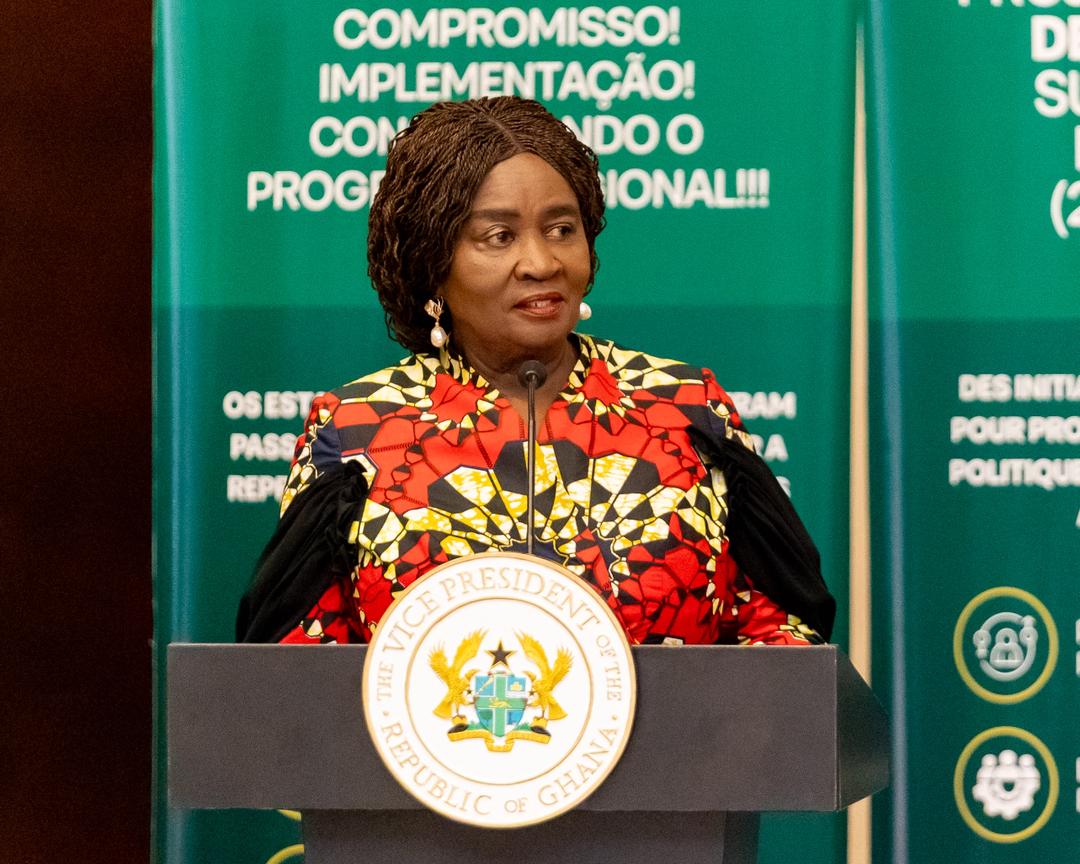
The Vice President, Prof Naana Jane Opoku Opoku-Agyemang, has called for deliberate investment in leadership development and mentorship, particularly at the grassroots level in the West African sub-region.
She noted that empowerment is most sustainable when it gives individuals the networks, abilities, and self-assurance they need to lead in the long run.
She made this call on Friday at the closing ceremony of the ECOWAS Regional Consultation on Political Participation and Leadership of Women and Young People in Accra.
She stated that Ghana has made strides in promoting gender equity, including the appointment of women to key leadership roles and the establishment of youth engagement platforms.
She noted that Ghana’s Affirmative Action Act, aimed at promoting women’s leadership, has enabled women to take up key positions in government, parliament, and local governance.
According to her, the administration of President Mahama has moved beyond symbolic representation, with women now serving in key ministerial, parliamentary, judicial, and local government positions.
She described this as a practical commitment grounded in the view that institutions perform better when their leadership reflects the diversity of the society they serve
Prof. Opoku-Agyemang acknowledged progress made under regional frameworks such as the ECOWAS Gender Policy and ECOWAS Youth Policy, but noted that women and young people remained underrepresented in leadership and decision-making across many member states.
She stated that the government’s investments in youth empowerment through the Ministry of Youth and Development and the National Youth Authority had created engagement platforms and expanded youth participation in policy dialogue, civic education, and local governance.
“The future of West Africa depends on our ability to harness the talents and leadership of all our people,” she said.
The Vice President reaffirmed Ghana’s readiness to collaborate with ECOWAS partners to promote shared goals, offering to share expertise and best practices while learning from the diverse approaches implemented across the region.
“There is no one-size-fits-all model and progress depends on honest sharing and practical cooperation,” she said.
She urged ECOWAS partners to collaborate in sharing best practices and expertise to accelerate progress, emphasising that inclusion is not rhetoric, but a determinant of policy and development outcomes.
Priscilla Osei-Wusu Nimako, ISD