The successful implementation of the 24-hour economy depends on efficient and responsive public institutions.
The 24-hour economy requires hospitals that operate around the clock, ports and customs offices that clear goods smoothly and seamlessly, and local assemblies that provide services without obstruction and delay.
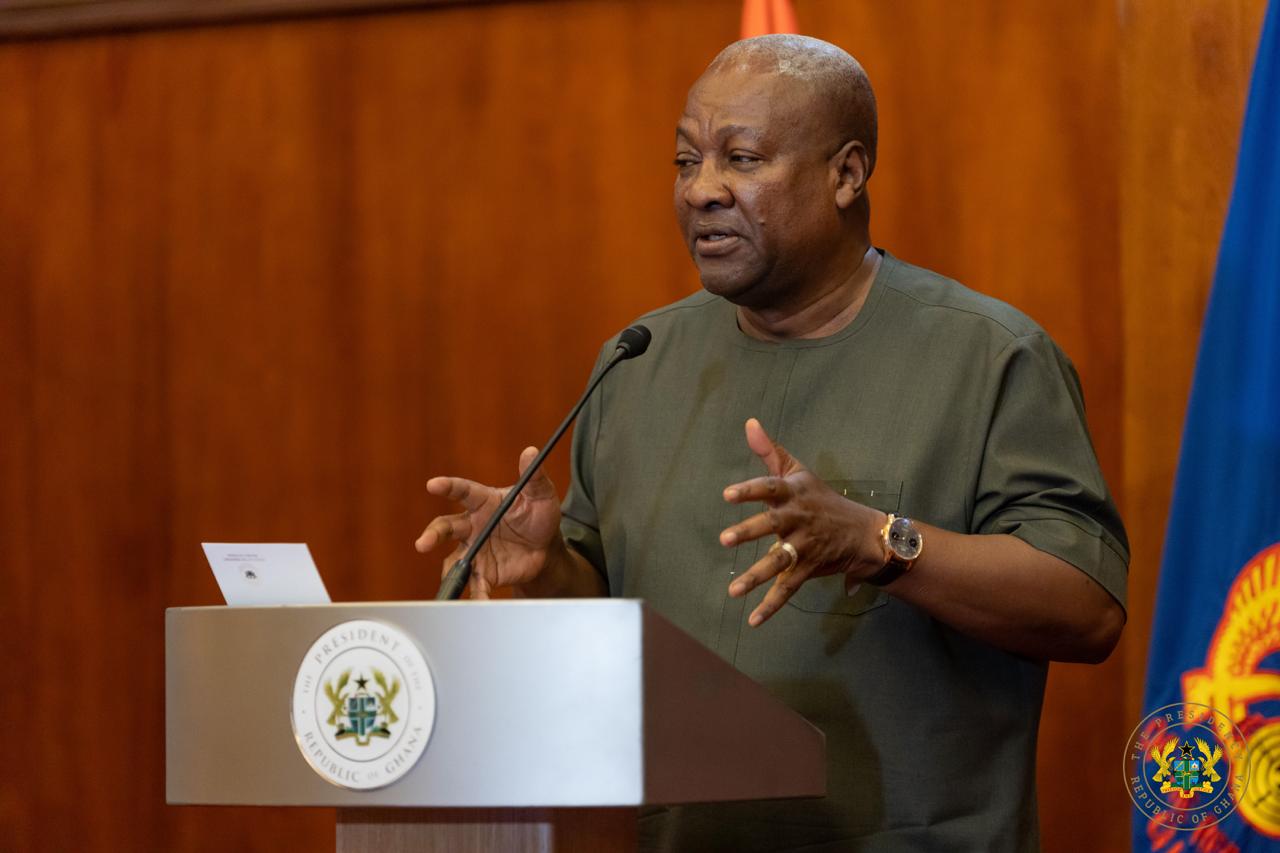
President John Dramani Mahama said this at the opening of the 14th Regional Conference of Public Service International in Accra on Wednesday.
“As Ghana moves towards a 24-hour economy, the public service remains the driving force behind this transformation. A 24-hour economy relies on efficient and responsive public institutions, hospitals that operate around the clock, ports and customs offices that clear goods smoothly and seamlessly, and local assemblies that provide services without obstruction and delay,” he said.
The President noted that achieving this goal calls for a new social agreement between government, labor and citizens, founded on fairness, productivity and mutual respect.
He stated that government’s strategy is to work collaboratively with organized labor to develop reforms rather than impose them.
“Genuine reform only succeeds when it is done with workers and not over them,” President Mahama declared.
Under Ghana’s Reset Agenda, the President said government is strengthening the civil and local government service, expanding digital governance and enforcing performance accountability across ministries, departments and agencies.
The reforms include a new public service performance management framework, the full operationalization of the Human Resource Management Information System and a renewed focus on training, ethics and merit-based advancement.
President Mahama stressed that the effectiveness of the public service must reflect the values of justice, fairness and respect for human dignity.
He recalled that during the COVID-19 pandemic, the true frontline of national survival was in hospitals, classrooms and local government offices, not in corporate boardrooms.
“These are the people who keep our nation running. These are the people who keep our nation united, often with limited resources but endless dedication. And that is why we must continue to protect, empower and modernize the public service, not weaken or privatize it,” he stated.
The President noted that throughout Ghana’s history, the nation’s progress has been anchored on the dedication of public servants, including teachers, nurses, engineers, administrators, judges and police officers.
He emphasized that when public services are strong, societies flourish, but when public services fail, inequality deepens, trust erodes and the foundations of democracy are weakened.
The 14th Regional Conference of Public Service International, themed “Quality Public Service for Dignity,” brings together public service workers from across the region.
Richard Aniagyei, ISD