President John Dramani Mahama has directed the Ministry of Lands and Natural Resources and the Lands Commission to conduct an immediate and thorough audit of all state lands allocated, leased, or sold between 2017 and 2024.
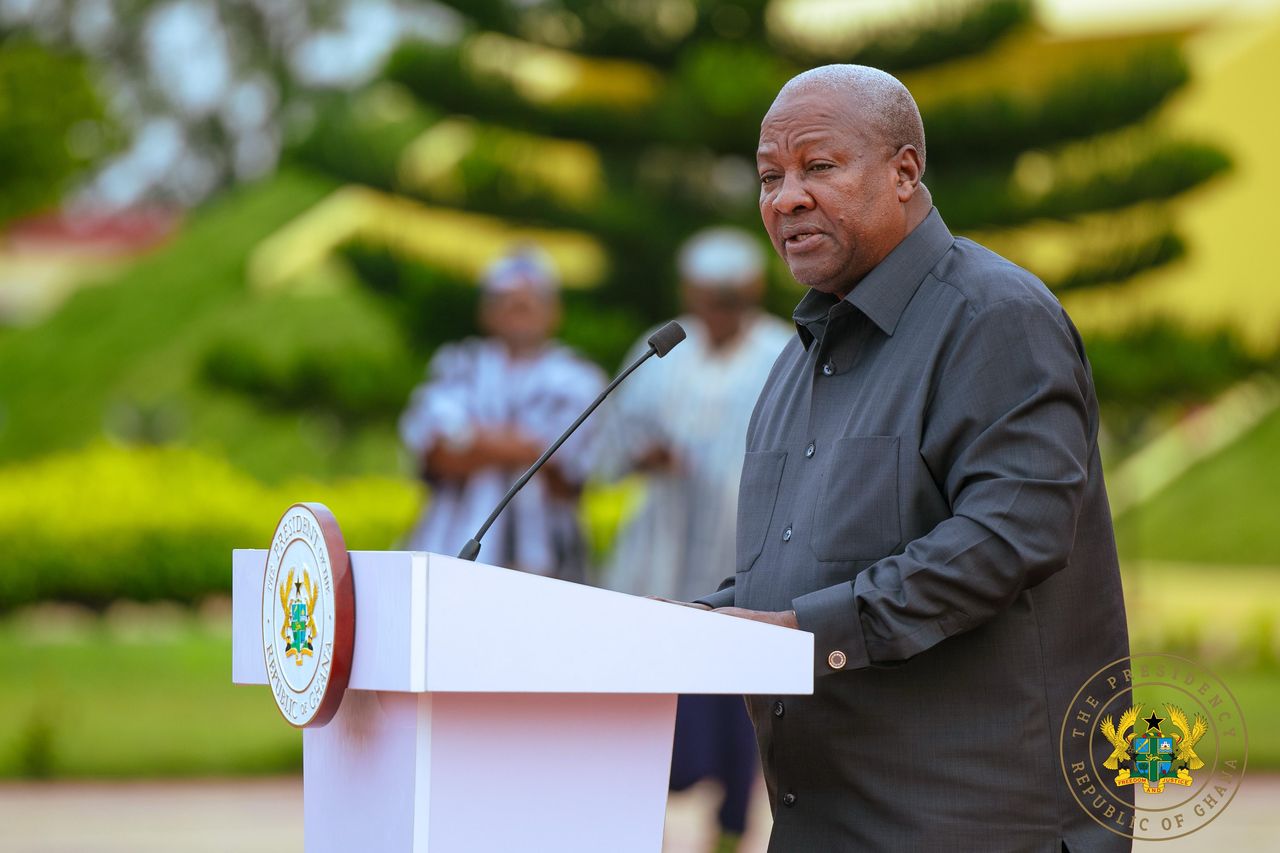
The President announced the sweeping investigation during the inauguration of the reconstituted National Lands Commission at the Jubilee House, warning that any transactions tainted by illegality or impropriety would be reversed and the land recovered by government.
“I’ve directed the ministry of lands and natural resources and the Lands Commission to immediately undertake an audit of all state lands allocated, leased or sold, particularly between 2017 and 2024,” President Mahama declared.
The audit will examine lands acquired for schools, hospitals, public institutions, forests, and ecological zones that were unlawfully converted to private use. The President specified that transactions involving conflict of interest, abuse of power, or political patronage would face particular scrutiny.
President Mahama assured that the exercise represents a pursuit of fairness and justice rather than a punitive campaign against legitimate landowners. He emphasized that those who legally acquired land through proper processes need not fear the investigation.
“We’re not on a witch hunt. Those who have legally acquired land through proper processes need not fear. This exercise is about fairness and justice,” the President stated.
The audit forms part of what the President described as a “bold reset” of Ghana’s land governance system, which he said had become synonymous with confusion, conflict, and corruption. He noted that public confidence in land governance had reached an all-time low due to widespread irregularities in the sector.
President Mahama revealed that a sale of state lands committee has already begun its work and will soon submit findings that will serve as a blueprint for rethinking the management, allocation, and protection of state lands.
The President expressed particular concern about the appropriation of prime government lands, ecological buffer zones, school reserves, forest enclaves, and other protected areas by influential individuals who treated public office as personal entitlement.
He cited examples of illegal alienation spanning from forest reserves in the Eastern Region to the conversion of public lands in the Northern Region, describing these activities as evidence of “a national tragedy of greed, impunity and dysfunction.”
The President noted that independent anti-corruption surveys had consistently ranked the Lands Commission among the most distrusted institutions in Ghana, with public lands meant for all citizens being illegally sold, rezoned, or encroached upon with little accountability or consequences.
“Public lands meant for the benefit of all Ghanaians, have been illegally sold, rezoned or encroached upon with little accountability or consequences,” President Mahama observed.
The audit represents one of four main pillars in the government’s land sector reform agenda, which also includes restoring public confidence through transparency, digitizing and modernizing land services, and harmonizing customary and statutory land systems.
President Mahama emphasized that the exercise would help identify systemic weaknesses that have allowed irregular practices to flourish and provide the foundation for implementing lasting reforms in Ghana’s troubled land administration sector.
The President warned that any transactions found to violate proper procedures would face reversal, with affected lands being returned to government ownership through legal processes.
Richard Aniagyei, ISD