
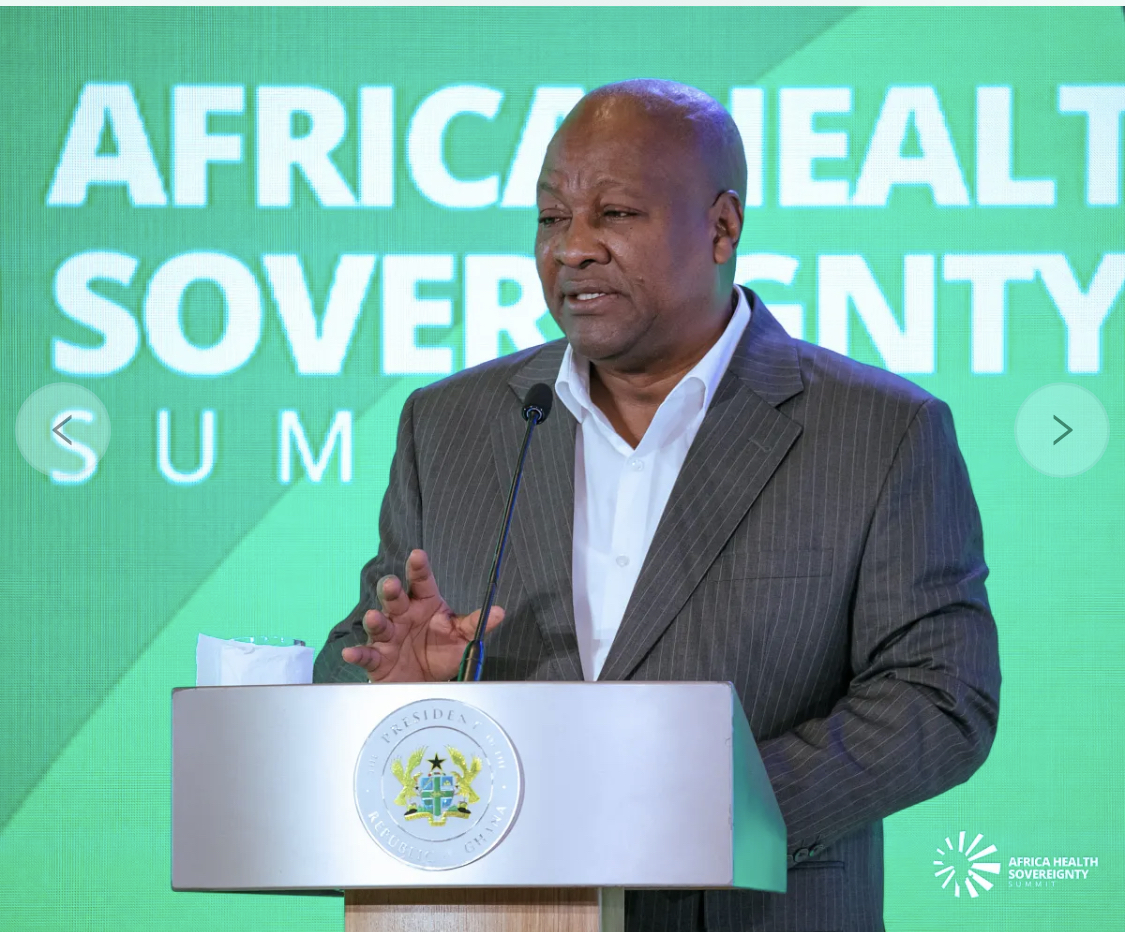
President Mahama calls for Climate-adapted Health Governance Systems
August 5, 2025 Health / Top Stories 0 CommentThe current global health architecture cannot address the realities of climate shocks and their impact on health systems.
Therefore, new health governance systems must then be adapted to this climate-challenged world.
President John Dramani Mahama said this in his address at the Africa Health Sovereignty Summit in Accra, on Tuesday.
The President identified climate challenges as part of overlapping global crises that are exposing fault lines in existing health systems.
He stated that health governance must be redesigned for a “multipolar, digitally interconnected, climate-challenged world” rather than outdated frameworks.
“War, pandemics, climate shocks, economic volatility, and widening inequalities are not just testing our systems; they are exposing their fault lines.
“The world has changed, but global health governance has not kept pace,” President Mahama stated.
The President noted how climate impacts transcend traditional boundaries, explaining that “floods erase borders and diseases ignore passports.”
He argued that this reality demands health systems that can respond to climate-driven health emergencies while maintaining routine care delivery.
Ghana has already begun implementing climate-resilient digital health solutions that demonstrate how technology can strengthen health systems against environmental disruptions.
President Mahama shared the story of Akosua, a young mother in Dodowa who survived childbirth complications because her community health clinic was digitally linked to a regional hospital through real-time referral systems.
“A real-time referral system saved her life. A digital prescription platform ensured she received the medicines without delay.
“This is not a vision of the future. It is the present reality of health sovereignty in Ghana,” the President explained.
President Mahama explained that the digital platforms create resilience against multiple shocks, including climate events that can isolate communities or damage health facilities.
The systems ensure that health services remain accessible through digital prescription platforms and telemedicine connections that bypass physical barriers.
The President called for scaling similar innovations across Africa through initiatives like PANABIOS for digital health verification and pandemic preparedness.
These platforms are designed to maintain health system functionality during climate emergencies while supporting routine care delivery.
Ghana’s approach demonstrates how digital health infrastructure can serve dual purposes – improving routine care while providing climate resilience.
President Mahama argued that climate-adapted health systems require new forms of international cooperation that recognize environmental challenges as health security issues.
He called for health governance frameworks that integrate climate preparedness with traditional disease prevention and treatment approaches.
Richard Aniagyei, ISD
Post a Comment