President John Dramani Mahama has called for a behavior change communication strategy as part of the national response to illegal mining.
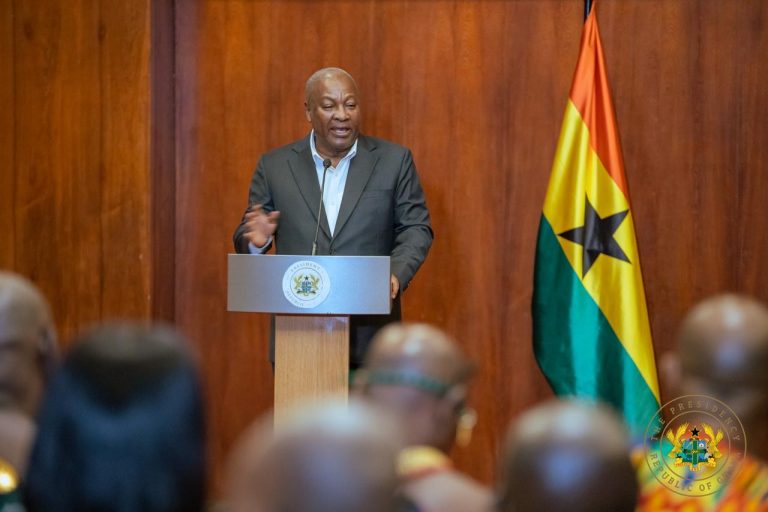
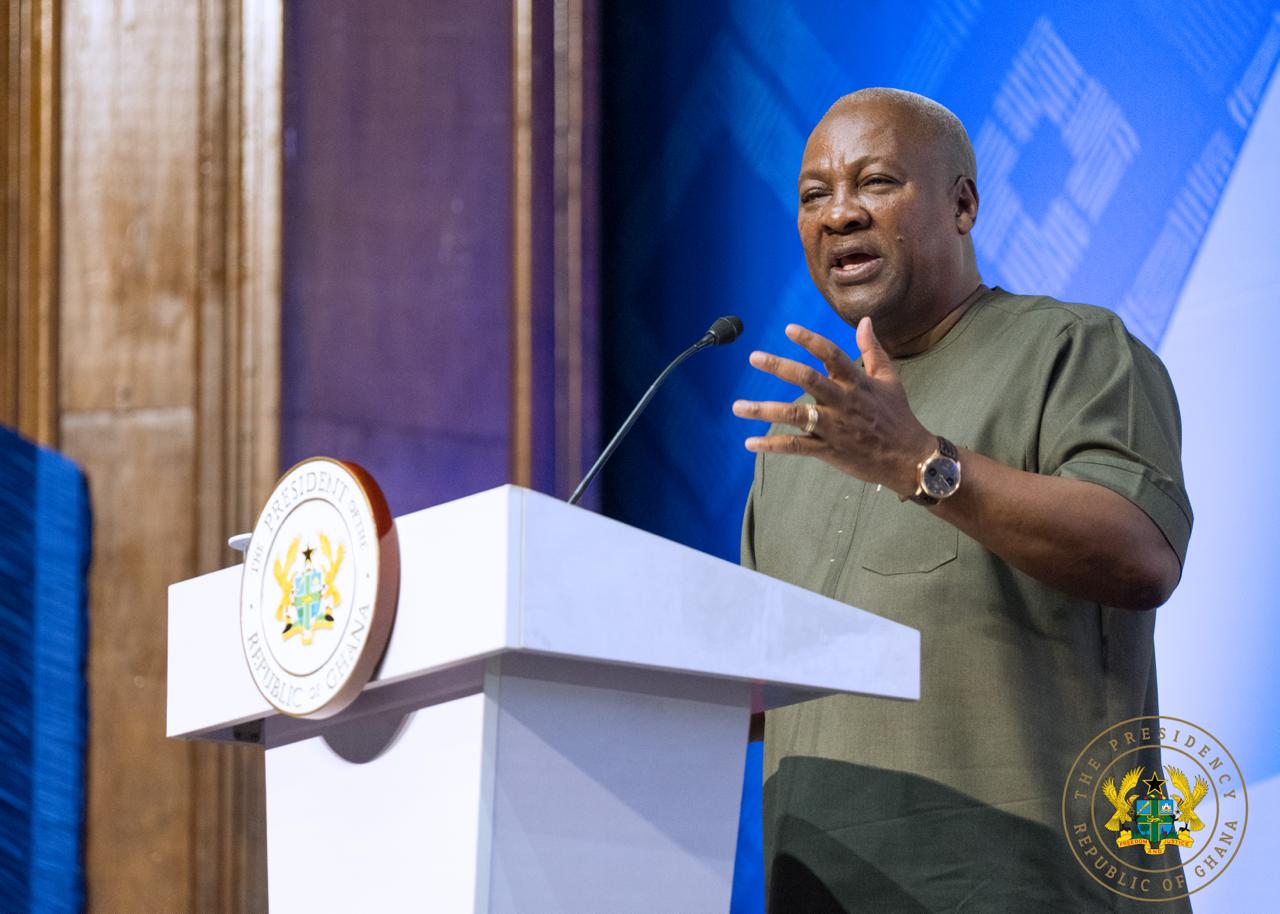
Speaking at the IPR Ghana and Africa PR Association Knowledge Sharing Conference on Friday, President Mahama said he supports the vision by IPR Ghana, which, in a statement issued in 2024, called for the adoption of a comprehensive behavior change communication strategy.
“I support that vision 100 percent. Because without communication, mobilization and community ownership, enforcement cannot succeed,” he said.
The President acknowledged that government has failed to convey the full extent of the destruction caused by illegal mining and the difficult battle needed to root out the problem.
“Despite some success in combating this illegal activity, there is much anxiety amongst our people because we have failed to convey the full extent of the destruction and the difficult battle needed to root out a problem that has deeply embedded itself in our nation’s fabric,” he stated.
President Mahama described illegal mining commonly known as galamsey as one of the most urgent issues facing the country. He said the activity has resulted in river pollution, deforestation and the exposure of citizens to toxic chemicals.
He noted that since taking office his government has responded decisively by seizing equipment, making arrests and monitoring excavators.
“But enforcement alone is not enough, and that is why we have introduced the Responsible Cooperative Mining and Skills Development Program. This initiative supports legal cooperative mining, it restores degraded lands and offers alternative livelihoods to our youth who are involved in this illegal activity,” he said.
The President announced that government has decided to initiate a dialogue with recognized groups starting with CSOs to not only involve Ghanaians but also give them ownership of the fight against illegal mining.
“Future dialogues will be held with traditional rulers and religious leaders,” he added.
President Mahama emphasized that as professionals in public communications there is need to identify the most effective ways to manage new media channels to positively shape the perceptions and attitudes of audiences.
“Today, the new media offers us the tools to connect with our audiences in ways that were previously impossible. However, these same tools can also enable miscommunication and the spread of disinformation,” he said.
He gave an example of the Japanese Africa Hometowns Initiative which was aimed at twinning Japanese towns and cities with their African counterparts for cultural exchange and knowledge sharing.
“Misinformation that the initiative was aimed at facilitating African migration to Japan led to strong public resentment resulting, unfortunately, in the cancelling of the program. A well-meaning idea became a victim of poor communications and misunderstanding,” he stated.
The President told the communications professionals that their role is to anticipate, explain and connect to ensure that noble ideas do not fail because of lack of clarity and engagement.
Richard Aniagyei, ISD