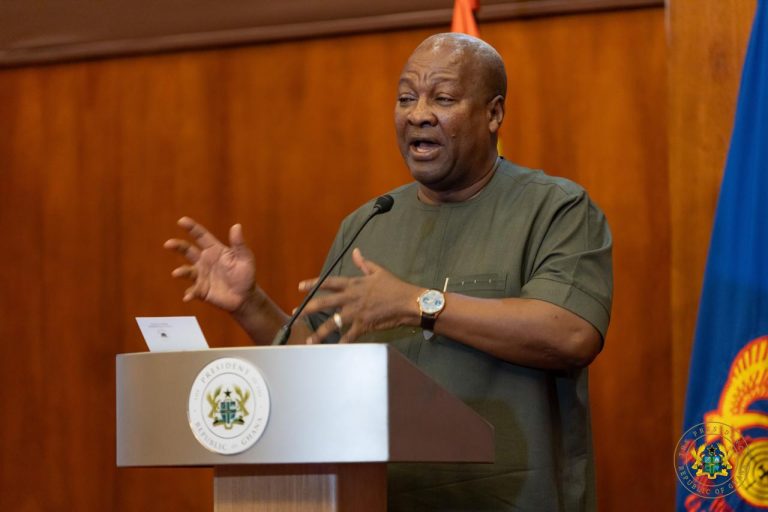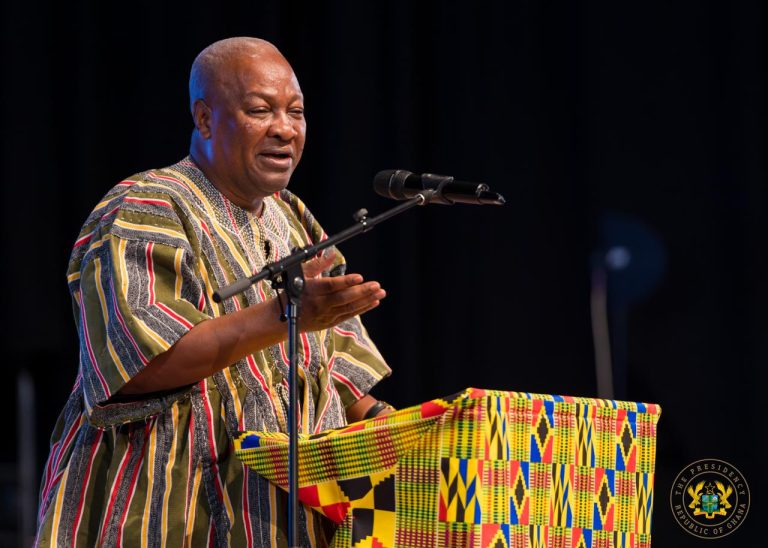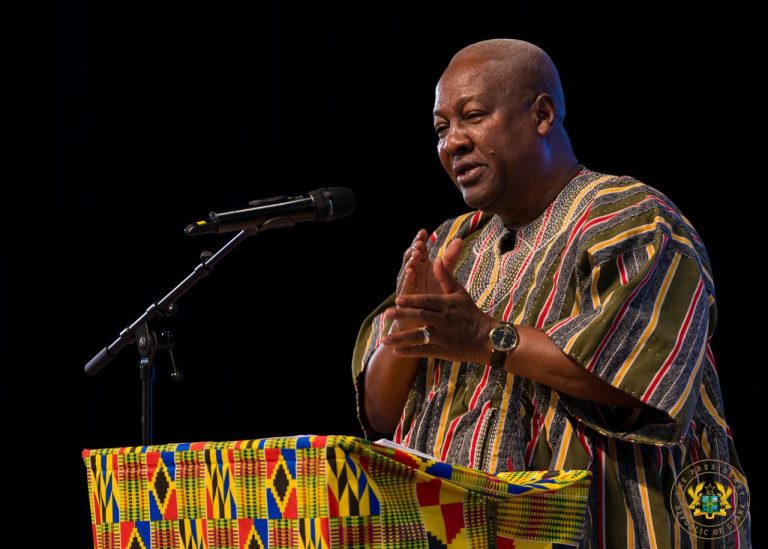
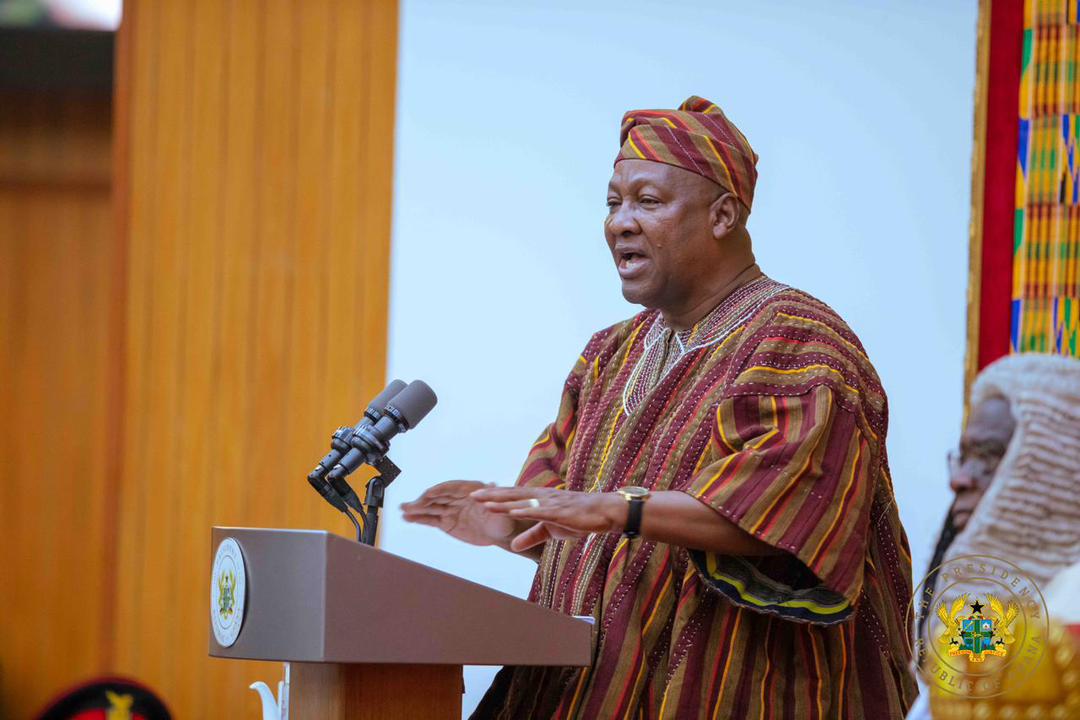
President John Dramani Mahama has directed the Ministry of Health to issue guidelines to eliminate the unacceptable no-bed syndrome in the country’s health facilities, insisting that no patient in a medical emergency should be turned away.
He made this known during his State of the Nation Address to Parliament on Friday.
“Patients facing medical emergencies must be received and given help, even under makeshift conditions,” he told Parliament
The directive came as part of a sweeping overhaul of the health sector that the President unveiled, which also included the rollout of a Free Primary Health Care programme, the absorption of 13,500 health workers onto the public payroll, and a total health financing package of GH¢34.7 billion.
President Mahama recalled that by January 2025, the health sector was burdened with GH¢15 billion in liabilities from stalled hospital projects, ageing equipment, and a financing gap of more than GH¢2.4 billion.
He noted that donor support had declined sharply from 19 percent of total health spending three years ago to just 2.2 percent today, leaving an annual gap the government had no choice but to fill. “Faced with these realities, my government chose to act decisively,” he told the House.
The President disclosed that Direct government funding would account for about 72 percent of total health spending in 2026, up from 56.8 percent in 2023,
He stated that core health allocations had risen to GH¢23.3 billion and with National Health Insurance resources included, total health financing now stood at GH¢34.7 billion.
“This reflects our clear commitment to domestic financing and health sovereignty,” President Mahama told Parliament.
On the health workforce, the President disclosed that at the start of 2025, 103,000 trained health workers had been awaiting placement, employment, or enrolment on the payroll.
He revealed that over the past year, the government had absorbed 13,500 nurses and midwives, along with hundreds of doctors and pharmacists, onto the public payroll.
President Mahama assured the House that the government would expand recruitment and add more health workers going forward, adding that the maldistribution of health workers would be corrected through targeted incentives for underserved areas.
He appealed to health workers to accept postings to our underserved areas, seeing it as a call to national duty, while we work to ensure they have an enabling environment.
On infrastructure, President Mahama was emphatic that the government would not abandon unfinished projects.
he said provision had been made in the 2026 Budget to commence Regional Hospitals in the Oti, Savannah, and Western North Regions.
The completion of the Sewua Hospital, the Aferi Military Hospital, and the KATH Maternal and Children’s Block in the Ashanti Region was on course, he added, while the Ridge Hospital phase two, the Police Hospital project, and the La General Hospital would also be expanded.
The President disclosed that a new post-basic nursing programmes in Cardiology, Nephrology, Endocrinology, and Oncology Nursing would be introduced this year.
At least 30 nursing training institutions would transition to a competency-based degree curriculum, he noted, with scholarship opportunities for PhD-level training for nurses and allied health professionals also being made available.
Richard Aniagyei, ISD