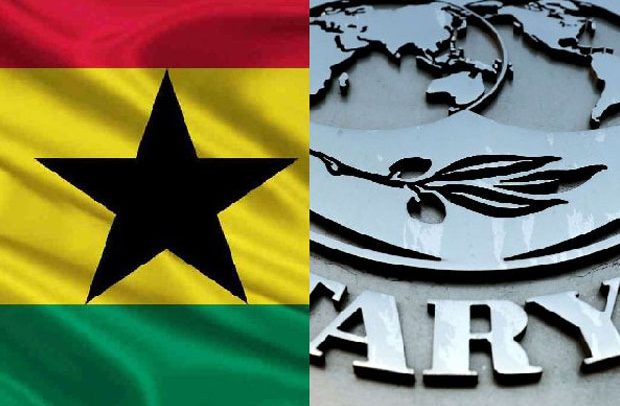
The Northern Region is set to become one of the main beneficiaries of a planned investment equivalent to one percent of Ghana’s GDP in commercial agriculture, following the conclusion of Ghana’s Extended Credit Facility programme with the International Monetary (IMF) Fund and the transition to a new Policy Coordination Instrument (PCI).
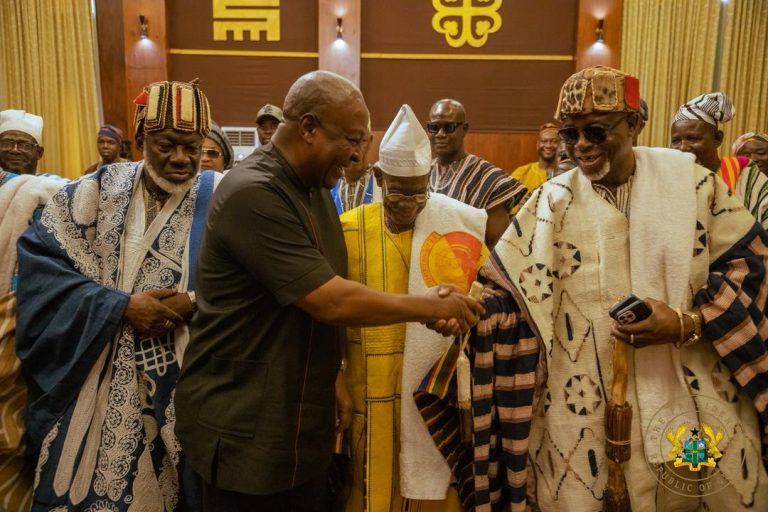
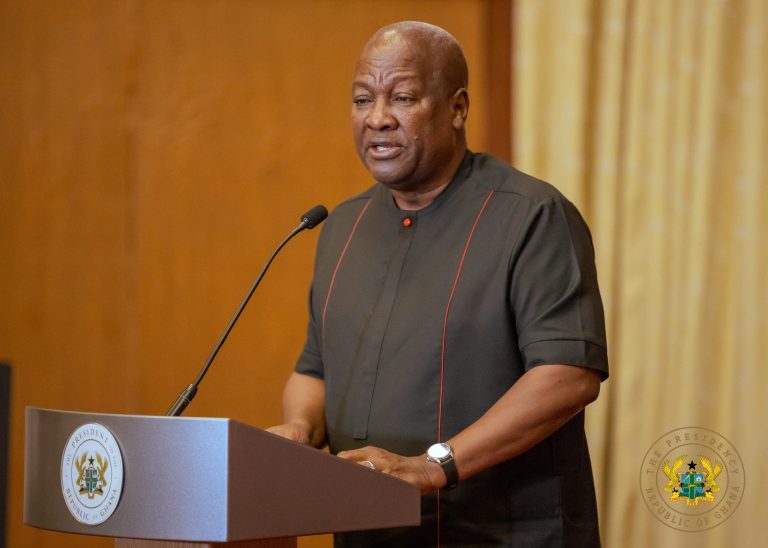
President John Dramani Mahama made the disclosure on Friday at Jubilee House during a courtesy call by the Northern Regional House of Chiefs, telling the delegation that the new policy framework created the fiscal space for targeted investments in high-yielding sectors, with commercial agriculture identified as one of the priority areas.
He said the Northern Region, with its vast arable lands, was strategically positioned to host large-scale agriculture and agri-processing, and that the government intended to restore the region to its historical identity as the Granary of Ghana.
The President recalled that under former Head of State I.K. Acheampong, the Northern Region was the country’s leading food production zone, home to the Nasia Rice Factory, Mesilo Rice Factory, vegetable oil mills, and other agro-industrial facilities that contributed to national food security.
“We want to capture that vision again,” he said.
To support the agricultural drive, the government is deploying Farmer Service Centres across the Northern Region under the Feed Ghana programme, equipped to offer ploughing, harrowing, planting, spraying, harvesting, drying, and storage services to farmers engaged in commercial agriculture.
President Mahama said farmers would be able to register at the centres and access mechanisation support throughout the entire production cycle, from land preparation to market-ready packaging.
The President said complementary investments in road corridors, rural electrification, irrigation, and water systems were already underway to support the agricultural transformation of the region.
He noted that work on critical trunk roads linking farming communities to markets was progressing, and that two major water projects for Tamale and Yendi were moving into procurement.
President Mahama said the Northern Region was also being positioned as a logistics and trade corridor for the Sahel and a centre for agri-business, and that the government’s broader investment in education, healthcare, and energy access across the region was designed to build the human capital and infrastructure base that commercial agriculture and industrialisation required.
Richard Aniagyei, ISD