NADMO receives Disaster Risk Financing Framework from UNDP
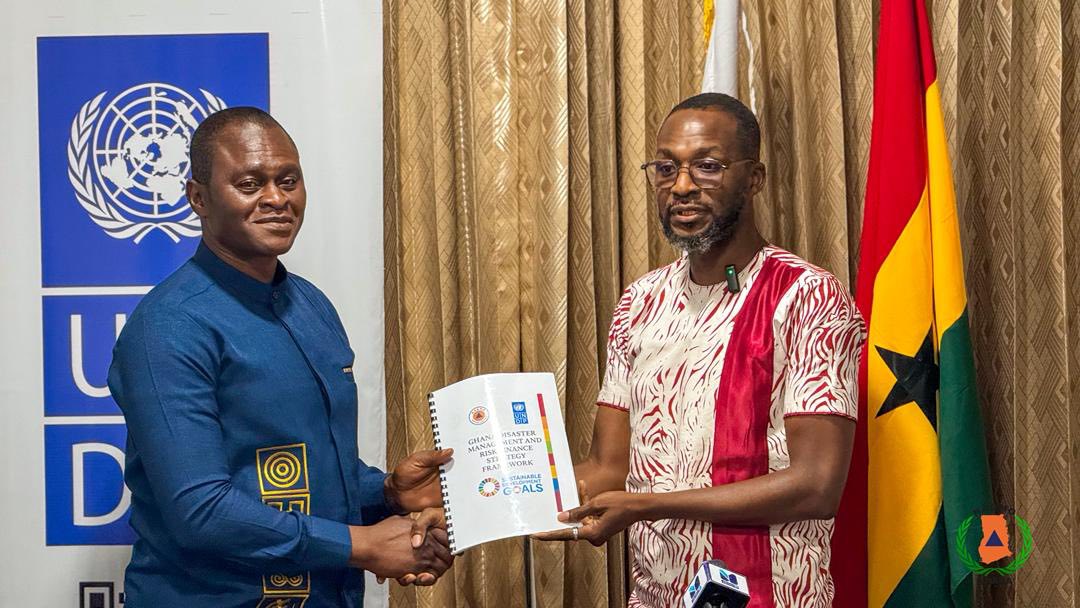
January 23, 2026 News 0 CommentThe National Disaster Management Organisation (NADMO) has received the National Disaster Risk Financing and Investment Strategy Framework from the United Nations Development Programme (UNDP), aimed at strengthening national preparedness and shifting the country from reactive disaster response to proactive risk management.
Speaking at the ceremony on Wednesday in Accra, the Director General of NADMO, Major Dr Joseph Bikanyi Kuyon (Rtd), said the framework would enhance Ghana’s ability to prevent disasters and identify risks early, noting that all communities across the country remain vulnerable to one form of disaster or another.
He noted that disasters in Ghana are increasingly climate-related, making adaptation and resilience-building a critical component of national disaster planning.
According to Dr Kuyon, investing in disaster risk reduction was far more cost-effective than mobilising resources after emergencies have already caused widespread damage.
He explained that the lack of a dedicated disaster risk financing framework had long limited the country’s capacity to respond effectively to disasters, prompting NADMO to seek technical support from UNDP to address the gap.
Dr Kuyon expressed gratitude to UNDP for the technical and financial assistance provided through its insurance and risk financing facility, and stated the commitment to work with partners to operationalise the strategy.
He described the framework as a foundation for strengthening national resilience, adding that its full implementation would deliver long-term benefits for communities and sectors vulnerable to floods, droughts, and fires.
The Head of UNDP’s Environment and Climate Department, Dr Saeed Abdul-Razak, stated that disasters often place enormous pressure on national budgets and disrupt development plans.
He explained that the new strategy provides a clear roadmap for improved disaster planning through insurance and risk-financing instruments, thereby reducing reliance on emergency spending.
Dr Abdul-Razak further noted that the framework opens opportunities for private sector investment at a time when traditional donor funding was declining.
According to him, a functional disaster risk financing system was important for citizens with lower adaptive capacity, who are often the most affected when disasters strike.
He pledged to continue working closely with NADMO to ensure the effective implementation of the strategy for a more resilient and disaster-prepared Ghana.
Judith Twumwaa, ISD
Post a Comment