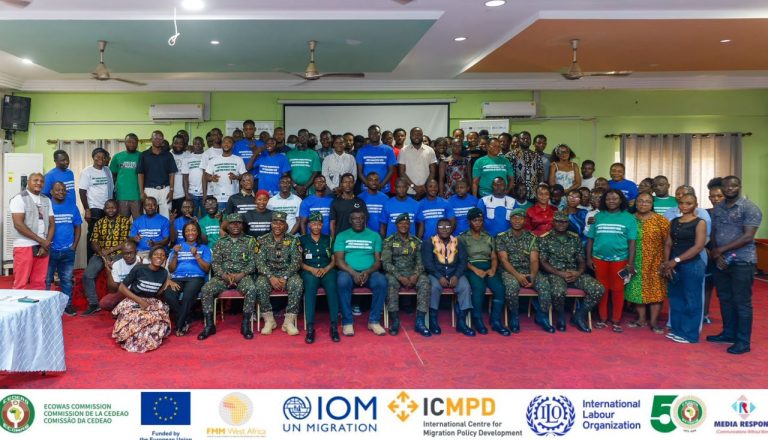
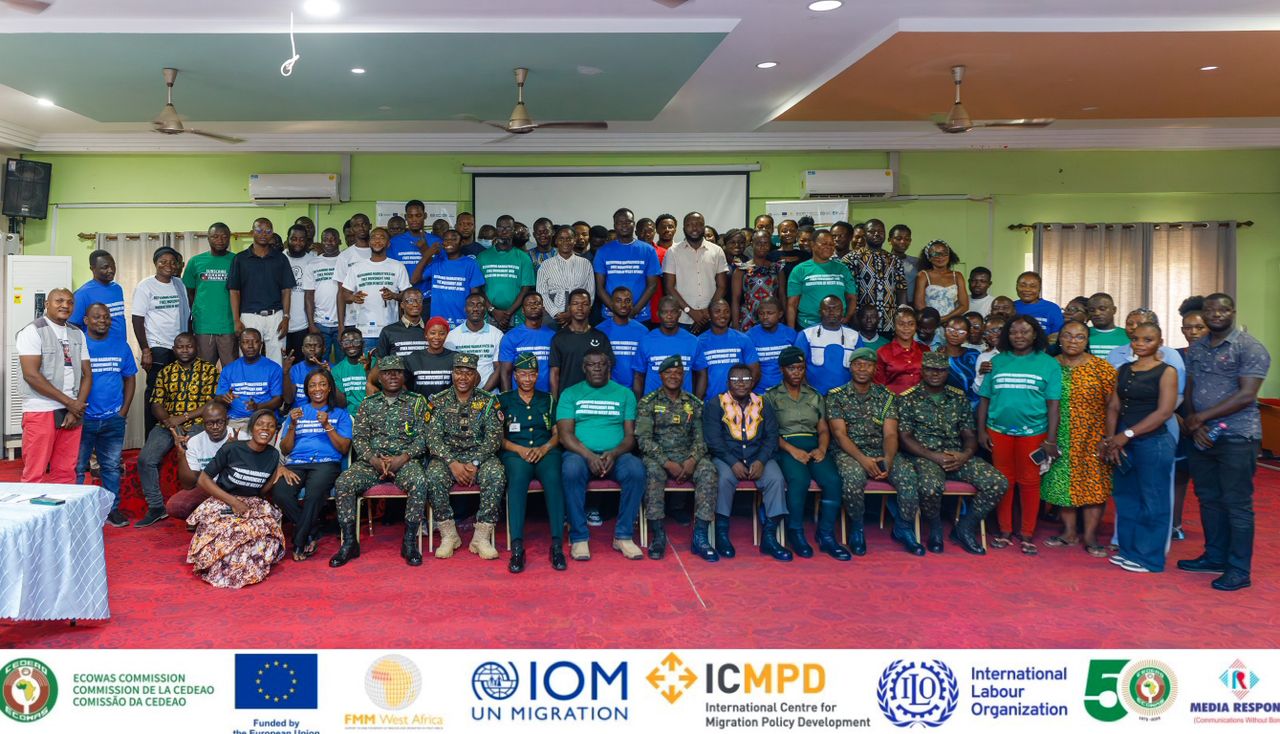
Media Response, a Ghana-based non-profit advocacy group, has organised a one-day hands-on training in digital storytelling and mini-video production for over 100 journalists, broadcasters, bloggers and immigration officers in Bolgatanga in the Upper East region.
The workshop, titled Digital Content Creation and Mini-Video Blogging, was held under the theme “Reframing Narratives on Free Movement and Migration in West Africa.”
The training, organised by Media Response on Wednesday, formed part of the Free Movement and Migration Phase II (FMM II) project, which seeks to promote balanced, factual, and human-centred reporting on migration to shape public understanding across the sub-region.
The project activities include organising training workshops in the three border regions of Ghana – Western, Volta, and Upper East; a mini-video competition, and a three-month-long radio campaign featuring Immigration officials, community members, and migrants in each of the border areas of Elubo, Aflao, and Paga to discuss migration and free movement.
Delivering the keynote address, Mr Albert Sore, Chairman of the Ghana Journalists Association (GJA) Upper East Region Chapter, noted that the training was timely and stressed the need for journalists and content creators to report migration issues responsibly and avoid sensational narratives that fuel fear, stereotypes, and misinformation.
He noted that migration reporting in the region is often presented without context, leading to misconceptions about migrants and cross-border mobility. “Migration is not just about statistics or border crossings. It is about people, opportunities, survival, trade, culture, dreams, and sometimes struggle,” he stated.
Underscoring the essence of continuous learning for media persons in the era of rapidly changing technology, Mr Sore urged participants to use digital storytelling tools ethically and responsibly. “A one-minute video on TikTok, Facebook, Instagram, or X can shape public opinion faster than a long newspaper article. That power comes with responsibility,” he added.
Executive Director of Media Response, Samuel Dodoo, took participants through the ECOWAS Free Movement Protocol, highlighting the rights, responsibilities, and obligations associated with regional mobility.
He stressed the need for the media to play a role in educating the public on the rights and responsibilities tied to free movement.
Providing practical insights from the field, DSI Rockson Akanbang of the Ghana Immigration Service Upper East Regional Command touched on the realities of implementing the protocol in the region. He addressed common misconceptions and outlined operational challenges faced by immigration officers.
The workshop featured sessions on ethical migration reporting, mobile journalism, and digital content creation. Participants were taken through practical exercises, including scripting, filming, and editing short videos using their mobile phones.
The next set of activities includes a mini-video competition in June 2026 to showcase participants’ work and a series of community radio discussions aimed at deepening public awareness of free movement across West Africa.
The project is supported by FMM West Africa, the ECOWAS Commission, and the European Commission, among other partners.
ISD