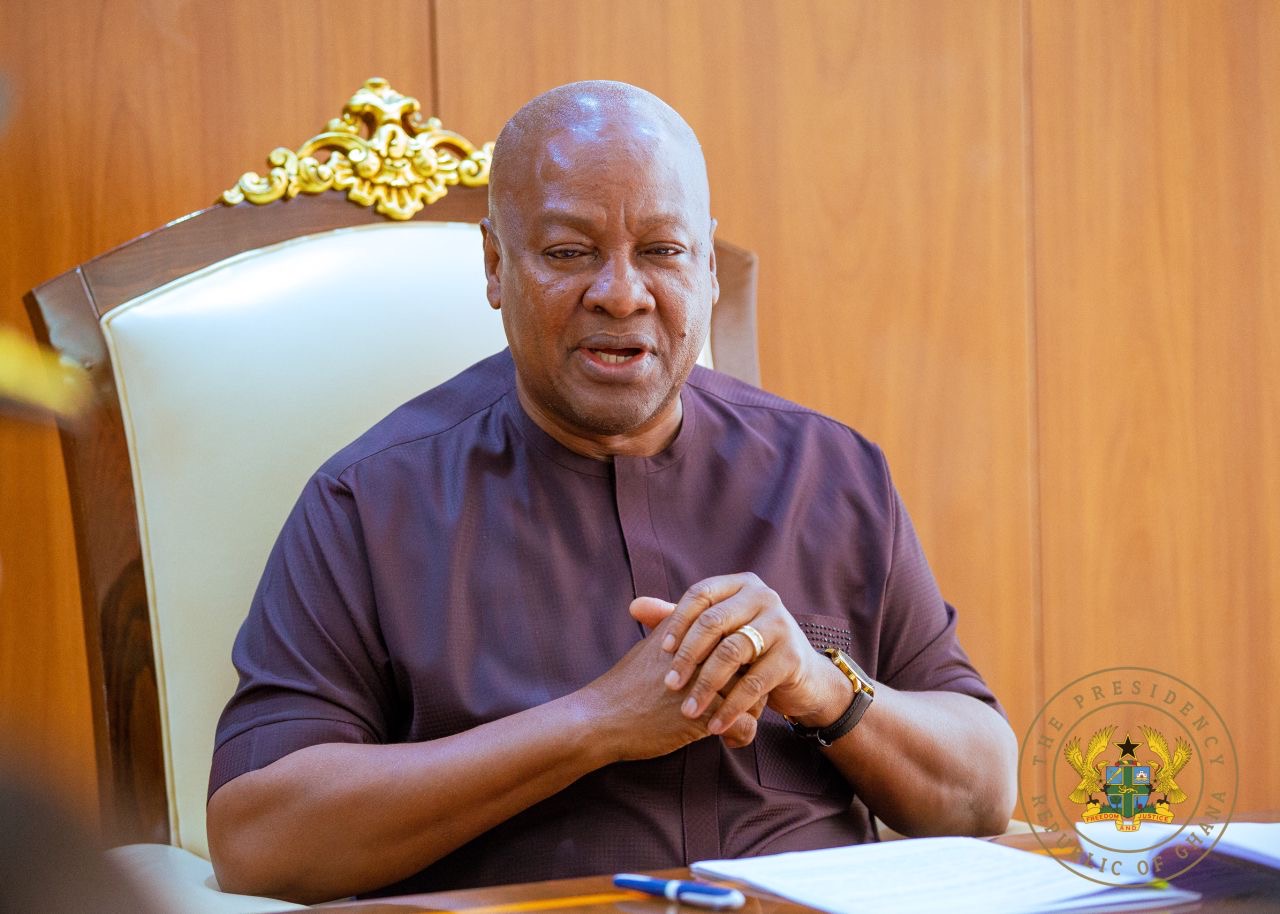
The Republic of Ghana, on behalf of the African Union and under the leadership of President John Dramani Mahama in his capacity as African Union Champion on Reparations, will introduce a draft resolution at the United Nations General Assembly on 25 March 2026, marking the International Day of Remembrance of the Victims of Slavery and the Transatlantic Slave Trade.
The draft resolution, entitled “Declaration of the Trafficking of Enslaved Africans and the Racialised Chattel Enslavement of Africans as the Gravest Crime Against Humanity,” seeks formal international recognition of the trafficking.in enslaved Africans and the system of racialised chattel enslavement in light of their unprecedented scale, duration, and enduring global consequences.
The trafficking in enslaved Africans and the system of racialised chattel enslavement spanned more than four centuries and forcibly displaced over twelve million Africans, representing the largest forced migration in human history. This system had profound consequences and its effects continue to be felt today.
The prohibition of slavery and enslavement is universally recognised under international law as ajus cogens norm-a peremptory rule from which no derogation is permitted and which binds all States irrespective of treaty obligations. Although the practices associated with racialised chattel enslavement predate modern legal instruments such as the Rome Statute of the International Criminal Court, they correspond substantively to contemporary legal definitions of crimes against humanity, including enslavement, deportation, sexual viQlence, and racial persecution. The initiative is grounded in customary international law and does not rely on the retroactive application of treaty frameworks such as the Nuremberg Charter.
The proposed resolution is forward-looking and unifying. It focuses on truth, remembrance, education, and dialogue and seeks to strengthen global efforts to combat racism and injustice. It does not seek retroactive legal liability or retribution, does not assign legal blame to specific States, does not impose financial obligations, and does not establish tribunals or enforcement mechanisms.
The initiative builds upon existing United Nations consensus. The Durban Declaration and Programme of Action acknowledged the enduring consequences of slavery and the slave trade and their contribution to global inequality. This resolution seeks to further consolidate that recognition within the framework of the United Nations General Assembly.
The initiative also aligns with several major international priorities, including the African Union’s 2025 theme, “Justice for Africans and People of African Descent through Reparations,” the launch of the Second International Decade for People of African Descent (2025—2034), and expanding cooperation between African states and CARICOM on reparatory justice.
Ghana respectfully invites all Member States of the United Nations to support and co-sponsor this resolution as a reaffirmation of the international community’s shared commitment to human dignity, historical truth, and equality.
ISD