
Ghana has become home to the world’s largest calcined clay cement plant following the commissioning of the CBI Ghana facility in Tema, marking a historic achievement in sustainable cement production.
The $110 million investment with an annual capacity of 1.5 million tons of environmentally friendly calcined clay cement positions Ghana at the forefront of sustainable cement production globally.
The facility introduces limestone calcined clay cement technology that substantially reduces carbon emissions while maintaining the strength and quality required for modern construction.
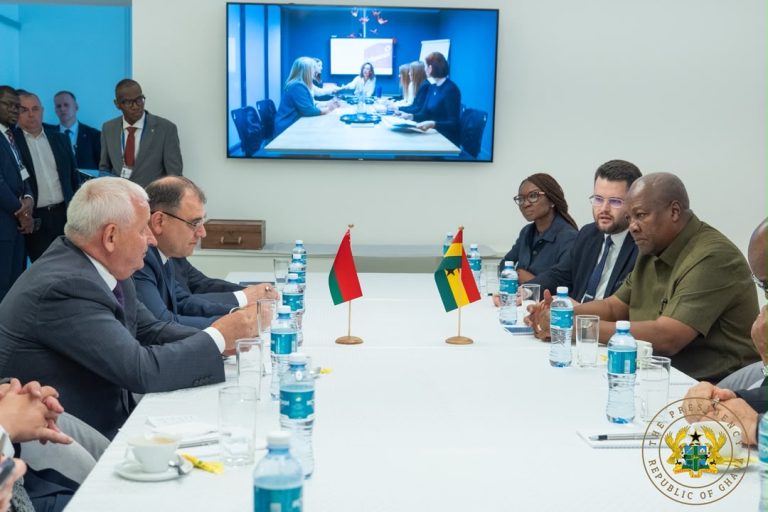
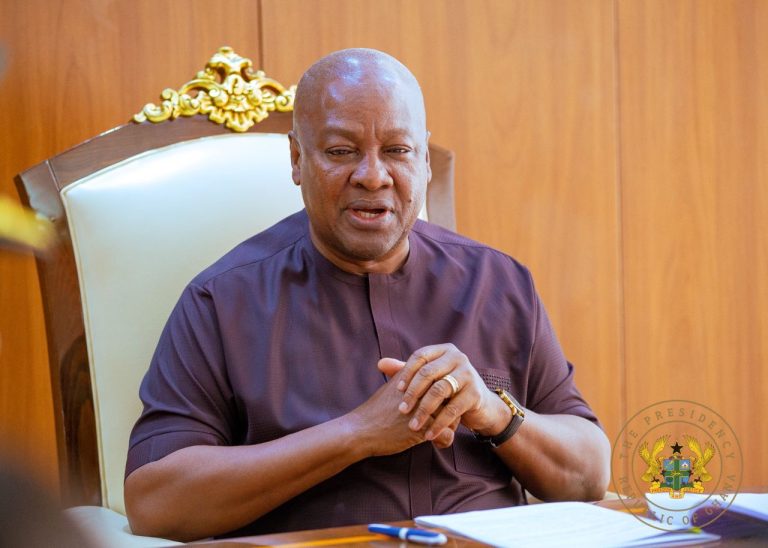
President John Dramani Mahama commissioned the facility on Thursday at Tema, describing it as a substantial industrial achievement that places Ghana as a leader in Africa’s industrial future.
The President stated that the investment sends a strong signal to the international business community that Ghana is open to serious industrial investment.
“This investment demonstrates clearly that when the policy environment is transparent, stable, and supportive of enterprise, the private sector will respond and will have the confidence to mobilize capital and undertake projects of global significance,” President Mahama said.
He pledged to maintain a conducive environment for the Ghanaian private sector to continue investing and make handsome returns on investments.
The President explained that traditional clay-based cement production accounts for about eight percent of global carbon dioxide emissions, making it one of the most carbon-intensive industrial processes.
He noted that the calcined clay cement technology substantially reduces carbon emissions while delivering the strength and quality standards modern construction demands.
President Mahama disclosed that the innovation enables Ghana to replace large amounts of imported clinker with locally sourced Ghanaian clay processed and refined within the country.
He stated that this means lower production costs, reduced import dependency, and more value retained within the Ghanaian economy.
The President revealed that replacing clinker is expected to cut import reliance by more than 10 percent, keeping hundreds of millions of cedis circulating within the domestic economy.
He announced that local clay is being processed at the factory using liquid natural gas from Ghana’s oil and gas fields in the Western Region through collaboration with Ghana Gas.
President Mahama assured CBI and partners in the industrial enclave that interaction with upstream oil and gas companies has been very positive, with two new memoranda of understanding recently signed.
He disclosed that the Jubilee partners will invest another $2 billion in the upstream oil and gas industry to increase volumes of gas produced.
The President revealed that an MOU has been signed with ENI, operators of the Sankofa field, for a fresh investment of $1.5 billion to increase the amount of gas available for Ghanaian industrialization.
He stated that the cement produced at the facility will comply with the rules of origin requirements of the African Continental Free Trade Area because of the amount of local material included in production.
President Mahama noted that this positions Ghanaian cement to compete effectively in regional markets and support the accelerated export development program.
“Through such investments, Ghana is not merely producing for domestic consumption but establishing industries capable of serving the entire African market,” the President said.
He disclosed that the facility has been designed to operate continuously 24 hours a day, 7 days a week, 365 days a year, making it symbolic of the government’s 24-hour economy policy.
The President revealed that the project has created 109 direct jobs, including engineers, technicians, and machine operators, and over 1,000 indirect jobs within the supply chain, logistics, and support services.
He described these as high-quality industrial jobs that will drive Ghana’s long-term economic transformation.
President Mahama stated that as part of the economic transformation agenda, the government has set an ambitious target of increasing the share of manufacturing in GDP to at least 15 percent by 2030.
He expressed confidence that this will create an additional half a million decent jobs for Ghanaians.
The President noted that the commissioning comes at a timely opportunity when government is investing more than GH¢60 billion in infrastructure construction under the Big Push program.
He disclosed that GH¢50 billion worth of road construction has already been awarded, with culverts, interchanges, and drains being constructed across Ghana using cement produced locally.
President Mahama stated that through macroeconomic stabilization, fiscal discipline, and constructive engagement with industry stakeholders, cement prices had fallen by about 20 percent by July 2025, providing relief to builders, contractors, and the housing construction industry.
He revealed that recent data from the Ghana Statistical Service shows that construction inflation decreased to 3.9 percent year-on-year in January 2026.
The President commended the Chamber of Cement Manufacturers Ghana (COCMAG) for its ongoing engagement with government, noting that dialogue between government and industry remains essential for ensuring stability and growth in the sector.
He announced that government will rehabilitate the entire Tema industrial zone in partnership with the private sector, re-engineering roads, drains, and waste treatment plants.
President Mahama disclosed that TDC, GIDEC, VALCO, and all partners have already signed an MOU for the rehabilitation project.
He commended the Chairman and CEO of CBI, the board, management, and investors for their confidence in choosing Ghana for the investment.
The President noted that by constructing the world’s largest calcined clay plant in Tema, Ghana’s historic industrial center envisioned by Dr. Kwame Nkrumah, CBI has affirmed Ghana’s position as a leader in Africa’s industrial future.
He stated that the investment demonstrates that economic growth and environmental sustainability can co-exist.
President Mahama thanked the chiefs and people of the Togome traditional area in the Volta Region, which is the source of raw material for the calcined clay production.
He addressed workers at the facility, telling them they are not just employees of a factory but architects of Ghana’s industrial future.
“For every one of you who has been employed in this factory, there are 10 who would have loved to be in your place. And so take this employment as a very precious asset,” the President said.
Richard Aniagyei, ISD