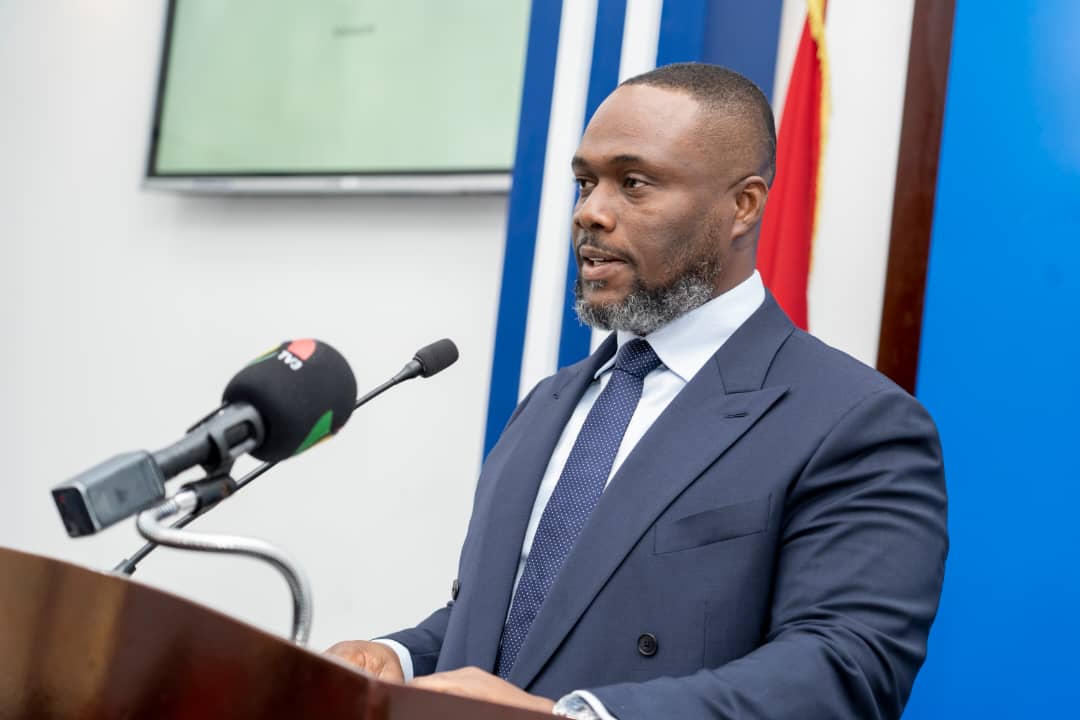
The Minister of Works, Housing, and Water Resources, Mr. Kenneth Gilbert Adjei, has reiterated the government’s commitment to safeguarding its vital water resources.
Speaking during the maiden launch of the 2025 World Rivers Day in Accra on Wednesday, the Minister emphasized the key role that rivers play in Ghana’s heritage, economy, and the well-being of future generations.
Touching on the theme, “Our Rivers, Our Future,” he highlighted significant strides made in water governance over the past decades. “We have established the Water Resources Commission and collaborated with communities and international partners to expand access to clean water for millions of Ghanaians,” he stated.
Mr. Adjei noted that illegal mining, agricultural runoff pollution, and the impacts of climate change are major challenges undermining water quality. “Our rivers are at the heart of our national story,” he said, citing alarming statistics from the United Nations Environment Programme, which reports that over one-third of the world’s rivers are severely polluted, threatening the health of nearly 3 billion people.
According to the him, Ghana’s renewable water availability has significantly declined from approximately 3,000 cubic meters per person per year in the 1960s to around 1,650 cubic meters today. He warned that this downward trend poses a risk of pushing Ghana into the category of water-stressed countries if not addressed urgently.
“If we do not act swiftly, Ghana risks slipping into the category of water-stressed countries,” he cautioned.
Mr. Adjei announced plans to revamp the legal and policy framework governing water resources. He mentioned that new legislation will be enacted to protect riparian areas, while enforcement measures will be strengthened to hold polluters accountable.
He added that the fight against illegal mining will be intensified, with a focus on providing alternative livelihoods for those currently engaged in destructive practices.
The Minister stressed the government’s intention to launch a comprehensive agenda for water infrastructure, including the expansion and rehabilitation of water treatment plants and improved access for rural communities.
“Water and climate are inseparable,” he emphasized, highlighting the importance of integrated water resource management to balance competing demands and enhance resilience to climate impacts.
Mr. Adjei called for stakeholder engagement and public education, encouraging citizens to view rivers as sacred treasures deserving protection.
“Protecting our rivers means protecting our future. When we see rivers as sacred treasures, we will have won half the battle,” he concluded.
Margaret Adjeley Sowah, ISD