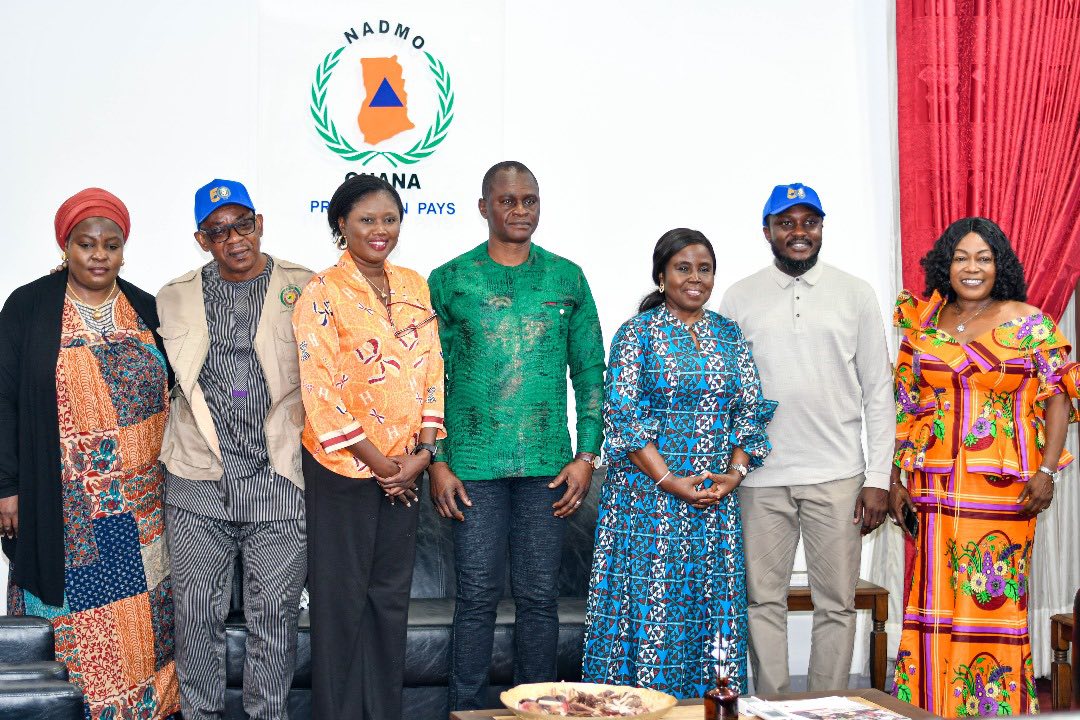
An eight-member fact-finding delegation from the Economic Community of West African States (ECOWAS), led by Dr Sintiki Tarfa-Ugbe, has paid a two-day working visit to the National Disaster Management Organisation (NADMO) to assess the implementation of the ECOWAS Flood Relief Assistance Programme.
Speaking during the meeting on Monday in Accra, the Director General of NADMO, Major (Rtd) Dr Joseph Bikanyi Kuyon, highlighted the devastating impact of the 2022 and 2023 floods, which displaced thousands and destroyed livelihoods.
He underscored the need for long-term recovery and resilience measures to safeguard affected communities.
Dr Kuyon noted that the Flood Relief Assistance Programme, implemented over eight months with support from ECOWAS and Abantu for Development, provided essential food and non-food items to over 5,000 households, helping stabilise their lives in the aftermath of the disaster.
“Beyond immediate relief, the programme supported farmers with climate-smart agricultural inputs, greenhouse seedlings, and modern tools. Artisans and small business owners, including carpenters, masons, caterers, bakers, soap makers, beauticians, and hairdressers, were also empowered with tools and start-up kits to restart their enterprises,” he said.
He added that the programme also delivered 10 boreholes to provide safe drinking water, trained 40 NADMO officers in disaster risk reduction, and prioritised support for vulnerable groups, including female-headed households, the elderly, and persons with disabilities.
For her part, Dr Tarfa-Ugbe reaffirmed ECOWAS’ commitment to directly impacting local communities, while Dr Rose Mensah Kutin of Abantu for Development explained that the relief distribution process was designed to reach the most vulnerable beneficiaries.
The event was attended by representatives from the Ghana Refugee Board, civil society organisations, and beneficiaries of the ECOWAS-funded initiative, who shared testimonies of how the support had transformed their lives.
Judith Twumwaa, ISD