Africa’s health struggles should be viewed as providing depth of perspective rather than representing deficits.
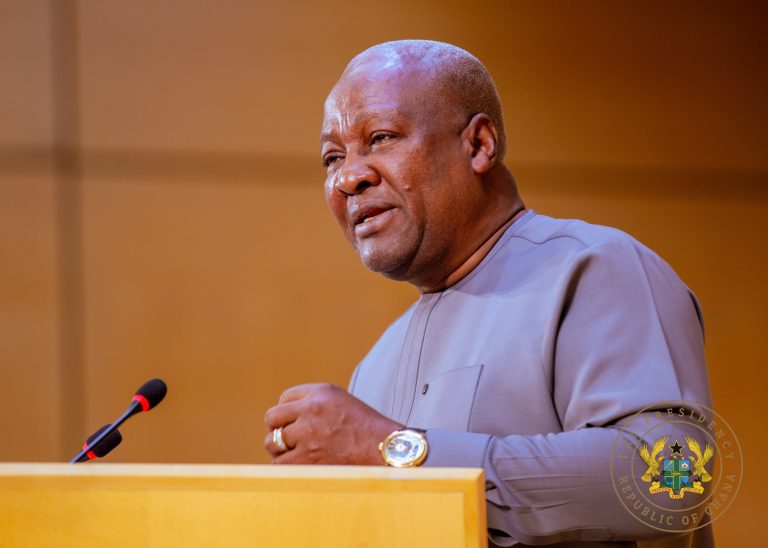
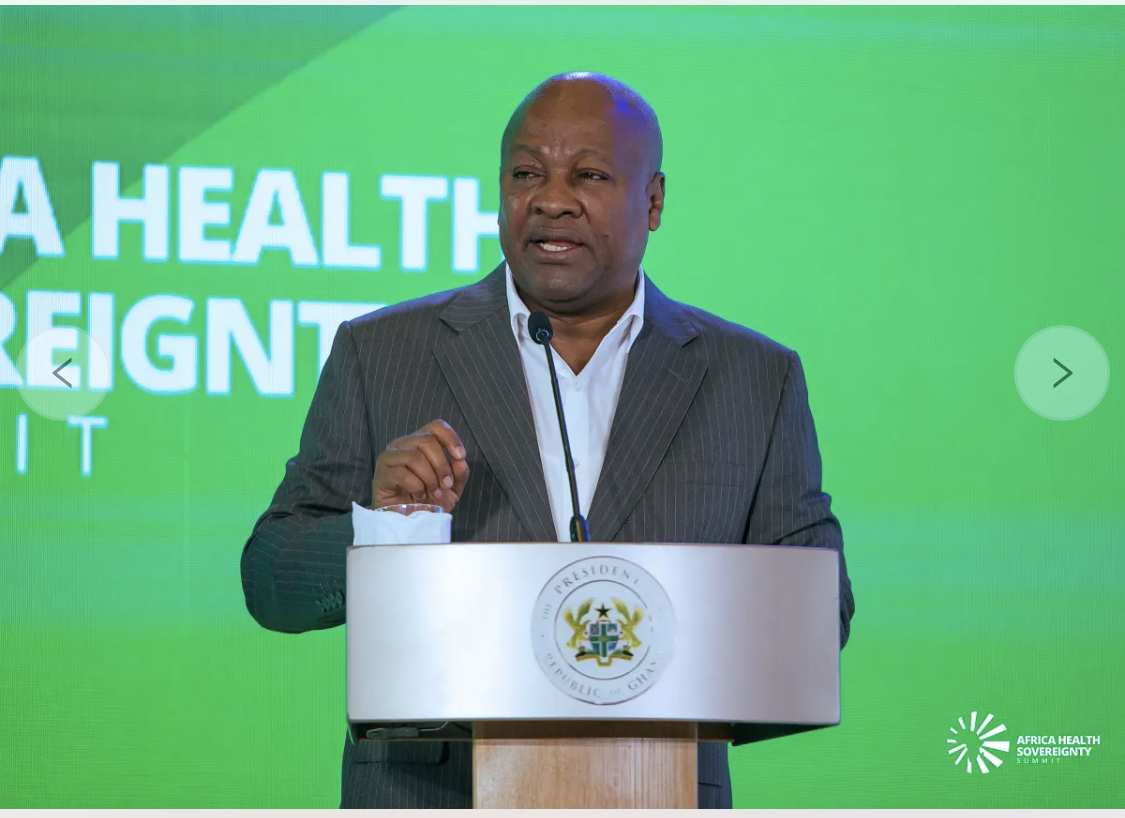
President John Dramani said this while reframing the continent’s narrative during the Africa Health Sovereignty Summit in Accra on Tuesday.
“Africa’s pain is not a deficit. It is a depth of perspective.
“Africa’s healing is not a plea. It is a rallying cry,”President Mahama told delegates gathered in Ghana’s capital, which he described as the “land of freedom and justice” and the proud home of Pan-African aspiration.
The President positioned the summit as more than a policy forum, describing it as a moral call, strategic milestone, and continent-wide awakening.
He emphasized that the gathering represented a collective refusal to accept limits imposed by an outdated global health order, with African leaders choosing to lead, reform, heal, and reimagine their approach to health governance.
President Mahama grounded his philosophical framework in human dignity and solidarity, arguing that health represents the foundation of freedom and the currency of dignity.
“In a world where floods erase borders and diseases ignore passports, we must remember one truth: in the face of suffering, we are human.
“Titles disappear. What remains is our dignity, our solidarity, and our shared resolve to protect life,”he stated.
The choice of Accra as the summit venue carried particular significance, with the President emphasizing Ghana’s role as a center of Pan-African aspiration.
He described the gathering as driven by conviction, shared purpose, and a collective determination among African leaders to transform their continent’s health destiny.
President Mahama rejected the notion of African sovereignty as isolation, instead positioning it as co-creation with global partners.
“Our sovereignty is not isolation – it is co-creation,” he declared, calling for a new multilateralism grounded in mutual respect rather than charity, and based on co-creation rather than extraction.
The President described health as the greatest public good, rejecting traditional approaches that treat it as a luxury.
He called for resetting the moral compass of global health governance to build systems that generate wealth, uphold dignity, and expand purpose across the continent.
President Mahama thanked these partners for representing the new multilateralism the world needs.
He called on Africans to not only reimagine their future but to own it, emphasizing that the continent must move from being patients in the global health system to becoming authors, architects, and advocates of their health destiny.
The summit brought together African leaders, international partners including the Rockefeller Foundation and Georgetown University, and organizations like AfroChampions and the Obasanjo Foundation.
Richard Aniagyei, ISD