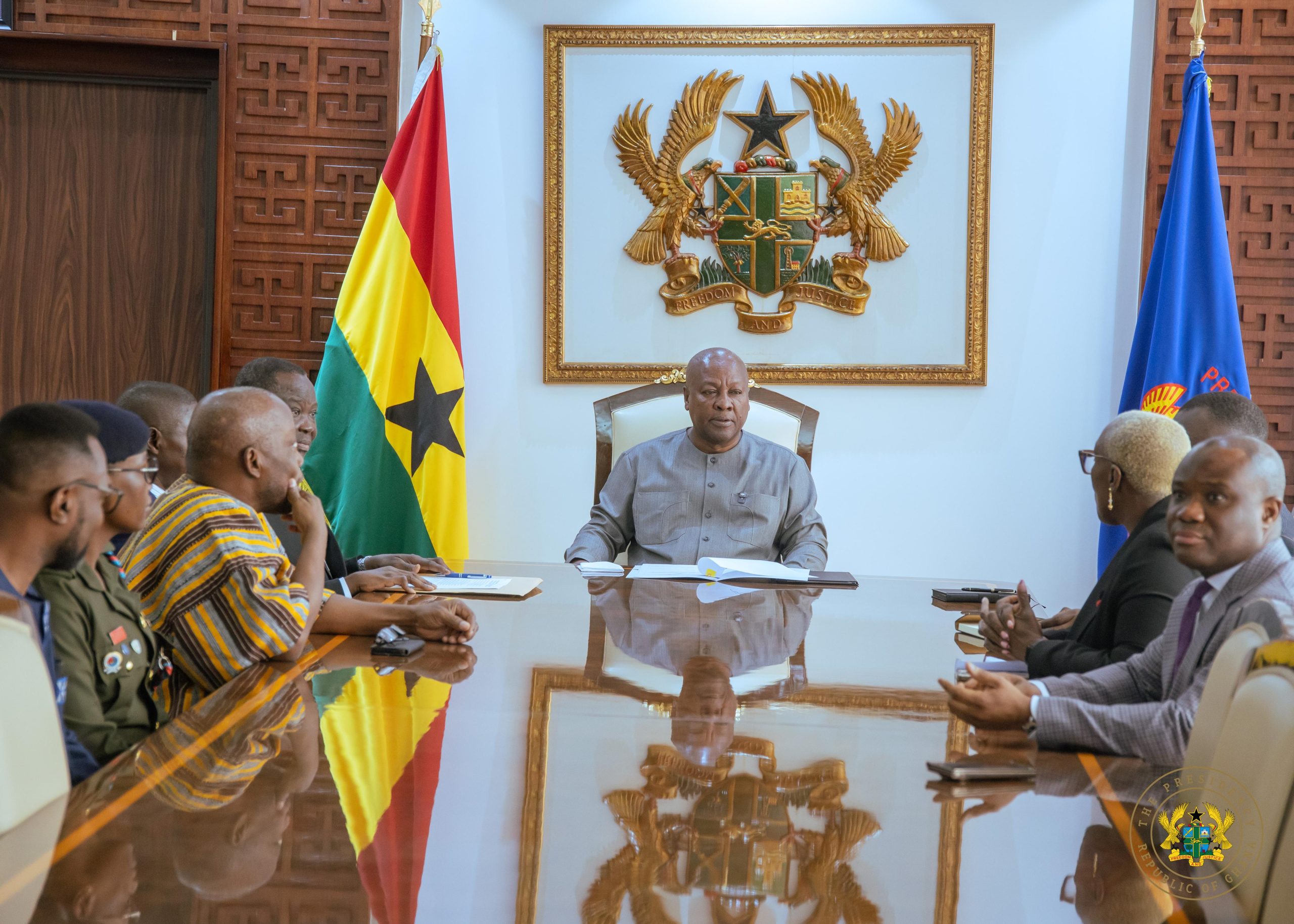
The constitutional committee tasked with investigating petitions for the removal of Chief Justice Gertrude Araba Esaaba Sackey Torkornoo has presented its first findings to President John Dramani Mahama.
The committee chairman delivered the sealed recommendation to the President during a formal ceremony attended by the Chief of Staff, Attorney-General and Minister of Justice, other Ministers of State, Legal Counsel to the President Lawyer Marrietta Brew, and presidency officials.
The committee was established under Article 146, Clause 6 of the Constitution after President Mahama received three separate petitions in March calling for the Chief Justice’s removal.
The inquiry process began on May 15, 2025, following constitutional procedures and Supreme Court precedents.
Speaking at the presentation ceremony, the committee chairman explained that while all three petitions seek the same outcome, each case stands alone and must be evaluated on its individual merits.
The committee has completed its work on the first petition but will address the remaining two at a later date.
The first petition, brought by Daniel Ofori, involved extensive testimony and documentation.
The committee heard from thirteen witnesses supporting the petitioner’s case, while Chief Justice Torkornoo presented her defense through twelve witnesses, including expert testimony.
The Chief Justice testified personally and underwent cross-examination during the proceedings.
Both sides were represented by four lawyers each, and the committee reviewed approximately 10,000 pages of documentary evidence.
The chairman emphasized that the committee conducted its inquiry “in camera” rather than “in secret,” allowing for transparency about the process while maintaining confidentiality of the proceedings’ substance.
The committee operated under Article 146, Clauses 7 and 8 of the Constitution, which mandate that such inquiries be conducted privately, with the accused person given full opportunity to defend themselves either personally or through legal representation before a recommendation is made to the President.
Throughout the inquiry, the committee faced public commentary and what the chairman described as “blatant false statements” about committee members and their work.
However, the committee chose not to respond to these criticisms, focusing instead on their constitutional mandate.
The second and third petitions have been temporarily postponed at the joint request of both the second petitioner and the Chief Justice. The committee granted this adjournment and will resume work on these remaining cases in due course.
The chairman concluded by stating that the committee reached its recommendation through “critical and dispassionate examination and assessment of all the evidence” while operating “without fear or favour” in accordance with constitutional requirements and relevant laws.
Richard Aniagyei, ISD