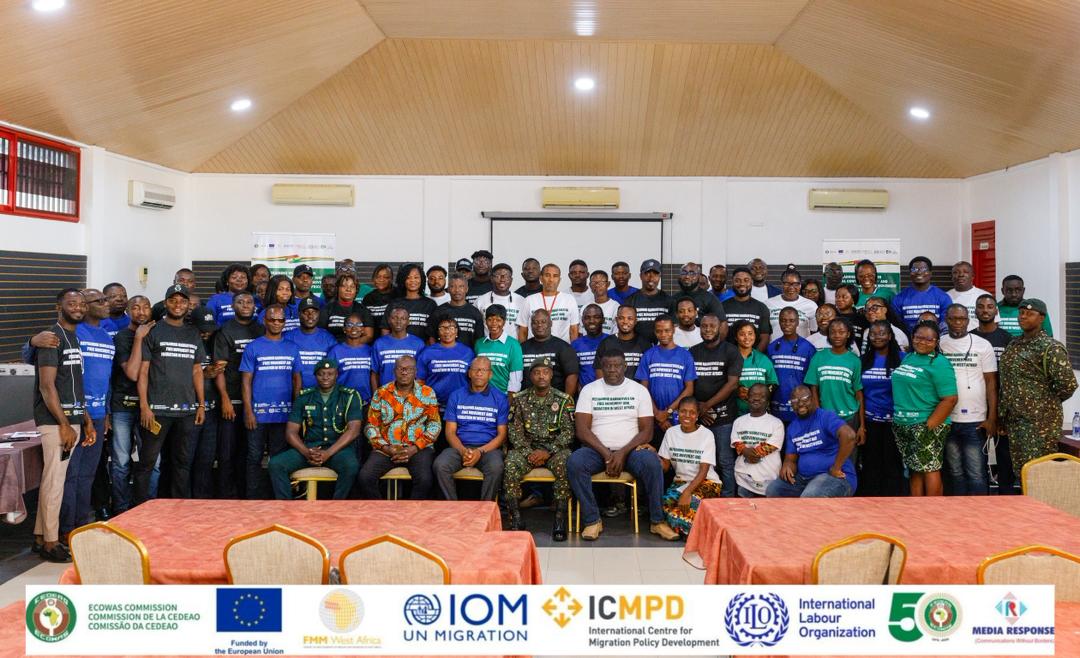
As part of efforts to promote free movement of people and migration in the West Africa subregion, Media Response, a non-governmental organisation based in Ghana, launched a project this year to train journalists, bloggers and communication experts.
This project seeks to empower media practitioners to report ethical, accurate and balanced stories on issues of migration and free movement of people.
The implementation of the project saw Media Response training 100 journalists and media practitioners in digital content creation and mini video blogging in Ho on Wednesday.
The trainees were also taken through the rudiments of Mobile Journalism, which has gained ground on social media in recent years.
The Executive Director of Media Response, Mr Samuel Dodoo, took the participants through the ECOWAS Protocol on Free Movement.
He touched on the framework of the Protocol, explaining that it makes provision for citizens of ECOWAS member states to enter and reside in other West African countries for 90 days without a visa.
He, however, clarified that the ECOWAS Protocol on Free Movement does not mean unregulated, uncontrolled entry, explaining that migrants are conditioned to fulfil certain legal requirements.
The Executive Director also noted that the Protocol establishes rights such as the rights of migrants to enter, reside and establish.
Addressing the trainees, the Volta Regional Chairman of the Ghana Journalists Association, Dr Harrison Kofi Belley, described the project as timely, explaining that it complements several other initiatives governments and various bodies have implemented to deal with issues of migration.
He highlighted the significance of social media, saying social platforms have become integral to the success of the policy decision-making process, explaining that they influence everything from the international, national and local levels in today’s digital-first world.
He underscored the place of migration in development, saying “While migration was, historically, seen as a developmental challenge, its potential to contribute to socio-economic development is now increasingly acknowledged.”
Bala Ali