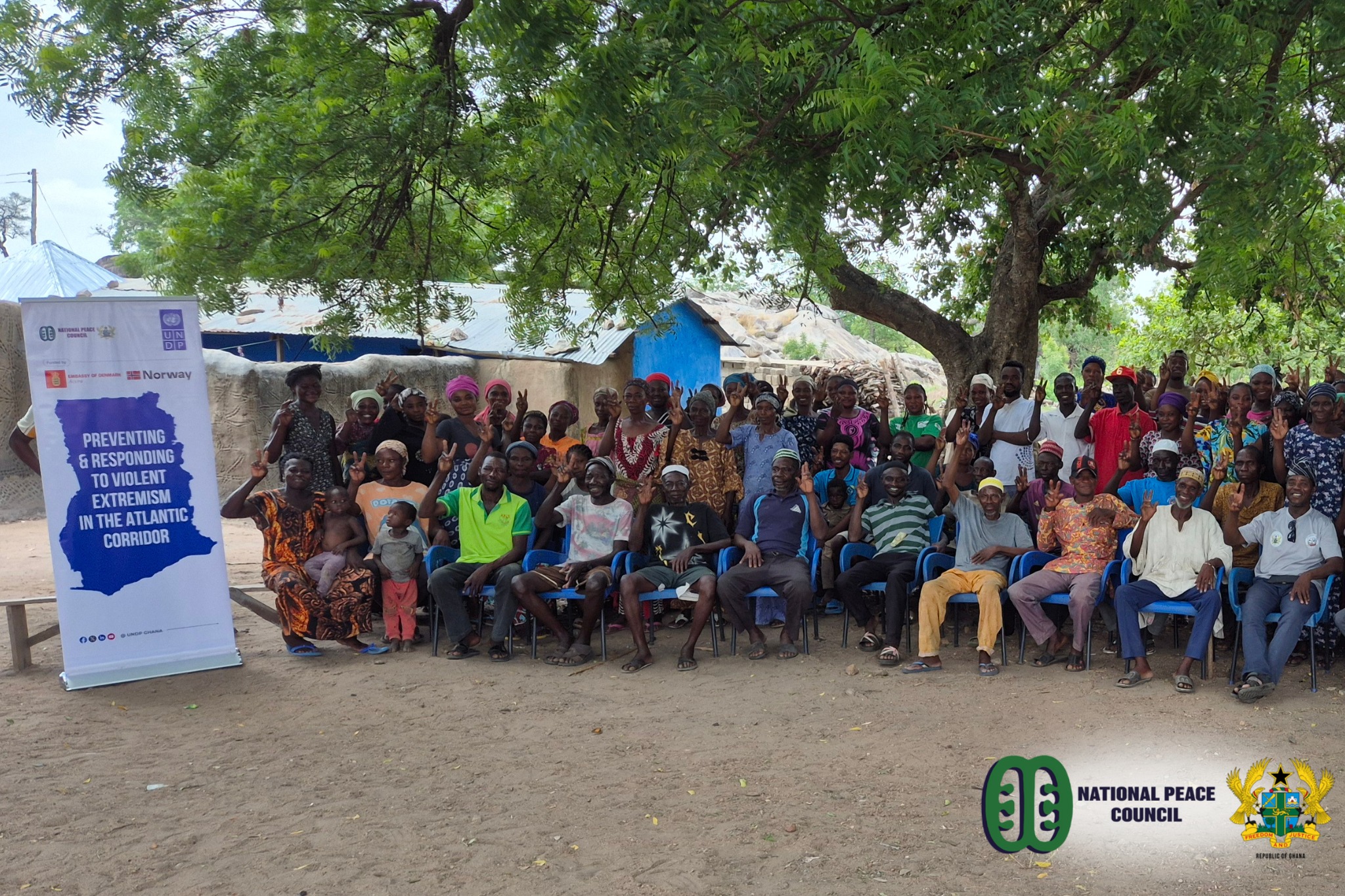
The Savannah Regional Peace Council has conducted a peacebuilding training programme for residents of Don-arayiri, Chieyiri, and Jang in the Sawla-Tuna-Kalba District of the Savannah Region, as part of efforts to strengthen community resilience against violent extremism.
The initiative was organised in collaboration with the United Nations Development Programme (UNDP Ghana), with support from the embassies of Norway and Denmark, under the flagship project, “Preventing and Responding to Violent Extremism in the Atlantic Corridor.”
The training brought together participants from the three communities to deepen their understanding of key drivers of conflict, including hate speech, misinformation, and violent extremism and facilitators guiding discussions on how such threats can be identified and effectively addressed at the local level.
As part of the programme, women and youth were empowered and designated as Peace Ambassadors, tasked with promoting unity and countering divisive narratives both online and within their communities.
Participants were also equipped with tools to establish and strengthen early warning systems to detect potential conflicts and respond proactively before they escalate.
The sessions further encouraged inter-ethnic dialogue, helping to rebuild trust and strengthen social cohesion among the participating communities. Topics covered included conflict management strategies, Ghana’s legal frameworks on hate speech, and the growing link between misinformation and violent extremism.
Speaking on the significance of the training, facilitators emphasised that knowledge remains a critical tool in combating hate and preventing the spread of extremist ideologies.
The National Peace Council reiterated its commitment to grassroots peacebuilding, noting that sustainable peace is cultivated not only in formal settings but also within everyday community spaces such as villages, markets, mosques, and churches.
Judith Twumwaa, ISD