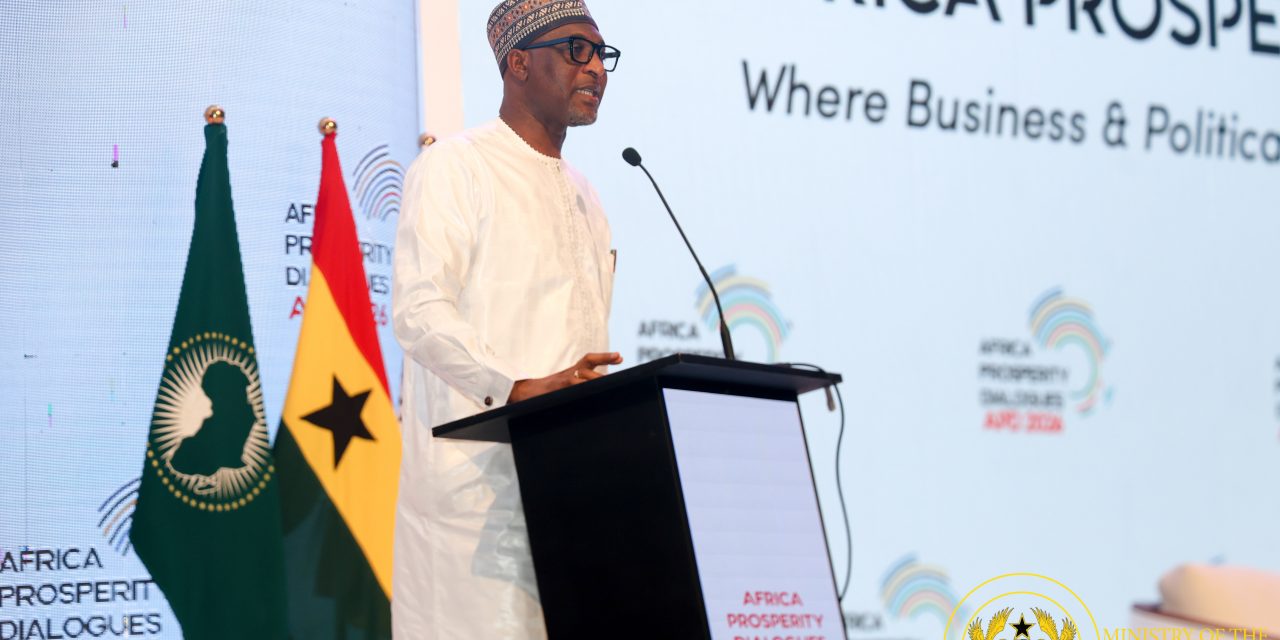
The Minister for the Interior, Mr Muntaka Mohammed-Mubarak, has indicated that security and free movement across the continent are not competing priorities but mutually reinforcing pillars of Africa’s economic transformation.
Speaking at the Africa Prosperity Dialogue 2026 on Thursday, in Accra, the minister said the African Continental Free Trade Area (AfCFTA) offers a historic pathway to deeper economic integration, but warned that its full potential can only be realised if issues of security, migration governance, and effective border management are addressed.
He noted that the dialogue’s theme, “Empowering SMEs, Women, and Youth in Africa’s single market through innovation, collaboration, and trade,” reflects the central role of small and medium-sized enterprises (SMEs) in driving African economies.
The Interior Minister called for smart, coordinated, and technology-driven approaches that facilitate trade while strengthening safety and trust across borders, mentioning the ECOWAS Protocol on Free Movement of Persons as a practical example of successful regional integration, which allows visa-free travel for up to 90 days within West Africa.
Mr Muntaka also advocated for the development of a harmonised African Union biometric identity system, stressing that integration must go hand in hand with effective security frameworks.
“A borderless Africa does not mean borderless security; it means smart borders,” he said.
He further urged African states to move away from siloed operations towards integrated border management systems, invest in capacity-building for frontline security and immigration officers, and deploy technology-based clearance and verification mechanisms.
“Let us build an Africa where goods move freely, people move safely, and prosperity moves widely,” he added.
The Minister of Trade, Agribusiness and Industry, Mrs Elizabeth Agyare Ofosu, acknowledged that access to finance remains a major challenge for SMEs across the continent.
She assured participants that the government remains committed to closing financing gaps and supporting enterprise growth, urging stakeholders to engage in productive deliberations.
Judith Twumwaa, ISD