Minister for Food and Agriculture, Eric Opoku, has disclosed that 13,000 farmers in 12 selected districts have received 720,000 birds under a pilot program for the Nkoko Nkitinkiti initiative.
The Minister stated that battery cages were distributed to support backyard poultry production, especially for those doing layers.
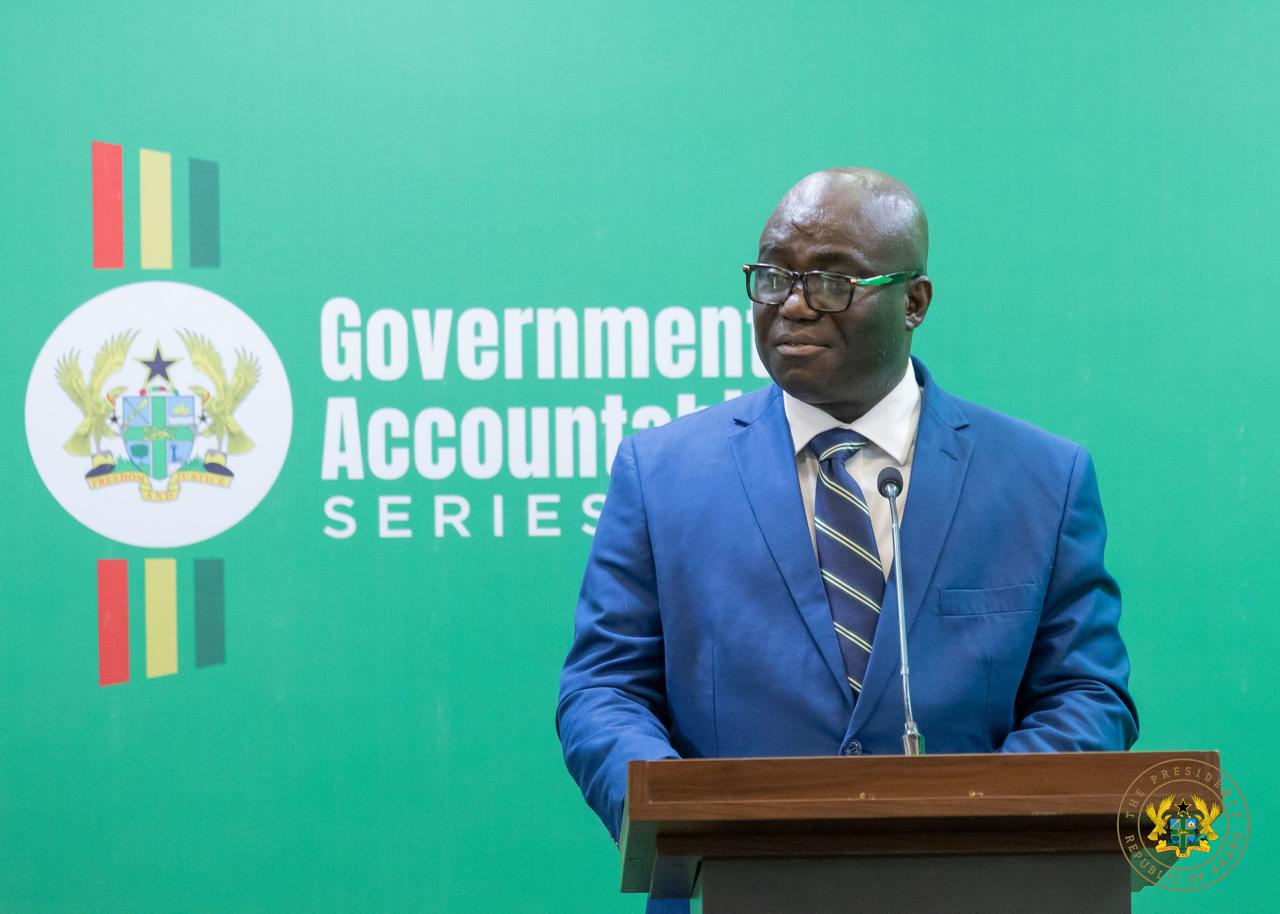
Speaking at the Government Accountability Series on Monday, Mr. Opoku explained that the program was successful, hence the need for immediate national rollout.
“This was the pilot for the Ministry to appreciate the associated risks of the Nkoko Nkitinkiti Program. The program has been very successful and hence the need for immediate rollout,” he said.
The Minister listed the districts as Tamale Metro, Wa Municipal, Nandom, Savelugu, Mion, Krachi East, Bole West, West Gonja, Nanumba South, Sissala East, East Mamprusi, and Mamprugu Moagduri.
He noted that the targeted intervention seeks to uplift vulnerable communities, particularly women-headed households, by enabling them to contribute meaningfully to local food production while improving nutrition and income security at the grassroots level.
Mr. Opoku announced that government will establish a soya processing plant in northern Ghana to produce soya oil and cake for poultry feed.
He stated that the capacity of the soya plant is 40 metric tons per day, at an estimated cost of $370,000.
“While the oil is edible, the cake will contribute to a reduction in poultry feed costs in Ghana. This will provide direct markets for soya farmers in northern Ghana,” the Minister said.
He disclosed that the sod-cutting ceremony will be done in early 2026, adding that the plant will provide direct markets for soya farmers in northern Ghana.
The Minister stated that looking at the huge investment government is making in the poultry sub-sector and the vigorous campaign for participation that the Ministry has launched, the nation is going to produce a lot of poultry in the coming months.
Mr. Opoku announced that the Ministry of Food and Agriculture is establishing nurseries at district departments of agriculture across the country to improve household access to vegetable seedlings.
He explained that the initiative supports the home gardening program under the Feed Ghana campaign.
“As part of the Feed Ghana campaign, a clarion call has been made to all households to engage in home gardening to help reduce household expenditure on food, especially vegetables. The participation has been massive and incredible,” he stated.
The Minister noted that even though the campaign has not achieved its full objectives, it has been a possible endeavor.
He stated that to sustain the home gardening program, nurseries are being established at district agriculture offices to ensure households have access to seedlings of various vegetables.
Mr. Opoku revealed that under the Feed Ghana program, government wants to achieve two major things: food sufficiency to be able to feed every Ghanaian from local resources, and provide constant and uninterrupted supply of raw materials for industrial operations to support government’s broad policy of the 24-hour economy.
Richard Aniagyei, ISD