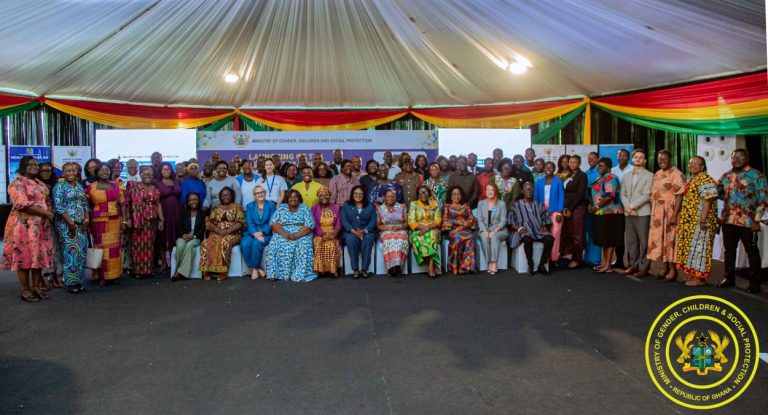
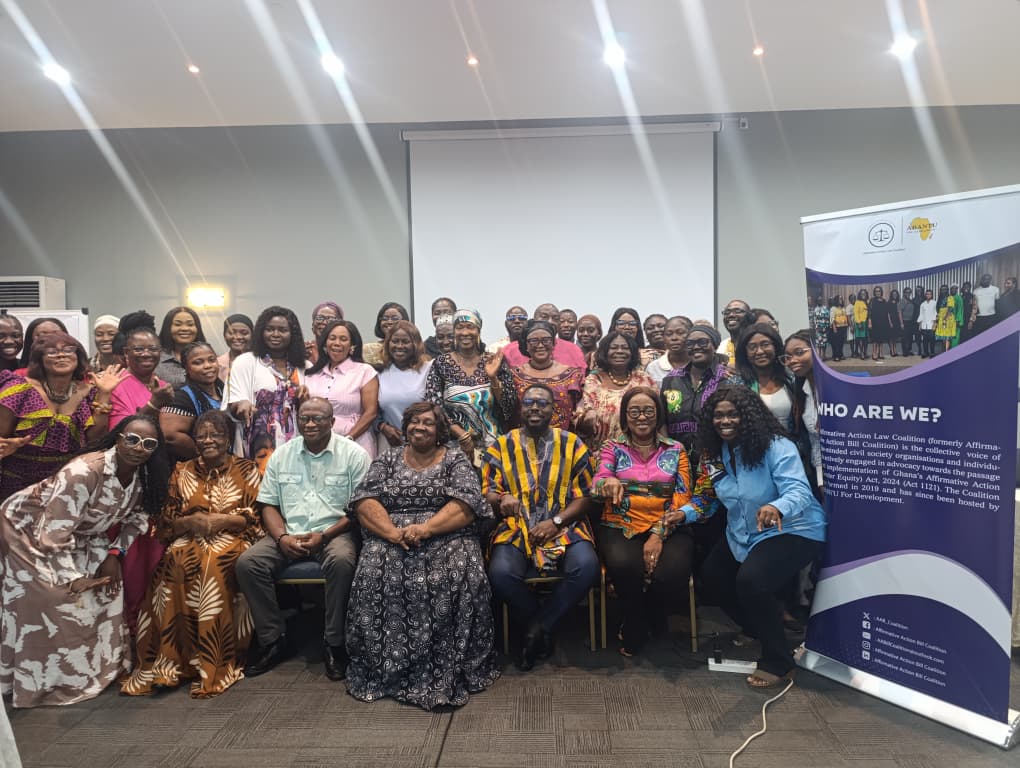
The Affirmative Action Law Coalition has called on political parties to take a leading role in implementing the Affirmative Action Gender Equity Act, as efforts to continue addressing gender imbalances in decision-making.
The call was made on Friday at a dialogue organised by the Coalition, where participants gathered to assess progress and engage political parties on their responsibilities under the law.
Speaking at the event, the convener of the coalition, Madam Sheila Minkah-Premo Esq, said persistent inequality between men and women in decision-making continues to affect efforts to achieve inclusive governance and social transformation.
She noted that increasing women’s participation in political leadership has long been recognised globally as a way to strengthen democratic systems and make policymaking more representative.
“Ghana passed the Affirmative Action Gender Equity Act, 2024, on July 30, 2024, following years of advocacy. The law outlines a phased approach to raise women’s participation in decision-making positions in both the public and private sectors from a minimum of 30 per cent to 50 per cent by 2034,” she said.
According to Madam Minkah-Premo, with the second anniversary of the Act approaching, it will be vital to review its implementation.
She asserted that political parties were central to this process due to their influence over candidate selection, leadership structures and access to governance spaces.
The coalition stressed that the state of a country’s democracy can be measured by the level of women’s representation in political institutions. While political parties are key to building inclusive systems, concerns were raised about the continued underrepresentation of women in party leadership and internal structures.
Participants were urged to use the framework provided by the Act to reform party structures and create more opportunities for women to compete for leadership roles.
The coalition maintained that without equal participation in political processes, the goal of inclusive democracy will remain out of reach.
The dialogue ended with a call for sustained collaboration among political parties, civil society and other stakeholders to create an environment that supports gender equality in governance.
Irene Wirekoaa Osei, ISD