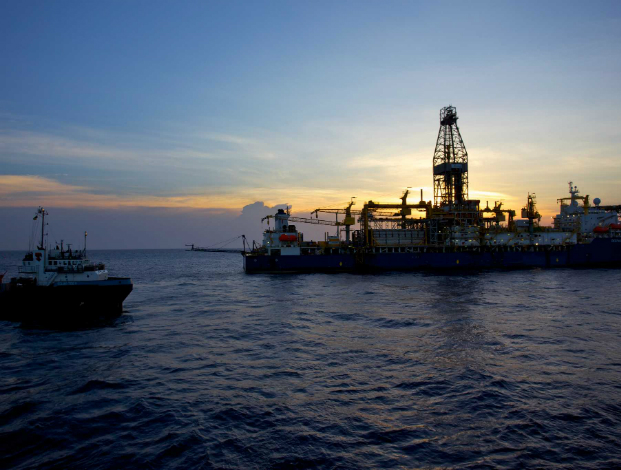

Government is renegotiating its liquefied natural gas agreement with Shell to secure LNG delivery within 18 months, part of a strategy to position the country as West Africa’s petroleum hub.
President John Dramani Mahama announced this on Tuesday at the Africa Oil week programme in Accra.
He added that the Ghana National Petroleum Corporation (GNPC) is working with Shell and other partners to finalize the LNG sale and purchase agreement that will end Ghana’s reliance on expensive liquid fuels as backup power for thermal plants.
“The deal forms part of the government’s gas-to-power policy that seeks to make natural gas the primary fuel source for thermal electricity generation,” he said
The LNG import arrangement will strengthen Ghana’s energy security while reducing power generation costs, addressing backup power challenges that have historically relied on costlier liquid fuels.
The President said the agreement represents a shift toward more reliable and affordable energy supply as the country develops its domestic gas resources.
He noted that Ghana is simultaneously implementing an accelerated gas infrastructure development plan that includes investments in pipelines, new processing plants, and storage systems to evacuate gas from production fields to markets.
“These infrastructure projects will create opportunities for private investment and strategic partnerships as the country expands its gas handling capacity,” he said.
The energy security initiatives support Ghana’s larger ambition to transform into a regional petroleum hub serving West Africa.
President Mahama outlined plans to develop petrochemical facilities, petroleum product storage systems, and pipeline networks that would position Ghana as a center for energy-based industrialization across the region.
Oil and gas refineries expansion forms another pillar of the hub strategy, with the government pursuing policies to enhance value addition before export.
The approach aims to capture more economic benefits from Ghana’s hydrocarbon resources rather than simply exporting crude materials to international markets.
He said the petrochemical development plans include establishing facilities that can process Ghana’s oil and gas into higher-value products for both domestic consumption and regional export.
“This value-addition focus aligns with continental efforts to prevent African resources from leaving the continent as raw materials only to return as expensive finished products,” he added.
Ghana’s positioning as a regional hub builds on existing infrastructure and its strategic location along the West African coast.
The country’s established petroleum sector, combined with planned infrastructure investments, provides a foundation for expanded operations serving neighboring countries’ energy needs.
The hub strategy encompasses both midstream and downstream operations, with midstream focusing on gas processing, storage, and transportation infrastructure, while downstream emphasizes refining, petrochemicals, and product distribution networks. Together, these elements would create an integrated petroleum value chain centered in Ghana.
The President said the government is creating an enabling environment where investor capital, expertise, and innovation can thrive while delivering jobs and shared prosperity.
The petroleum hub development is expected to generate employment opportunities across the energy value chain from technical operations to supporting services.
Richard Aniagyei, ISD